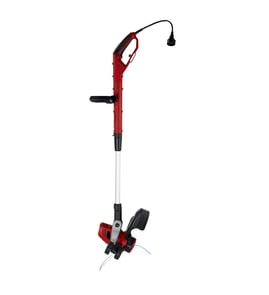
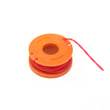

Why does the cable in my strimmer line keep breaking?
On a Worx WG151 electric line trimmer, the cutting line most often breaks because the spinning head is contacting hard edges (pavers, rocks, fence posts, or walls) or the line is being fed too long and gets “whipped” and snapped. Keeping the head slightly off hard surfaces and using the correct line size prevents repeat breaks.
- Hitting hard objects: Trim with the head parallel to the ground and keep a small gap from edging stones and concrete.
- Line extended too far: Shorten the exposed line; most trimmers cut best with a modest length beyond the guard.
- Wrong line diameter or type: Use the line size recommended for your trimmer; thicker line can overload the head, and very thin line snaps easily.
- Worn or damaged spool/head: Burrs or cracks can nick the line as it feeds; inspect the spool and eyelets.
- Line installed incorrectly: Rewind evenly and avoid crossing wraps, which causes binding and sudden snap-offs.
- Dry, brittle line: If line has been stored hot and dry, replace it; fresh line is more flexible.
- Unplug the trimmer.
- Remove the spool cover and pull out the spool.
- Check the eyelets/line guides for sharp edges, melting, or debris.
- Confirm the line is wound in the correct direction and is not crossed.
- Reinstall the spool and test with a short line length first.
| Symptom | Likely cause | Best fix |
|---|---|---|
| Breaks instantly when edging | Contact with concrete/stone | Keep head off the edge; slow down |
| Breaks after a few seconds | Line too long or brittle | Shorten line; replace with fresh line |
| Breaks only when feeding | Binding or nicked eyelet | Rewind neatly; inspect guides |
Repeated line breakage wastes line, reduces cutting performance, and can overwork the motor if the head binds. A clean feed path and correct trimming technique keep your WG151 cutting smoothly.
For help confirming you have the correct model before ordering supplies, use how to find your appliance model number (and what it means for parts).
Last updated: February 2026
Which is better, a 20 volt or 40 volt trimmer?
A 40V trimmer is better for thicker weeds, longer runtime, and larger yards; a 20V trimmer is better for lighter trimming, lower weight, and easier handling. For a Worx WG151 electric line trimmer, voltage comparisons mainly apply when you are choosing a cordless trimmer.
| Feature | 20V cordless trimmer | 40V cordless trimmer |
|---|---|---|
| Cutting power | Light to medium | Medium to heavy |
| Runtime per charge | Shorter | Longer |
| Tool weight | Lighter | Heavier |
| Best for | Small yards, edging, touch-ups | Larger yards, thicker growth |
| Battery cost | Typically lower | Typically higher |
- Choose 20V if you mostly edge sidewalks, trim around beds, and cut light grass.
- Choose 40V if you regularly hit tall grass, dense weeds, or you want fewer battery swaps.
- If fatigue is a problem, lighter weight beats extra power for many homeowners.
- If you already own batteries in a platform, staying in the same battery family usually saves money.
- For corded models like the Worx WG151, focus more on extension cord gauge/length, line condition, and spool feed performance than “volts.”
Voltage is a shortcut for how much work a cordless trimmer can do before it bogs down or runs out of charge. Higher voltage usually means better performance in tough conditions, but it also adds weight and cost, which affects comfort and control.
Match parts to the exact model number on the trimmer’s data label before ordering. Our guide, how to find your appliance model number (and what it means for parts), shows where to look and why it matters.
Last updated: February 2026
Why do landscapers take the guard off string trimmers?
Landscapers remove a string trimmer guard to edge faster and see the cut line better; it also lets more line extend for a wider swath. On a Worx WG151 electric line trimmer, we recommend keeping the guard installed because it’s a key safety and debris-control feature.
Removing the guard mainly affects speed, visibility, and debris direction.
- More line exposure can increase cutting swath and reduce trimming time
- Clearer sightline can make edging along sidewalks and beds easier
- Better access around tight corners, fence lines, and low obstacles
- Less chance of the guard dragging in tall grass
- More debris thrown toward the operator, bystanders, vehicles, and windows
Even an electric trimmer head can fling rocks, sticks, and wire at high speed. The guard helps block debris and often helps control line length for more predictable cutting.
- Safety glasses or a face shield
- Long pants
- Closed-toe shoes (boots preferred)
- Gloves with good grip
- Hearing protection for extended use
| Setup | What you gain | What you risk |
|---|---|---|
| Guard on | Better debris control, more consistent line length | Slightly slower edging in some spots |
| Guard off | Faster coverage, clearer view | Higher injury risk, more property damage risk |
If the WG151 feels slow or cuts poorly, removing the guard usually is not the best fix. Better results come from fresh line, correct line feed, and clearing wrapped grass from the head (unplug first).
Before any inspection or cleanup, review are diy appliance repairs safe for safe work habits.
Last updated: February 2026
How do Worx free spools for life work?
Worx “Free Spools for Life” is a Worx promotional program, not a Sears PartsDirect program. For a Worx WG151 electric line trimmer, the key is that eligibility depends on the exact promotion terms; once enrolled, you request replacement pre-wound spools and pay the required shipping and handling.
Use this checklist to understand the usual flow and avoid surprises:
- Confirm your exact trimmer model and version (WG151, and any version/Type on the ID label).
- Register the trimmer under the promotion rules (model and serial details are commonly required).
- Request refill spools when you run low.
- Pay the shipping and handling amount required for each refill shipment.
- Keep your registration confirmation and order history for future refills.
The details vary by promotion and region, but the structure is generally:
| Category | Commonly included | Commonly paid by you |
|---|---|---|
| Pre-wound replacement spools | Yes | No |
| Trimmer line on the spool | Yes | No |
| Shipping and handling | No | Yes |
Good technique reduces line waste and feed problems:
- Store spare spools in a cool, dry place so the line stays flexible.
- Keep the spool head clear of wrapped grass and stringy weeds.
- Avoid hitting concrete, edging blocks, and fence posts with the head.
- Feed only the amount of line you need; excess line breaks faster.
On the WG151, the spool and line are the main consumables. Understanding the enrollment and refill steps helps you plan ongoing trimming costs and avoid downtime when you run out of line.
For help confirming the exact model identification details you will need for registration, use how to find your appliance model number (and what it means for parts).
Last updated: February 2026
Can you replace a trimmer head?
Yes. On the Worx WG151 line trimmer, you can replace the trimmer head assembly; start by removing the battery pack, then remove the spool/cover and unthread or unfasten the head from the drive shaft (the exact fastener style varies by head version).
- Remove the battery pack before servicing the head.
- Wear gloves and eye protection; trimmer line ends can be sharp.
- Clear wrapped grass and line from the head so you can see the fasteners.
- Take a photo of the spool, spring, and cap orientation before disassembly.
- Remove the spool cap (usually tabs or a twist-lock) and pull out the spool.
- Look for a retaining screw, nut, or threaded head connection at the center hub.
- If the shaft spins, hold the shaft using the built-in lock feature (if present) or hold the hub firmly while loosening the fastener.
- Transfer any spacers, washers, or springs to the new head in the same order.
- Reinstall the spool and cap; then test for smooth rotation and normal line feed.
- Cut away fused line and packed debris around the hub.
- Apply steady torque; avoid crushing plastic with pliers.
- If loosening one direction tightens, reverse direction; some heads use opposite-thread fasteners.
| What you notice | What it usually means | What we do next |
|---|---|---|
| Head wobbles | Spool not seated or missing spacer | Reseat spool; confirm spacers/washers |
| Line will not feed | Spool wound wrong or cap not latched | Rewind line; reinstall cap securely |
| Excess vibration | Debris in head or damaged head | Clean; replace head if cracked |
A correctly installed head keeps line feeding consistent, reduces vibration, and protects the drive system from wear.
To make sure you are ordering parts for the exact WG151 version you own, use how to find your appliance model number (and what it means for parts).
Last updated: February 2026