Owner’s manual
 Error Codes


Do you remove cardboard from the bottom of a Whirlpool refrigerator?
No. On Whirlpool refrigerator model GZ25FSRXYY2, the cardboard panel at the bottom (typically the rear lower cover) is meant to stay in place because it helps protect components and supports proper airflow for cooling.
In most bottom-mount refrigerators, that panel functions as a protective and airflow cover for the machine compartment.
- Helps direct airflow across the condenser area
- Protects wiring and components from dust and damage
- Reduces noise and vibration from the compressor area
- Helps keep pets and debris away from moving parts
You can remove the lower rear access cover only for service tasks, then reinstall it.
- Cleaning the condenser area (if accessible on your design)
- Inspecting for a water leak or drain pan overflow
- Checking the condenser fan area for obstructions
- Accessing parts during a repair
Always reinstall the cover before operating the refrigerator.
| What you see | What to do | Why |
|---|---|---|
| Cardboard or fiberboard panel screwed on at the lower back | Leave installed (remove only for service) | Maintains airflow and protects components |
| Loose shipping cardboard, tape, corner blocks, foam | Remove and discard | Packaging can block vents and cause noise |
| Panel is wet, warped, or falling apart | Replace the panel | Airflow and protection are compromised |
If that lower cover is left off, the refrigerator can run hotter, run longer, and cool less efficiently because airflow through the condenser area is no longer controlled.
For model-specific panel location and access steps, use the GZ25FSRXYY2 owner’s manual.
Last updated: February 2026
What is the advantage of a bottom mount fridge?
A bottom-mount refrigerator like the Whirlpool GZ25FSRXYY2 puts the fresh-food section at a more convenient height, so we reach everyday items with less bending. The freezer stays below, which works well when we use refrigerated foods more often than frozen foods.
- Fresh food at eye level: easier to see and grab milk, produce, and leftovers.
- Less bending: we bend less often for the most-used compartment.
- Better organization: shelves and door bins are easier to sort and keep visible.
- Freezer capacity and access: lower freezer drawers can hold bulky frozen items.
- Good fit for families: frequent fridge access feels more natural.
| Feature | Bottom-mount refrigerator | Top-freezer refrigerator |
|---|---|---|
| Most-used items | Easier access (fridge up top) | Harder access (fridge lower) |
| Bending during daily use | Less | More |
| Freezer access | Drawer-style, lower | Door-style, upper |
| Best for | Fresh-food focused households | Frozen-food focused households |
- Measure door swing and clearance; confirm dimensions in the GZ25FSRXYY2 owner's manual.
- Plan for freezer drawer pull-out space in front of the unit.
- Keep airflow paths clear inside the fridge so cooling stays even.
Ergonomics and visibility drive real convenience. With a bottom-mount design, we spend less time crouching and more time quickly finding what we need, which helps reduce food getting forgotten in the back.
Last updated: February 2026
What is the life expectancy of a Whirlpool refrigerator?
A Whirlpool refrigerator like model GZ25FSRXYY2 typically lasts about 13 years with normal household use and basic maintenance. Keeping airflow clear, temperatures set correctly, and the water system maintained helps you get the full expected lifespan.
Most full-size Whirlpool refrigerators fall into these practical ranges:
- 10 to 15 years: common real-world lifespan
- 13 years: typical midpoint expectation
- 15+ years: achievable with good care and timely part replacement
| What you do | What it helps prevent | Why it extends life |
|---|---|---|
| Clean condenser area regularly | Overheating, long run times | Reduces compressor strain |
| Keep doors sealing tightly | Frost, warm temps, moisture | Stabilizes cooling system |
| Replace water filter on schedule | Slow water flow, valve stress | Protects inlet valve and ice maker |
| Keep vents unblocked | Hot spots, freezing sections | Improves airflow and efficiency |
We see these steps make the most impact on bottom-mount refrigerator longevity:
- Set steady temps (avoid frequent changes)
- Keep the condenser area free of dust and pet hair
- Do not overload shelves so air can circulate
- Confirm doors close fully every time
- Maintain the water supply system (filter changes, good water pressure)
For model-specific care and cleaning intervals, follow the GZ25FSRXYY2 owner's manual.
A simple rule we use:
- Worth it: ice maker, inlet valve, damper, light switch, door bin, fan blade, control board issues
- Usually not worth it: sealed-system failures (compressor, evaporator, condenser) on an older unit
| Repair type | Examples on this model | Typical decision |
|---|---|---|
| Low to moderate cost | Ice maker, valve, damper | Repair is usually smart |
| High cost sealed system | Compressor, evaporator | Replace if unit is older |
A refrigerator that is running hot, leaking water, or struggling to make ice often wears out key components faster. Addressing airflow, door sealing, and water system issues early helps protect expensive parts like the compressor.
Last updated: February 2026
Can I use a generic filter in my Whirlpool?
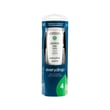
Yes, you can use a generic water filter in your Whirlpool refrigerator, but for model GZ25FSRXYY2 it must be an exact fit and properly certified so you do not end up with leaks, low water flow, or poor taste and odor reduction. For the correct replacement and reset steps, follow the GZ25FSRXYY2 owner's manual.
- The box lists GZ25FSRXYY2 as a compatible model (not just “fits Whirlpool”)
- The filter is NSF/ANSI certified for the reductions you care about (commonly chlorine taste and odor, some models also claim lead reduction)
- The end caps and O-rings match the original filter design so it seats fully
- The filter has clear install and flush instructions (purging air is critical)
- You can return it if it leaks or triggers a “replace filter” light that will not reset
- Install the filter firmly (do not cross-thread or force it).
- Dispense and discard several gallons of water to flush carbon fines and purge air.
- Check for drips at the filter head and under the refrigerator.
- Reset the filter indicator using the steps in the GZ25FSRXYY2 owner's manual.
| Symptom | Most common cause | What we do next |
|---|---|---|
| Slow dispenser flow | Air trapped or filter not seated | Reinstall filter, flush more water |
| No ice production | Air in line or supply issue | Purge dispenser, confirm shutoff valve is open |
| Leaking at filter | Poor fit or damaged O-ring | Replace filter with a better-fitting option |
If you are troubleshooting flow issues or you use an external filtration system, a bypass plug can help you confirm whether the filter is the restriction. For this model, use the refrigerator water filter bypass W11395888 when appropriate.
A refrigerator water filter is part of the sealed water path; a slightly wrong fit can cause internal leaks, weak ice maker fill, or nuisance air in the line. Choosing a certified, model-listed filter protects water quality and helps the dispenser and ice maker run normally.
Last updated: February 2026
What is the most common problem with Whirlpool refrigerators?
The most common Whirlpool refrigerator problems are cooling issues (warm fridge or freezer), ice maker or water dispenser failures, and water leaks. On Whirlpool model GZ25FSRXYY2, these symptoms usually trace back to airflow restrictions, a clogged/iced drain, or a water supply component that is restricted or failing.
- Fridge warm, freezer OK: airflow problem between compartments; damper stuck or frost blocking vents.
- Freezer warm, fridge warm: sealed system or airflow issue; condenser dirty, fan not running, or defrost problem.
- No ice or small cubes: low water flow, frozen fill tube, or ice maker issue.
- Water under the fridge or in the freezer: defrost drain restriction or a cracked/loose water line.
- Lights not working or door alarm behavior: door switch issue.
- Confirm controls are set correctly (typical targets: 37°F fresh food, 0°F freezer); see the GZ25FSRXYY2 owner's manual.
- Make sure vents are not blocked by food packages.
- Clean the condenser area and verify fans run when the compressor is running.
- If you see ice on the freezer floor or water puddles, inspect and clear the drain path.
- For ice and water issues, verify household water supply is on and the line is not kinked.
| Symptom | Likely area | Example part for this model |
|---|---|---|
| Fridge warm, freezer cold | Airflow/damper | Refrigerator damper control assembly WPW10196393 |
| Water leaking inside/freezer | Drain path | Refrigerator drain tube W10619951 |
| No water/ice, slow fill | Water supply valve | Refrigerator inlet valve WPW10498990 |
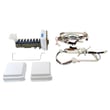
| No ice production | Ice maker | Refrigerator ice maker assembly W10882923 |
Catching the symptom early prevents food spoilage and helps avoid secondary damage like ice buildup, water puddles, and strain on the compressor. A simple airflow or drain fix often restores normal temperatures faster than adjusting settings repeatedly.
Last updated: February 2026