Installation guide
 Owner’s manual
 Error Codes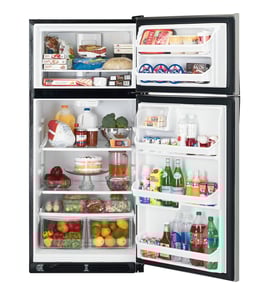




Who makes Kenmore refrigerator model 253?
Kenmore model numbers that start with 253 (including your Kenmore 25370609411 top-mount refrigerator) are built for Kenmore by Frigidaire/Electrolux. You can also confirm the model-series identification details in the 25370609411 owner's manual.
We recommend verifying the model prefix directly from the serial plate inside the fresh food compartment.
- Open the refrigerator door and look along the inside wall for the serial plate
- Confirm the model number begins with 253
- Record the full model and serial number for parts matching
- Use only mild soap and water to clean the serial plate (so the numbers stay readable)
Kenmore is a brand; different manufacturers build Kenmore appliances. The model prefix is the quickest way to identify the manufacturing source and helps ensure you get the right parts (like an ice maker, door gasket, or evaporator fan motor) for your exact design.
| Kenmore model prefix | Typical manufacturer family | What it helps with |
|---|---|---|
| 253 | Frigidaire/Electrolux | Correct part design and service procedures |
| Other prefixes | Varies by series | Use the full model number to match parts |
When ordering replacement parts, match by full model number (25370609411), not just the 253 prefix. For example, this model page lists parts such as:
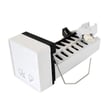
- Refrigerator ice maker 241798231 for ice production issues
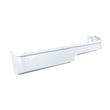
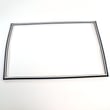
- Frigidaire refrigerator door gasket (white) 242193206 if the door seal is torn or leaking air
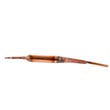
- Refrigerator defrost heater 242044008 if frost buildup is affecting cooling
Knowing that the 253 prefix aligns with Frigidaire/Electrolux manufacturing helps you troubleshoot more accurately and avoid ordering look-alike parts that do not mount, wire, or seal correctly.
Last updated: February 2026
What is a fridge with freezer on top called?
A fridge with the freezer on top is called a top-freezer refrigerator (also commonly called a top-mount refrigerator). Your Kenmore 25370609411 is this style: the freezer compartment sits above the fresh-food section, typically with two side-swing doors.
These terms describe the same basic layout:
- Freezer compartment is on the top
- Refrigerator (fresh-food) compartment is on the bottom
- Separate doors for freezer and refrigerator
- Cooling air is circulated from the freezer area into the fresh-food section
For model-specific features, door swing details, and control locations, use the 25370609411 owner's manual.
Top-freezer refrigerators are a common choice because they balance capacity, efficiency, and straightforward serviceability.
- Usually lower purchase and repair cost than many specialty styles
- Simple door and hinge design (helpful for door alignment and sealing)
- Easy access to fresh-food shelves at mid-height
- Often efficient for everyday use
| Style name | Freezer location | Typical door layout |
|---|---|---|
| Top-freezer (top-mount) | Top | Two side-swing doors |
| Bottom-freezer | Bottom | Upper fridge door(s) plus lower freezer drawer/door |
| Side-by-side | Left side | Two tall vertical doors |
| French door | Bottom | Two upper fridge doors plus lower freezer drawer |
The “top-freezer/top-mount” design affects where you’ll check for common issues like warm temperatures, frost buildup, or door sealing problems.
- Temperature control changes often need time to stabilize (we recommend waiting about 24 hours between adjustments)
- Door sealing and leveling are key to consistent cooling
- Many common repairs involve the evaporator area, door gaskets, or the ice maker (if equipped)
Last updated: February 2026
What are the common problems with Kenmore Elite refrigerators?
Common Kenmore Elite refrigerator problems usually fall into a few buckets: not cooling or warming temps, frost buildup that blocks airflow, water leaks, and unusual noises from fans or the compressor. On Kenmore model 25370609411, many of the same root causes apply, and our owner's manual troubleshooting and care tips help you narrow it down fast.
- Fridge or freezer too warm: controls set too warm, doors opened too often, or airflow restricted by frost
- Frost buildup or moisture inside: door left slightly open, worn or dirty door gasket, or defrost system trouble
- Water leaks or puddles: drain issues, water line not drained after freezing storage, or ice maker supply problems
- Loud humming, rattling, or buzzing: condenser fan area, evaporator fan area, or compressor start components
- Door not closing or beeping: unit not level, door/gasket issues, or door left open
- Set temperatures correctly and give the unit 24 hours to stabilize after changes.
- Check both doors for a tight seal and make sure nothing is holding them open.
- Clean the door gaskets with mild soap and water; a dirty gasket can leak warm air.
- Listen for fan noise: a failing fan often gets louder before it quits.
- Reduce door openings; frequent openings add moisture that can create frost.
If troubleshooting points to a failed component, these are common replacements for this model family:
| Symptom | Common suspect part | Example part on this page |
|---|---|---|
| Frost buildup, poor cooling | Defrost heater | Refrigerator defrost heater 242044008 |
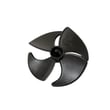
| Warm temps, weak airflow | Evaporator fan motor | Refrigerator motor 242077705 |
| Ice maker not making ice, leaking at ice maker | Ice maker assembly | Refrigerator ice maker 241798231 |
| Warm temps, sweating, frost near door | Door gasket | Frigidaire refrigerator door gasket (white) 242193206 |
Most “Kenmore Elite not cooling” complaints come down to airflow and sealing. A slightly open door or a gasket that is dirty, worn, or poorly fitted can let in warm, humid air; that moisture turns into frost, blocks airflow, and temperatures rise.
Last updated: February 2026