Installation guide
 Owner’s manual
 Error Codes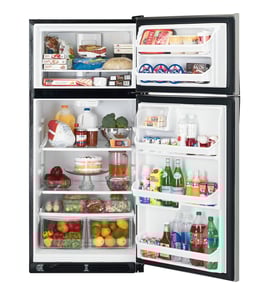



What is the upper part of a fridge called?
On the Frigidaire FFHT2033VS2 top-mount refrigerator, the upper compartment is the freezer. It’s the section designed to keep food frozen, and it typically houses items like the ice maker, ice bucket, and freezer shelf shown in the owner's manual.
What you’ll typically find in the upper (freezer) section
Depending on the exact configuration, the freezer area can include:
- Ice maker and ice bucket (some models)
- Freezer shelf for frozen foods
- Ice tray (if you are not using an ice maker)
- Auxiliary freezer control (on some models)
- Freezer door bins or racks (varies by model)
Freezer vs. refrigerator: quick comparison
| Compartment | Location on FFHT2033VS2 | Main purpose | Typical temperature target |
|---|---|---|---|
| Freezer | Upper | Keeps food frozen, makes ice | About 0°F |
| Refrigerator | Lower | Keeps fresh food cold | About 37°F |
Why it matters
Knowing the correct name helps when you’re troubleshooting temperature issues, reading control settings, or ordering the right replacement parts (for example, door bins, gaskets, or controls). The freezer and fresh food sections can have separate controls, and adjusting the wrong one can lead to warm freezer temps or frozen items in the refrigerator.
Helpful tip for temperature complaints
If the freezer is warmer than you want but the refrigerator section seems fine, we follow the guidance in the owner's manual and adjust the auxiliary freezer control colder, then allow about 24 hours for temperatures to stabilize.
Last updated: February 2026
Can I buy extra fridge shelves?
Yes. For your Frigidaire FFHT2033VS2 top-mount refrigerator, you can add or replace shelves as long as the replacement matches the shelf style and the rail positions inside the fresh-food section. Use the shelf adjustment steps in the FFHT2033VS2 owner's manual to confirm how your shelves remove and reinstall.
How to choose the right shelf
We recommend matching the original shelf type and mounting style first, then confirming size.
- Match the shelf type (sliding glass shelf vs sliding wire shelf)
- Match the mounting method (side rails and stop position)
- Compare width and depth to your existing shelf
- Check for any front clips or trim pieces that transfer over
- If you are replacing a damaged shelf, inspect the shelf rails for cracks or warping
How to remove and reinstall a sliding shelf (typical for this model)
The manual’s process is straightforward and helps prevent damage.
- Remove food from the shelf.
- Pull the shelf forward to the stop position.
- Lift the front edge up, then pull the shelf out.
- To reinstall, rest the side edges on a matching pair of rails and push the shelf back into place.
Tempered glass shelf handling tips
Tempered glass shelves are strong, but they can break if stressed the wrong way.
| Do | Avoid |
|---|---|
| Support the shelf with two hands | Twisting the shelf while it is half-seated on the rails |
| Let the shelf reach room temperature before washing | Sudden temperature changes (hot water on cold glass) |
| Check for chips or deep scratches before reinstalling | Using a damaged shelf that can fail unexpectedly |
Why it matters
A correctly fitted shelf keeps airflow moving through the refrigerator compartment and prevents items from shifting into vents. It also reduces the chance of shelf breakage and liner damage when you slide shelves in and out.
Last updated: February 2026
Why is my Frigidaire top mount freezer not freezing?
If your Frigidaire FFHT2033VS2 top-mount refrigerator freezer is not freezing, the most common causes are incorrect control settings, blocked airflow, or a fan or sensor problem. Set controls to the recommended starting point, allow time to stabilize, and confirm the freezer fan is moving cold air.
Quick checks we recommend first
- Confirm the refrigerator control is set to Normal as the initial setting (then wait 24 hours before making another change); see the owner's manual.
- Keep doors closed and allow a proper cool-down period (at least 8 hours before loading food).
- Make sure food packages are not blocking cold air vents in the freezer or refrigerator.
- If the unit is in a garage or space below 55°F, set the auxiliary freezer control to the coldest setting to improve freezer performance.
- Listen for the evaporator fan in the freezer; if it is not running, cold air will not circulate.
Control settings and timing (what to expect)
Your FFHT2033VS2 uses a refrigerator control that affects temperatures in both compartments, plus an auxiliary freezer control that fine-tunes freezer temperature. Changes are not instant.
| Situation | What to do | When to recheck |
|---|---|---|
| Freezer too warm | Turn auxiliary freezer control colder | After 24 hours |
| Refrigerator too warm (and freezer also struggling) | Turn refrigerator control colder | After 24 hours |
| After power outage or first start | Wait for cooling to begin (can take up to 15 minutes) | Same day, then 24 hours |
When a part is likely involved
If settings and airflow are correct but the freezer still will not freeze, these model-matched parts commonly relate to “not freezing” symptoms:
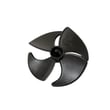
- Refrigerator evaporator fan motor 242077705 (no airflow across the evaporator)
- Refrigerator temperature sensor 240597220 (incorrect temperature feedback)
- Refrigerator electronic control board and housing assembly 5304501856 (control issues)
Why it matters
A freezer that is even a few degrees too warm can cause soft ice cream, thawing, and unsafe food storage. Getting airflow and control settings right first prevents unnecessary part replacement.
Last updated: February 2026
What is the most common problem with Frigidaire refrigerators?
The most common Frigidaire refrigerator complaint is a cooling problem: the refrigerator section runs warm, the freezer may still feel cold, or temperatures swing because airflow is restricted or a fan/sensor is failing. For your Frigidaire FFHT2033VS2, start with airflow, coil cleaning, and door sealing checks in the owner's manual.
Most common causes we see (and what to check first)
- Dirty condenser coils: reduces heat removal and causes long run times.
- Airflow blocked inside: packages or ice buildup can block vents between freezer and fresh food.
- Evaporator fan issue: weak or noisy fan reduces cold air circulation (common symptom is warm fridge, colder freezer).
- Door seal leak: warm, moist air sneaks in and creates temperature and frost problems.
- Temperature sensing/control issue: a bad sensor can cause poor temperature regulation.
Quick troubleshooting checklist (FFHT2033VS2)
- Confirm controls are not set to “0” or “OFF” and the unit is plugged into a dedicated outlet (the manual notes a dedicated 115V, 60 Hz, 15A outlet).
- Make sure the doors fully close; do a paper-strip test around the gasket.
- Clear vents and avoid overpacking; leave space for air to circulate.
- Clean condenser coils and verify the condenser fan area is clear.
- If the refrigerator is warm after a door has been open a lot, allow time for temperatures to stabilize.
Parts that commonly solve cooling and airflow complaints
| Symptom | Common area | Example part for FFHT2033VS2 |
|---|---|---|
| Fridge warm, freezer cold | Evaporator airflow | Frigidaire refrigerator evaporator fan motor 242077705 |
| Temps swing, food freezing or too warm | Temperature sensing | Refrigerator temperature sensor 240597220 |
| Frost, sweating, poor cooling | Door sealing | Frigidaire refrigerator door gasket (white) 242193213 |
Why it matters
Cooling issues are usually airflow or sealing related; fixing them early helps prevent food spoilage, excessive frost, and compressor overwork (which can shorten the life of major components).
Last updated: February 2026