Owner’s manual
 Error Codes


What is a bottom mount refrigerator?
A bottom-mount refrigerator (like your Samsung RF32FMQDBSR) keeps the refrigerator section on top and the freezer on the bottom. This puts everyday fresh foods at a more comfortable, eye-level height while frozen foods stay in a lower pull-out drawer.
Most bottom-mount (bottom-freezer) refrigerators are organized like this:
- Top section: fresh food compartment with shelves, bins, and door storage
- Bottom section: freezer drawer or door with baskets for frozen items
- Cooling system: evaporator and fans circulate cold air to maintain set temperatures
- Ice and water features (if equipped): use a water filter and inlet valve to supply the dispenser and ice maker
For model-specific features and controls, we recommend checking the RF32FMQDBSR owner's manual.
A bottom-mount layout reduces bending for the items you use most (milk, produce, leftovers). It also helps you organize frozen foods in baskets so you can see what you have without digging through a top freezer.
| What you notice | Why it happens | What to do |
|---|---|---|
| Fresh foods are easier to reach | Fridge compartment is on top | Store most-used items on middle shelves |
| Freezer access takes more bending | Freezer is in a lower drawer | Use baskets to separate meats, veggies, and snacks |
| Ice and water performance depends on water flow | Filter and valve affect supply | Replace the refrigerator water filter DA29-00019A on schedule |
If you are troubleshooting cooling, ice, or water issues on the RF32FMQDBSR, these parts are often involved:
- Refrigerator water filter DA29-00019A (taste, flow, ice production)
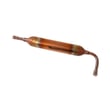
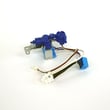
- Refrigerator water inlet valve DA62-04027A (no water to dispenser or ice maker)
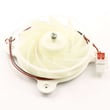
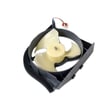
- Refrigerator evaporator fan motor DA31-00334A (warm fridge, weak airflow)
- Refrigerator temperature sensor DA32-10104N (temperature regulation)
Last updated: February 2026
Why is my Samsung fridge not making ice in the bottom freezer?
If your Samsung RF32FMQDBSR bottom-mount refrigerator is not making ice, the most common causes are restricted water flow (often a clogged water filter), a failed water inlet valve, or an ice maker issue caused by freezing or airflow problems. Use the checks below, then confirm model-specific steps in the owner's manual.
- Make sure the ice maker is turned on and ice production is not set to “Off.”
- Confirm the freezer temperature is set correctly (most refrigerators make ice best around 0°F).
- Dump old ice and reseat the ice bin fully so the auger and bin switch engage.
- Check for a frozen fill tube or ice buildup around the ice maker area.
- Replace the water filter if it is overdue or water flow at the dispenser is weak.
These parts are commonly involved when ice stops or slows:
| Symptom | Likely cause | Part to consider |
|---|---|---|
| No water entering ice maker | Valve not opening, low flow | Refrigerator water inlet valve DA62-04027A |
| Slow ice production, weak dispenser flow | Clogged filter | Refrigerator water filter DA29-00019A |
| Ice maker area warm, frost buildup, fan noise | Poor airflow across evaporator | Refrigerator evaporator fan motor DA31-00334A |
- Verify the household shutoff valve is fully open.
- If the dispenser flow is weak, replace the filter first.
- After replacing the filter, flush several cups of water to clear air from the line.
Poor airflow can cause temperature swings that stop ice production.
- Listen for the evaporator fan running when the doors are closed.
- Look for heavy frost on the rear freezer panel (a sign of airflow restriction).
- Make sure vents are not blocked by food packages.
If the dispenser works but the ice maker never fills, the valve circuit feeding the ice maker can still be the issue.
- Inspect the water line behind the refrigerator for kinks.
- If the fill tube is frozen, correct the underlying temperature or airflow issue so it does not refreeze.
Ice makers depend on steady freezer temperature and consistent water flow. A partially clogged filter or a sticking inlet valve can stop ice completely, and airflow issues can cause freezing in the wrong places, leading to repeated “no ice” problems.
Last updated: February 2026
What are the dimensions of the Samsung RF32FMQDBSR?
The Samsung RF32FMQDBSR refrigerator measures about 35 3/4 in. wide x 72 7/8 in. high x 35 3/4 in. deep (with doors and handles). For the exact measurement method and clearance guidance for your kitchen, use the dimensions section in the RF32FMQDBSR owner's manual.
These are the common “fit” dimensions customers use for delivery and cabinet planning.
- Width: 35 3/4 in.
- Height: 72 7/8 in. (overall)
- Depth (doors and handles on): 35 3/4 in.
- Depth (doors removed): about 30 7/8 in.
- Weight: about 405 lb.
- Measure the narrowest doorway and compare to the 35 3/4-in. cabinet width.
- Confirm overhead cabinet height against the 72 7/8-in. overall height.
- Plan for door swing clearance so doors and drawers open fully.
- Leave rear space for the water line and airflow.
- If you must remove doors for moving, use the doors-off depth (about 30 7/8 in.).
| Measurement | Typical value |
|---|---|
| Width | 35 3/4 in. |
| Height | 72 7/8 in. |
| Depth (doors/handles on) | 35 3/4 in. |
| Depth (doors off) | about 30 7/8 in. |
| Weight | about 405 lb. |
Depth and height drive most installation problems. Using the correct “doors on” versus “doors off” depth prevents delivery surprises, ventilation issues, and door interference once the refrigerator is in place.
Last updated: February 2026
What is the capacity of the Samsung RF32FMQDBSR?
The Samsung RF32FMQDBSR bottom-mount refrigerator has a total capacity of 30.4 cu. ft. For the exact compartment breakdown (refrigerator vs. freezer) and any “usable” vs. “total” notes, confirm the specifications section in the RF32FMQDBSR owner's manual.
Manufacturers often list more than one capacity figure. In the specs table, check for:
- Total capacity (combined refrigerator + freezer)
- Refrigerator (fresh food) capacity
- Freezer capacity
- “Net” or “usable” capacity notes
- Any differences by configuration (ice maker, bins, or drawers installed)
| Term | What it means | Why you care |
|---|---|---|
| Total capacity | Combined storage volume | Comparing refrigerator sizes |
| Refrigerator capacity | Fresh food section volume | Day-to-day food storage |
| Freezer capacity | Freezer drawer/compartment volume | Frozen storage planning |
| Net vs. gross | Usable space vs. measured interior volume | Comparing across spec sheets |
Knowing the correct capacity helps when you are planning food storage, comparing replacement refrigerators, and avoiding overpacking that can block air vents and reduce cooling performance.
Last updated: February 2026