Installation guide
 Owner’s manual
 Error Codes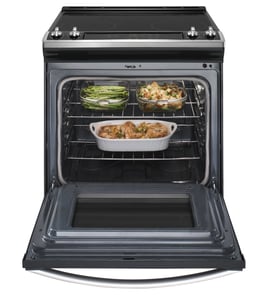



Can I air fry in my KitchenAid convection oven?
Yes. On your KitchenAid KERS505XSS00 electric range, you can use the convection oven to mimic air frying by circulating hot air around food to brown and crisp it. For best results, use a low-sided pan or a rack setup and cook in smaller batches; see the owner's manual for convection settings and rack positions.
- Use convection bake/roast (whichever your model provides for fan-assisted cooking)
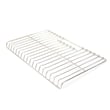
- Place food on a rack over a sheet pan or a perforated tray so air can move underneath
- Keep pieces spaced apart; overcrowding traps steam and reduces crisping
- Lightly oil food (or the pan) to improve browning
- Flip or rotate food halfway through for even crisping
Convection ovens usually cook faster than standard bake because the fan improves heat transfer.
| If a recipe is written for | Start with this in convection | What to watch for |
|---|---|---|
| Standard oven “bake” | Reduce set temp by about 25°F | Faster browning on edges |
| Air fryer directions | Use a similar temp, check early | Smaller batches cook best |
| Frozen crisping foods | Use convection, preheat fully | Turn once for even crisp |
- Using a deep roasting pan that blocks airflow
- Skipping preheat (convection still needs a fully heated cavity)
- Cooking too much at once
- Covering food with foil (traps moisture)
Air frying is really about dry, fast-moving hot air. Convection gives you that same airflow advantage, so you can get crisp results without a countertop appliance, as long as you set up the pan and spacing to let air circulate.
Last updated: February 2026
How many quarts is a KitchenAid KERS505XSS00?
KitchenAid model KERS505XSS00 is an electric range, so it does not have a quart capacity like a stand mixer bowl. For this range, the most useful “capacity” specs are its physical dimensions and oven features listed in the installation guide.
“Quarts” is a capacity measurement used for containers (like a mixer bowl or stockpot). For an electric range like KERS505XSS00, you typically look at:
- Overall width (to fit the cabinet opening)
- Depth (especially depth with handle)
- Cooktop height and overall height (leveling legs affect both)
- Electrical requirements (40 or 50 amp circuit is common)
These are the product dimensions shown in the installation documentation:
| Measurement | Dimension (approx.) | Why you care |
|---|---|---|
| Width | 29 15/16 in | Fits a standard 30-in range opening |
| Depth with handle | 28 1/2 in | Impacts aisle clearance and door swing |
| Cooktop height (min.) | 35 3/4 in | Helps align with countertops |
| Overall height (min.) | 47 1/8 in | Helps confirm backguard/control panel clearance |
If you are trying to confirm whether KERS505XSS00 will fit where an older range sat, dimensions and required clearances matter more than a “quart” rating. The installation instructions also call out important safety items like anti-tip bracket engagement and cabinet clearance above the cooktop.
- Measure the cabinet opening width and compare to the range width
- Confirm nothing behind the range sticks out too far (so the range can slide back)
- Verify the anti-tip bracket is installed and can engage the rear leveling leg
- Check the model/serial rating plate location (behind the control panel) for clearance requirements
Last updated: February 2026
What is the life expectancy of a KitchenAid oven?
A KitchenAid oven typically lasts 10 to 15 years with normal household use and basic maintenance. For your KitchenAid KERS505XSS00 electric range, lifespan is most affected by heating-element wear, door seal condition, and how often high-heat self-clean cycles are used (they add stress to components).
Most electric ranges fall into a predictable lifespan range when they are installed correctly and kept clean.
| Appliance type | Typical life expectancy | What usually ends it first |
|---|---|---|
| Electric range/oven (like KERS505XSS00) | 10 to 15 years | Bake element, control issues, door seal wear |
| Radiant cooktop elements | 8 to 12 years | Element burnout, switch wear |
These are the most common causes we see for early failures in electric ovens and radiant cooktops:
- Frequent self-clean cycles (extreme heat stresses wiring, sensors, and insulation)
- Poor electrical connection at the power cord or terminal block (overheating, arcing)
- Heavy spills and boilovers that bake onto the cooktop and around controls
- Slamming or leaning on the oven door (hinge and door seal wear)
- Blocked airflow or a failing cooling fan motor (overheats electronics)
A few simple habits make a measurable difference in heating performance and part life:
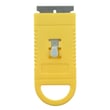
- Clean spills promptly; use a non-scratch method for glass cooktops (a cooktop scraper WA906B works well for cooked-on residue).
- Use self-clean sparingly; spot-clean when possible.
- Keep the oven door closing evenly; replace worn bumpers if the door starts to rattle or sit crooked.
- If the oven starts heating unevenly or takes much longer to preheat, test the bake circuit and consider replacing the range bake element W11662148.
- Follow the electrical and clearance requirements in the installation guide to prevent heat and wiring problems.
A range can “still turn on” but be near end-of-life if it cannot hold temperature, preheats slowly, or cycles erratically. Catching early symptoms often prevents secondary damage to wiring, switches, and insulation.
Last updated: February 2026
How do I know which KitchenAid model I have?
For your KitchenAid electric range, we recommend checking the model and serial number rating plate; on model KERS505XSS00, it’s located behind the control panel. That label is the most reliable way to match the correct parts, installation clearances, and electrical requirements.
On KERS505XSS00, the model/serial rating plate is behind the control panel and may rotate up for easier viewing from the front. Use the location and access steps shown in the installation guide.
- Turn the range off and let all surfaces cool completely.
- Look behind the control panel for the model/serial rating plate.
- Write down the full model number and serial number exactly as shown.
- Use that model number to match parts like a bake element, surface element, or control switch.
- Keep a photo of the label for future repairs and ordering.
KitchenAid ranges can look similar across model series, but parts and specs can differ by revision. The rating plate ties your unit to the correct:
- Electrical connection requirements (3-wire vs. 4-wire setups)
- Installation clearances and cabinet opening dimensions
- Replacement parts compatibility (controls, elements, wiring)
| What you see | What it usually means | What to do |
|---|---|---|
| A number on a knob or glass top | Part identifier, not the model | Use the rating plate behind the control panel |
| A similar-looking KitchenAid range | Same style, different internal parts | Match by model number, then select parts |
| Missing or unreadable label | Identification is harder | Use the owner's manual to confirm label location and compare features, then match parts by the closest verified model info |
If you are identifying the model to order a repair part, these are common examples for KERS505XSS00:
- Range bake element W11662148
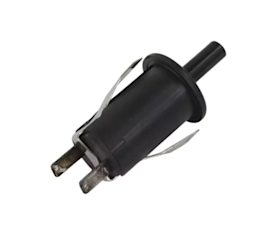
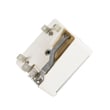
- Range surface element control switch WPW10296657
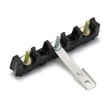
- Terminal block WPW10245259
Using the exact model number prevents ordering the wrong range surface element, oven rack, or wiring component; it also helps ensure safe electrical installation.
Last updated: February 2026