 Installation guide
 Owner’s manual
 Error Codes
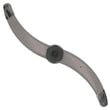






How to check GE dishwasher model number?
On the GE dishwasher model GDT530PSD0SS, the model number is printed on the rating label located on the tub wall just inside the door. Open the door fully and look along the inside edge of the tub for the label that lists both the model and serial numbers (helpful for parts and service).
Where to look (fast checklist)
- Open the dishwasher door and stand in front of the tub opening
- Look on the tub wall just inside the door
- Check the left and right inner edges of the tub opening
- Find the rating label with “Model #” and “Serial #”
- Write the numbers down exactly as shown (including letters)
What the label typically includes
| Label item | What it’s used for |
|---|---|
| Model number (example: GDT530PSD0SS) | Matching the correct parts diagrams and replacement parts |
| Serial number | Identifying production details for service and support |
Why it matters
We use the model number to ensure parts like a spray arm, door latch, control board, or drain hose match your exact GE dishwasher configuration. Even small model-number differences can change the correct part fit.
Helpful references
- Use the location diagram and wording in the GDT530PSD0SS owner’s manual to confirm the exact label position.
- If you’re installing or pulling the unit out to access the label, follow safety and removal guidance in the installation guide.
Last updated: February 2026
Is GE profile considered high end?
Yes. GE Profile is generally considered GE’s higher-end mainstream line, positioned above standard GE models with more premium features and finishes; it is not GE’s top luxury tier (that is typically where lines like Café and Monogram sit). For feature comparisons, check your GDT530PSD0SS owner's manual.
Where GE Profile typically fits in the GE lineup
GE organizes products into tiers; GE Profile usually lands in the “step-up” category for customers who want upgraded performance and convenience features without moving into luxury pricing.
- More advanced controls and cycle options than entry-level models
- More design-forward finishes and handle styles
- More tech-forward features (varies by appliance type)
- Better overall feature-to-price value than basic lines
- Luxury lines typically focus on higher-end materials and pro-style aesthetics
Quick tier comparison (typical)
| GE family | Typical positioning | What you usually get |
|---|---|---|
| GE (standard) | Value and core features | Basic cycles, straightforward controls |
| GE Profile | Mid-to-high end mainstream | More features, upgraded design, more options |
| Café / Monogram | Premium and luxury | High-end styling, premium materials, flagship features |
Why it matters when you are shopping parts or service
Knowing the tier helps set expectations for features and repair approach. Higher-feature models can use more electronic components and sensors, so accurate model matching matters when ordering parts and troubleshooting.
- Always match parts to the exact model number: GDT530PSD0SS
- Use the manual for cycle and feature details specific to your dishwasher
- For diagnostics, error codes can speed up troubleshooting: see GE electronic dishwasher error codes
Last updated: February 2026
What are the commonly replaced parts in a dishwasher?
In a GE dishwasher like model GDT530PSD0SS, the most commonly replaced parts are the wash and drain components (spray arms, filters, pump parts), door sealing and latching parts, and heating and control components. Many failures trace back to clogs, leaks, or normal wear from heat and detergent.
Most common dishwasher parts that get replaced
- Spray arms and related manifolds (poor cleaning, no spray, noisy operation)
- Filters (gritty dishes, reduced wash performance)
- Door latch and door seals (won’t start, leaks)
- Heater and drying components (not drying, cool water)
- Drain parts such as hoses and drain pump (standing water, slow drain)
- Racks, rollers, and basket parts (broken wheels, rusted tines, poor rack movement)
- Electronic controls and user interface parts (dead panel, erratic cycles)
Model-relevant examples for GDT530PSD0SS
These are examples of commonly replaced items we see for this model family:
| Symptom | Likely part area | Example part for this model |
|---|---|---|
| Dishes not getting clean | Spray and filtration | Dishwasher spray arm, lower WD22X33499, dishwasher coarse filter WD22X10093 |
| Won’t start or won’t latch | Door latch system | GE dishwasher door latch lock WD21X10490 |
| Not drying well | Heating circuit | Dishwasher heater element WD05X30818 |
| Leaking at the door | Door/tub sealing | Tub gasket WD08X23476 |
| Not draining | Drain path | Dishwasher drain hose WD24X10062, dishwasher drain pump kit WD49X23779 |
Quick checks that prevent repeat failures
- Clean the filters every month or two; the manual notes reduced wash performance or gritty dishes as a sign they need cleaning.
- Make sure nothing blocks spray arm rotation (utensils, tall pans, items protruding through racks).
- Secure small plastic items so they cannot fall onto the heater area.
- Use the cycle and options recommended in the GDT530PSD0SS owner’s manual for your load type.
Why it matters
Replacing the right part the first time saves money and prevents secondary damage; for example, a clogged filter can mimic a pump problem, and a misloaded rack can stop spray arms from turning and make it look like a wash motor issue.
Last updated: February 2026
What is the average lifespan of a GE dishwasher?
A GE dishwasher like model GDT530PSD0SS typically lasts 10 to 12 years with normal household use. Consistent cleaning, correct detergent use, and fixing small issues early can push lifespan toward the high end; heavy use and hard water usually shorten it.
What affects lifespan most
- Water quality: Hard water speeds up mineral buildup on spray arms, filters, and the heater.
- Cleaning routine: Regularly cleaning the tub and filter area reduces strain on the wash system.
- Loading habits: Overloading blocks spray coverage and makes the pump work harder.
- Drying heat use: Heated drying adds wear to heating components over time.
- Small leaks or door issues: A worn seal or latch can cause moisture problems that lead to bigger failures.
Quick maintenance checklist (best return for the effort)
- Scrape off hard soils and avoid heavy pre-rinsing; follow the loading guidance in the GDT530PSD0SS owner’s manual.
- Keep spray paths clear; if wash performance drops, inspect the dishwasher spray arm, lower WD22X33499 for clogs or cracks.
- Run a periodic cleaning cycle to reduce film and odor buildup.
- Use dishwasher detergent and rinse aid intended for automatic dishwashers.
- Address draining or filling problems quickly to prevent pump and control issues.
Typical lifespan expectations
| Usage pattern | Typical lifespan | What usually wears first |
|---|---|---|
| Light (few loads/week) | 12 to 15 years | Racks, seals, spray components |
| Average (daily) | 10 to 12 years | Drain parts, heater, latch |
| Heavy (multiple loads/day) | 8 to 10 years | Pumping, heating, controls |
Why it matters
Knowing the expected lifespan helps us decide whether a repair is a smart investment. For a dishwasher near the 10 to 12 year mark, replacing a wear item (like a spray arm or door latch) often restores performance; major electrical or leak damage can shift the decision toward replacement.
Last updated: February 2026
What is the most common problem with a GE dishwasher?
The most common issues we see on a GE dishwasher like model GDT530PSD0SS are poor cleaning from dirty filters, draining problems from clogs, and “won’t start” symptoms caused by the door not fully latching. Regular filter cleaning and confirming the door is latched usually fixes the most frequent complaints.
Most common problems (and what to check first)
- Dishes feel gritty or wash performance drops: clean the filters and check spray arm holes for debris.
- Won’t start or stops mid-cycle: press Start and fully close the door; a flashing Start light often points to an interrupted cycle or door opened.
- Not draining: check for a clogged filter area, blocked drain path, or a kinked drain hose.
- Leaks at the front: inspect the door seal area for food buildup and check the tub gasket for damage.
- Not drying well: confirm rinse aid is filled and use the correct detergent amount.
Quick “most likely cause” guide
| Symptom | Most likely cause | Best first step |
|---|---|---|
| Gritty dishes | Filters need cleaning | Follow the filter-cleaning steps in the GDT530PSD0SS owner’s manual |
| Won’t start | Door not latched or cycle interrupted | Press Start, then close the door firmly |
| Standing water | Drain restriction | Inspect drain path; consider the dishwasher not draining video |
| Poor spray | Clogged or damaged spray arm | Clean holes; replace the dishwasher spray arm, lower WD22X33499 if cracked or warped |
Why it matters
Most “GE dishwasher problems” are maintenance-related. When filters clog, water circulation drops and soil redeposits on dishes. When the door does not latch, the dishwasher may beep, flash, or pause to prevent leaks and unsafe operation.
When a part is the fix
If cleaning and basic checks do not restore normal operation, these parts commonly solve repeat symptoms on this model:
- Dishwasher spray arm, lower WD22X33499 for weak spray or poor cleaning
- GE dishwasher door latch lock WD21X10490 for start and latch-related problems
- Dishwasher drain hose WD24X10062 if the hose is split, kinked, or restricted
- Dishwasher heater element WD05X30818 for drying and heating-related issues
Last updated: February 2026





