Owner’s manual


Can a Maytag washer wash a king size comforter?
Yes. The Maytag MVWB700VQ0 washer is designed to handle large items like comforters; use the Bulky cycle so the washer can fully saturate the load, then wash and spin at speeds intended to help keep the load balanced (instead of tangling or bailing up). See the MVWB700VQ0 owner's manual.
Best cycle and loading tips for a king comforter
For comforters, sleeping bags, and blankets, we recommend the Bulky cycle. For best results, load the comforter correctly so the washplate can move it through the water.
- Select Bulky for comforters and other oversized items.
- Drop the comforter in loose heaps evenly around the basket wall.
- Do not load the item directly on the washplate/impeller.
- Use HE (High Efficiency) detergent only; non-HE detergent can cause excess suds and errors.
- If the comforter is waterproof/water-resistant, choose the lowest spin speed available for that cycle.
Quick decision guide (king comforter)
| Comforter type | Recommended setting on MVWB700VQ0 | What to watch for |
|---|---|---|
| Standard filled comforter (cotton/poly fill) | Bulky cycle | Keep load balanced; distribute evenly |
| Very heavy or oversized when wet | Bulky cycle | If it thumps or stops to rebalance, reduce load size |
| Waterproof/water-resistant (lined) | Bulky cycle with lowest spin | High spin can cause severe imbalance |
Why it matters
A king comforter can become extremely heavy when saturated. Using the Bulky cycle and loading it evenly helps the suspension and drive system maintain balance, improves cleaning, and reduces the chance of out-of-balance spinning.
Last updated: January 2026
What is the average lifespan of a Maytag washing machine?
Most Maytag washing machines, including the Maytag MVWB700VQ0 top-load washer, typically last 10 to 13 years with normal household use. Consistent maintenance, correct detergent use (HE), and fixing small problems early are the biggest factors that help a washer reach the high end of that range.
Typical lifespan ranges (what to expect)
Here’s a practical way to think about washer life in years:
| Usage pattern | Typical lifespan | What usually shortens life |
|---|---|---|
| Light (1 to 3 loads/week) | 12 to 15 | Long periods of non-use, corrosion |
| Average (4 to 7 loads/week) | 10 to 13 | Overloading, poor leveling |
| Heavy (8+ loads/week) | 7 to 10 | Frequent overloads, repeated unbalanced spins |
What helps a Maytag washer last longer
We see these habits make the biggest difference on Bravos-style Maytag washers:
- Use HE (High Efficiency) detergent only; non-HE detergent can cause oversudsing, longer cycles, and performance issues.
- Avoid overloading; heavy, tightly packed loads strain the drive system and suspension.
- Keep the washer level; repeated out-of-balance spinning accelerates wear.
- Address draining and filling issues quickly (slow drain, slow fill) to prevent secondary damage.
- Run periodic cleaning cycles to reduce residue and odor buildup.
For model-specific operating and care guidance, follow the MVWB700VQ0 owner’s manual.
Parts that commonly affect “end of life” symptoms
A washer often gets labeled “worn out” when one of these serviceable parts fails:
- Suspension: excessive shaking or banging during spin (see washer suspension W10820048).
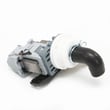
- Drain pump: won’t drain, long drain times, or standing water (see water pump W10536347).
- Lid lock: won’t start or stops mid-cycle (see washer lid lock WPW10619844).
- Hub/washplate drive: poor agitation or slipping (see hub W10820039).
Why it matters
Knowing the typical lifespan helps you decide whether to maintain, repair, or replace. If your MVWB700VQ0 is within the 10 to 13 year window, a targeted repair (like a lid lock or drain pump) often restores reliable performance without replacing the whole washer.
Last updated: January 2026
What is the most common problem with a Maytag washer?
The most common Maytag washer problems are “won’t drain” and “won’t spin.” On the Maytag MVWB700VQ0 top-load washer, these symptoms are often tied to a lid lock issue, a drain restriction, oversudsing, or a worn drive system component. See the MVWB700VQ0 owner's manual for model-specific troubleshooting steps.
Most common symptoms and what usually causes them
- Won’t drain (or drains slowly): kinked/clogged drain hose, blocked pump, or a failing drain pump
- Won’t spin: lid not locking, unbalanced load, suspension wear, or drive hub wear
- Long fill time: closed faucets, kinked inlet hoses, or clogged inlet valve screens
- Stops mid-cycle: normal cycle pauses, oversudsing, or lid opened
- Noise/vibration: suspension wear, load imbalance, or bearing/drive issues
Quick checks we recommend first (fast, no parts)
- Confirm the lid is fully closed; this washer will not operate with the lid open.
- Reduce detergent; oversudsing can cause poor draining and cycle interruptions (use HE detergent and avoid extra soap).
- Check hoses:
- Drain hose: not kinked, not clogged, installed correctly
- Fill hoses: not kinked, faucets fully open
- Run Drain & Spin after canceling a sudsy or stalled cycle.
Error codes that point to the most common problems
If the display shows a code, it often narrows the issue quickly.
| Code | What it usually means | What to check first |
|---|---|---|
| LF | Taking too long to fill | Faucets on, inlet hoses not kinked, inlet screens clear |
| LD | Taking too long to drain | Drain hose kink/clog, drain hose installation |
For more code help, use Maytag bravos vmw top load washer error codes.
Parts that commonly fix “won’t spin” or “won’t drain” on MVWB700VQ0
These are frequent repair paths when the basic checks do not resolve the symptom:
- Washer lid lock WPW10619844 (lid won’t lock, won’t start, won’t spin)
- Water pump W10536347 (slow drain, won’t drain, humming pump)
- Hub W10820039 (agitates poorly, slips during spin)
- Washer suspension W10820048 (banging, off-balance, poor spin)
Why it matters
Drain and spin problems can look like a “bad washer,” but they are often caused by a simple restriction, oversudsing, or a single wearable part (lid lock, pump, hub, suspension). Fixing the root cause prevents repeat stoppages and reduces vibration-related wear.
Last updated: January 2026