Owner’s manual
 Error Codes


How many cubic feet is my Kenmore refrigerator by model number?
Your Kenmore side-by-side refrigerator model 10657202602 has a specific cubic-foot capacity listed on its model and serial rating plate and in the specifications section of the owner's manual. The rating plate method is the fastest way to get the exact number for your unit.
Where to find the exact cubic feet (best options)
- Check the rating plate inside the fresh food section (commonly on a side wall, ceiling, or near the crisper area).
- Look in the specifications section of the owner's manual for capacity and key dimensions.
- If the label is hard to read, take a clear photo and zoom in; the capacity is often shown as “cu. ft.” or “total capacity.”
What the model number can and cannot tell you
Model numbers like 10657202602 identify the product line and configuration, but they do not reliably encode the exact cubic-foot capacity in a consistent, customer-readable way.
| Method | What you get | Accuracy |
|---|---|---|
| Rating plate | Exact total capacity for your unit | Highest |
| Owner’s manual specs | Published capacity for the model | High |
| Measuring interior space | Rough estimate only | Low |
Why it matters
Knowing the exact cubic feet helps us match the right refrigerator parts and accessories (like water system components, shelving, and door bins) and helps when comparing storage space, airflow needs, and installation clearances.
Last updated: February 2026
What causes a side-by-side refrigerator to stop cooling?
A Kenmore side-by-side refrigerator model 10657202602 usually stops cooling because power is interrupted, temperature controls are off or mis-set, airflow vents are blocked, or a cooling-system component (fan, defrost system, or compressor start parts) is failing. Use the checks in the 10657202602 owner's manual to narrow it down safely.
Quick checks we recommend first
- Confirm the refrigerator is plugged into a grounded 3-prong outlet and the outlet works (test with a lamp).
- Reset a tripped breaker or replace a blown fuse.
- Make sure the controls are turned on and not set too warm.
- If it was just installed or restarted, allow 24 hours to reach normal temperatures.
- Check that food packages are not blocking the air vents between the freezer and fresh-food sections.
Airflow and “no cooling” symptoms
This model relies on air moving from the freezer to the refrigerator section. If vents are blocked, airflow is obstructed and temperature problems can occur.
What to look for
- Freezer is cold but refrigerator is warm: vent blockage, evaporator fan issue, or frost buildup restricting airflow.
- Both sections are warm: power/control issue, compressor not running, or sealed-system problem.
Parts that commonly cause cooling failures
If the basic checks pass, these parts are common suspects on side-by-side refrigerators:
| Symptom | Likely area | Example part on this model |
|---|---|---|
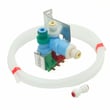
| No ice and no water, weak fill | Water supply/valve | Refrigerator water inlet valve W10408179 |
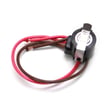
| Frost buildup, warm temps | Defrost system | Refrigerator defrost bi-metal thermostat WPW10225581 |
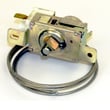
| Temps swing or won’t regulate | Temperature control | Refrigerator thermostat WP2198202 |
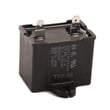
| Compressor hums, struggles to start | Start components | Run capacitor WPW10662129 |
Why it matters
When cooling stops, food safety becomes a concern quickly. Restoring airflow and correct control settings often fixes “sudden warm fridge” complaints; if not, identifying the failing component prevents repeat warm-ups and unnecessary part replacement.
Last updated: February 2026
Where is the model number on a Kenmore side by side refrigerator?
On Kenmore side-by-side refrigerator model 10657202602, the model number is printed on the appliance identification label inside the fresh food (refrigerator) compartment. Open the refrigerator door and look along the cabinet walls near the top or around the crisper area; the label typically lists both the model and serial numbers.
Where to look first (fast checklist)
- Check the inside walls of the refrigerator section (not the freezer) near the top front.
- Look around the crisper drawers and meat pan area.
- Inspect the side wall near the door opening where the door gasket seals.
- If you have a dispenser, also check the cabinet wall near the filter housing area.
- Wipe the area with a dry cloth; labels can be hard to read if dusty.
What the label usually includes
The ID label normally shows both identifiers you may need for parts and service.
| Item on label | What it’s used for | Example format |
|---|---|---|
| Model number | Matching parts diagrams and replacement parts | 10657202602 |
| Serial number | Identifying production run and version details | Letters plus numbers |
Why it matters
We use the model number to match the correct Kenmore parts list, diagrams, and compatible replacements for your exact side-by-side refrigerator configuration. Even small model variations can change items like the ice maker, water inlet valve, or door components.
If the label is missing or unreadable
- Check for a second label in the freezer compartment near the door opening.
- Look for a rating plate behind the toe grille (kick plate) area.
- Use the model number from your paperwork and confirm it against the appliance label when possible.
For additional model identification and care details, use the 10657202602 owner's manual.
Last updated: February 2026
How to clean the coils on a Kenmore side by side refrigerator?
To clean the coils on your Kenmore side-by-side refrigerator model 10657202602, unplug the refrigerator, pull it out far enough to reach the condenser area, then vacuum and brush away dust and pet hair so airflow stays strong and cooling stays efficient. See the cleaning and safety guidance in the 10657202602 owner's manual.
Steps to clean the condenser coils
- Unplug power (or switch off the breaker) before you start.
- Remove the base grille if your coils are behind it; many side-by-side models place coils at the bottom front.
- Vacuum loose dust first using a crevice tool.
- Brush the coils gently with a coil-cleaning brush to lift packed lint.
- Vacuum again to remove what the brush loosened.
- Clean the floor area under and behind the refrigerator.
- Reinstall the base grille, then restore power and slide the unit back carefully.
What to use (and what to avoid)
- Coil brush (soft bristles)
- Vacuum with crevice tool and brush attachment
- Flashlight for visibility
- Dry cloth for the surrounding area
- Avoid water spray on electrical components
- Avoid harsh or flammable cleaners; use nonflammable cleaning methods around the refrigerator
How often should we clean the coils?
Most homes do best with coil cleaning every 6 months. If you have pets, heavy dust, or the refrigerator sits near a busy kitchen traffic area, clean coils every 3 months.
| Home condition | Recommended coil cleaning interval |
|---|---|
| Low dust, no pets | Every 6 months |
| Pets or visible lint buildup | Every 3 months |
| Cooling seems weak or unit runs a lot | Clean now, then every 3 to 6 months |
Why it matters
Dirty condenser coils trap heat. That makes the compressor run longer, can raise refrigerator temperatures, and often leads to higher energy use. Keeping coils clean helps your Kenmore 10657202602 cool steadily and protects key components like the compressor and condenser.
When coil cleaning is not enough
If the refrigerator still runs constantly, is warm, or has poor airflow after cleaning, check these common related issues:
- Condenser fan not running (if your design uses one)
- Frost buildup from a defrost problem (a failed refrigerator defrost bi-metal thermostat WPW10225581 is one possible cause)
- Evaporator fan airflow problems (inspect the refrigerator evaporator fan blade WP2169142 for damage)
Last updated: February 2026
What are the most common problems with Kenmore refrigerators?
The most common problems we see on Kenmore refrigerators like model 10657202602 are cooling issues (often airflow or defrost related), water leaks, ice maker or dispenser trouble, and unusual noises. Many fixes start with cleaning, confirming proper air circulation, and checking a few key components listed in the 10657202602 owner's manual.
Common symptoms and what usually causes them
- Not cooling or warm temperatures: blocked vents, dirty condenser coils, evaporator fan problems, or defrost system trouble (ice buildup on the evaporator).
- Frost buildup in the freezer: defrost thermostat or control issues; doors not sealing well.
- Water leaking or puddles: clogged defrost drain, loose water line connections, or a leaking valve.
- Ice maker not making ice: water supply issue, failed ice maker module, or a valve that is not opening.
- Noisy operation: fan blade rubbing ice, worn fan motor, or normal operating sounds (compressor and refrigerant movement can be noticeable).
Quick checks we recommend first (before replacing parts)
- Confirm airflow: keep vents clear and avoid overpacking; the manual section on “Ensuring Proper Air Circulation” is a good baseline.
- Check door closing and sealing: look for gaps, torn gasket areas, or doors that do not self-close.
- Inspect for ice buildup: heavy frost on the back freezer panel points to a defrost problem.
- Verify water supply: make sure the refrigerator is connected to a cold water pipe and the shutoff valve is fully open.
- After filter changes: flush the water system; the manual notes this under “Prepare the Water System.”
Parts that commonly solve these problems on model 10657202602
| Problem area | What to check | Example part on this model |
|---|---|---|
| Defrost and frost buildup | Defrost thermostat, ice on evaporator | Refrigerator defrost bi-metal thermostat WPW10225581 |
| No water to dispenser or ice maker | Valve not opening, low flow | Refrigerator water inlet valve W10408179 |
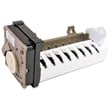
| Ice production issues | Ice maker not cycling or filling | Refrigerator ice maker WPW10190965 |
| Warm temps from control issues | Temperature control not regulating | Refrigerator thermostat WP2198202 |
Why it matters
Cooling, ice, and leak complaints usually trace back to airflow, defrost performance, or water supply control. Addressing the root cause prevents food spoilage, recurring frost, and water damage around the refrigerator.
Last updated: February 2026