Owner’s manual
 Error Codes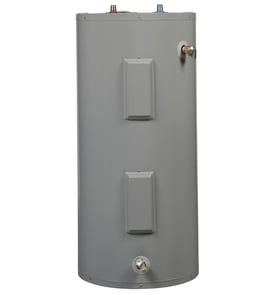



How much should a 40 gallon electric water heater cost?
A 40-gallon electric water heater typically costs about $400 to $2,000 for the unit, and installed cost is commonly $600 to $1,600+ depending on efficiency, warranty length, and local labor and permit requirements. For Whirlpool model ES40R123-45D, confirm electrical and installation needs in the ES40R123-45D owner's manual.
What changes the price the most
- Energy efficiency features (higher efficiency usually costs more up front)
- Warranty length (longer warranty often means higher purchase price)
- Electrical and code upgrades (panel capacity, wiring, disconnect, bonding)
- Plumbing updates (shutoff valves, piping changes, expansion tank)
- Permit and inspection fees (vary by city and county)
Typical cost breakdown (what you are paying for)
| Cost item | Typical range | Notes |
|---|---|---|
| Water heater unit | $400 to $2,000 | Brand, features, warranty drive the spread |
| Installation labor | $200 to $600 | Higher if access is tight or upgrades are needed |
| Permits and misc. materials | $0 to $300+ | Depends on local requirements |
Installation requirements to plan for (ES40R123-45D)
Your Whirlpool electric water heater should be installed to local code and the National Electric Code (NFPA 70). We also recommend planning for closed-system protection when required.
- Verify electrical requirements before purchase and install
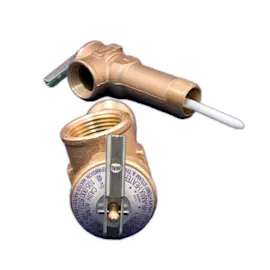
- Confirm the temperature and pressure (T&P) relief valve is properly installed and piped
- Add a thermal expansion tank if you have a closed plumbing system
- Budget for small parts that often get replaced during install (fittings, shutoff valve, connectors)
Why it matters
A low unit price can turn into a higher total cost if your home needs electrical upgrades, code-required safety components (like a properly installed T&P relief valve), or closed-system expansion control. Planning these items up front helps avoid delays and repeat service calls.
Last updated: January 2026
What are the most common issues with ES40R123-45D?
The most common issues we see with the Whirlpool ES40R123-45D electric water heater are no hot water, not enough hot water, water that is too hot, fluctuating temperatures, and small leaks at fittings or the drain. These problems usually trace back to the heating elements, thermostat/sensors, wiring, or sediment buildup.
Common symptoms and likely causes
- No hot water: tripped breaker, failed heating element, failed thermostat/control
- Not enough hot water: one element not heating, heavy sediment, dip tube problem
- Water too hot: thermostat or high-temperature sensor issue
- Temperature swings: thermostat calibration, sensor problem, element cycling issues
- Water leaking from the bottom area: drain valve seepage, loose fittings, condensation
Parts that commonly fix these problems
If troubleshooting points to a failed component, these model-matched parts are common replacements:
| Symptom | Common part to check | Example part for ES40R123-45D |
|---|---|---|
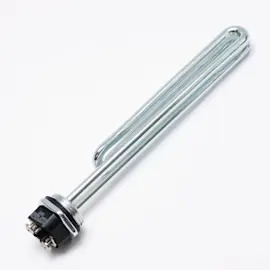
| No hot water or slow recovery | Heating element | Element 100108290 |
| Water too hot or erratic temps | Thermostat/control | Water heater electronic thermostat 100309396 |
| Overheat shutdown or error condition | High-temperature sensor | Water heater high-temperature sensor 100263932 |
| Not enough hot water early in a shower | Dip tube | Water heater dip tube 100089234 |
| Drips during draining or constant seep | Drain valve | Drain valve 100109106 |
Quick checks we recommend before replacing parts
- Confirm the circuit breaker is on and not tripping repeatedly.
- If the unit has diagnostics, check the display or indicator behavior; use Whirlpool electric water heater error codes.
- Listen for heating cycles; long recovery often points to sediment or a weak element.
- Inspect for moisture at the drain valve and plumbing connections.
- Review access and safety steps (power off, verify no voltage) in the owner's manual.
Why it matters
Catching element, thermostat, or sensor problems early restores hot water faster and helps prevent overheating, nuisance shutdowns, and unnecessary energy use.
Last updated: March 2026
What is the life expectancy of a 40 gallon electric water heater?
A 40-gallon electric water heater typically lasts 8 to 15 years. For a Whirlpool ES40R123-45D, regular maintenance (especially inspecting the anode rod and managing sediment) is what most often determines whether you land closer to 8 years or closer to 15.
What most affects lifespan (and what we recommend)
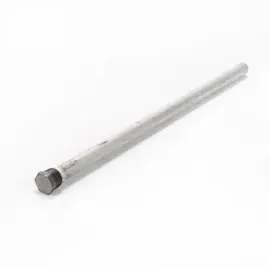
- Anode rod condition: The anode rod protects the tank from corrosion; once it is depleted, the tank starts corroding and can eventually leak.
- Water quality: Hard water and aggressive water conditions speed up wear; softened water can also be more corrosive to the tank.
- Water temperature setting: Hotter settings increase stress on components and can accelerate anode depletion.
- Sediment buildup: Sediment can reduce heating efficiency and contribute to element wear.
- Usage level: High daily hot-water demand increases cycling and overall wear.
Maintenance timeline for longer service life
The ES40R123-45D use and care guidance emphasizes anode rod inspection intervals; we follow that schedule as the baseline.
| Maintenance item | When to do it | What it helps prevent |
|---|---|---|
| Inspect anode rod | By year 3, then yearly after | Tank corrosion and early tank failure |
| Replace anode rod (as needed) | When depleted | Leaks caused by internal tank corrosion |
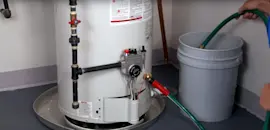
| Flush/drain sediment | Periodically (common annual routine) | Element overheating, slow recovery |
| Check for leaks at fittings | After any service | Water damage and hidden corrosion |
If you need the exact inspection and service steps for your unit, use the ES40R123-45D owner's manual.
Signs your water heater is nearing end of life
- Rust-colored water from the hot side
- Persistent popping or rumbling (often sediment-related)
- Water takes longer to heat (possible element or control issues)
- Moisture or dripping around the tank base
- Frequent temperature swings
Why it matters
Most electric water heaters fail because the tank corrodes from the inside out. Staying ahead of anode rod wear is the most direct way to extend the life of a 40-gallon electric water heater and avoid an unexpected leak.
Last updated: January 2026