

Can you still get parts for Briggs & Stratton engines?
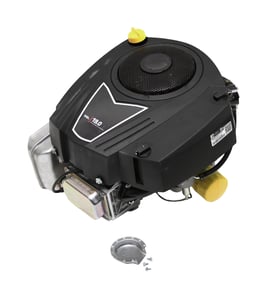
Yes. We still support parts lookup and replacement for Briggs & Stratton engines, including the Briggs model 137202-1117-E1. The key is matching the exact engine model and then choosing the correct component (ignition, carburetion, starter, seals, filters) based on the symptom and your parts diagram.
Best ways to get the right part
- Use the full engine model number 137202-1117-E1 when searching; small suffix differences can change fit.
- Start with common maintenance items first (air filter, gaskets) before major assemblies.
- If the engine will not start, focus on spark and fuel delivery parts.
- If it starts but runs rough, look at carburetor and air intake issues.
- If it pulls hard or will not recoil, inspect the starter and flywheel area.
Common parts customers replace on this engine
Here are examples of parts we carry for this model that match frequent repairs:
| Symptom | Likely system | Example part for 137202-1117-E1 |
|---|---|---|
| No spark | Ignition | Briggs & stratton lawn & garden equipment engine ignition coil 397358 |
| Starts then dies, surges, or will not stay running | Fuel | Briggs & statton lawn & garden equipment engine carburetor 498298 |
| Pull cord will not retract or is broken | Starting | Briggs & statton starter 497830 |
| Poor power, black smoke, hard starting | Air intake | Briggs & statton element 491435S |
Quick troubleshooting before you order
- Confirm fresh fuel and the correct oil level.
- Check the air filter for heavy dirt or oil saturation.
- Verify spark with an inline spark tester (or swap in a known-good ignition coil if testing points there).
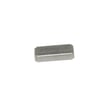
- Inspect the flywheel key if the engine backfired or suddenly stopped (a sheared key can throw timing).
- Look for damaged wires or a faulty stop switch if spark is intermittent.
Why it matters
Small engines often have multiple versions that look similar; ordering by the exact model number helps ensure the right Briggs parts fit and prevents repeat failures (especially with ignition and carburetor components).
Last updated: February 2026
How to decode briggs and stratton engine model number?
On a Briggs engine like model 137202-1117-E1, the engine ID is typically split into three parts: model, type, and code. The model identifies the basic engine family, the type narrows down the exact configuration, and the code tells the production date details.
What each section means
- Model: The first group of numbers; identifies the engine series and basic specs.
- Type: The second group; identifies the exact build variation (governor, crankshaft, starter setup, etc.).
- Code: The third group; identifies when the engine was built (used to match the right parts and updates).
How to use the code when ordering parts
The code is the most important piece when parts changed mid-production. When you are matching parts for your Briggs 137202-1117-E1 engine, use all three sections together.
- Write the full ID exactly as shown on the engine label
- Use the model + type to find the correct illustrated parts breakdown
- Use the code to confirm the correct revision of parts (especially ignition and carburetion)
- If the label is dirty, clean it gently so all digits are readable
- If a digit is missing, match by physical features (air filter style, ignition layout, carburetor linkage)
Common examples (quick reference)
| Engine ID section | Example format | What it tells you |
|---|---|---|
| Model | 137202 | Engine family/series |
| Type | 1117 | Specific configuration |
| Code | E1 (or longer code on some engines) | Production date details |
Why it matters
Briggs engines often have multiple versions that look similar. Decoding the model, type, and code helps us point you to parts that fit correctly the first time, such as an ignition component or air intake part.
Parts that are often matched by engine ID
If you are troubleshooting a no-start or weak spark condition, these are commonly checked first:
- Briggs & stratton lawn & garden equipment engine ignition coil 397358
- Briggs & statton key 222698S
- Briggs & statton element 491435S
Last updated: February 2026
How to tell what HP a Briggs and Stratton engine is?
To tell the horsepower (HP) of your Briggs 137202-1117-E1 lawn and garden engine, check the engine shroud, valve cover area, or emissions label for an HP marking or a power rating. If HP is not shown, use the model, type, and code numbers to look up the engine’s power rating.
Where to find the HP or power rating on the engine
Look for a decal or stamped information in these common spots:
- Top of the engine shroud (blower housing)
- Near the recoil starter housing
- On or near the valve cover
- On an emissions label (often lists kW and RPM instead of HP)
- In the equipment paperwork (mower or tiller manual), if the engine label is missing
If the label does not show HP (common on many engines)
Many Briggs engines do not print HP on the engine anymore; they may list torque, cc, or kW at a rated RPM.
Use this quick conversion when kW is listed:
| If the label shows | What it means | Quick conversion |
|---|---|---|
| kW @ RPM | Metric power rating | HP = kW × 1.341 |
| cc | Engine displacement | Not a direct HP value |
| Torque (ft-lb) | Twisting force | Not a direct HP value |
How to use your model numbers to identify power
For Briggs engines, the most reliable identifier is the Model-Type-Code set. Your model is 137202-1117-E1; if you also have the type and code, you can match the exact build and rating.
- Write down the full model and type exactly as shown
- Record the code (date of manufacture) if present
- Use those numbers when searching engine specs or ordering parts
Why it matters
HP ratings can vary across very similar-looking engines. Using the exact model information helps you match the correct carburetor, ignition parts, and tune-up items so the engine starts easily and runs at the correct governed speed.
If you’re troubleshooting a no-start while you’re identifying the engine, a sheared flywheel key is a common cause after an impact; the Briggs & statton key 222698S is the flywheel key used to keep ignition timing aligned.
Last updated: February 2026
What are common Briggs & Stratton engine problems?
Common problems on the Briggs 137202-1117-E1 lawn and garden engine are usually fuel delivery issues (stale fuel, varnish, clogged carburetor), ignition faults (weak spark), and airflow restrictions (dirty air filter). Starting trouble is also common when the flywheel key shears or the kill switch circuit is grounding the ignition.
Most common symptoms and likely causes
- Won’t start: stale fuel, clogged carburetor, fouled spark plug, failed ignition coil, grounded kill wire
- Starts then dies: restricted fuel flow, carburetor varnish, tank venting issue, choke not opening
- Runs rough or surges: dirty carburetor passages, air leak at gaskets, partially plugged air filter
- Hard to pull start: hydro-lock from fuel in cylinder, debris in recoil, compression issue
- No spark: bad coil, incorrect coil air gap, damaged flywheel key, bad stop switch
Quick checks we recommend (fast, low-cost)
- Drain old fuel and refill with fresh fuel (use the correct mix if your equipment requires it).
- Inspect and replace the air filter if it is dirty or oil-soaked; use the Briggs & statton element 491435S.
- Verify spark: remove the plug, ground it to the engine, and pull the starter; no spark often points to the Briggs & stratton lawn & garden equipment engine ignition coil 397358.
- Disconnect the kill wire from the coil and retest spark; if spark returns, suspect the Briggs & statton switch 692310 or wiring.
- If the engine backfires or kicks back while starting, check for a sheared flywheel key; the correct replacement is the Briggs & statton key 222698S.
Parts that commonly solve these problems
| Symptom | Part to consider | What it fixes |
|---|---|---|
| No spark | Ignition coil | Restores spark output |
| Starts, runs poorly | Air filter element | Restores airflow and mixture balance |
| Kickback, timing off | Flywheel key | Restores correct flywheel timing |
| Engine won’t shut off | Stop switch | Restores kill circuit control |
Why it matters
Most “engine problems” trace back to basic maintenance items (fuel, air, spark). Fixing those first prevents repeat carburetor clogging, reduces hard-starting, and helps avoid unnecessary replacement of higher-cost parts like a carburetor.
Last updated: February 2026
What is the spark plug gap on a Briggs & Stratton model 137202-1117-E1?
For the Briggs 137202-1117-E1 lawn and garden engine, the spark plug gap is typically 0.030 inch (0.76 mm). Setting the gap correctly helps the ignition system create a strong spark for easier starting, smoother running, and fewer misfires.
How to check and set the spark plug gap
- Turn the engine off and let it cool completely.
- Remove the spark plug wire boot so the engine cannot accidentally start.
- Remove the spark plug and inspect the tip for heavy carbon, oil fouling, or damage.
- Use a wire-style gap gauge or feeler gauge to measure the gap.
- Adjust by gently bending only the ground electrode (never pry on the center electrode).
- Recheck the gap after adjustment, then reinstall and snug the plug.
Quick spec table
| Item | Typical spec for this engine family | Notes |
|---|---|---|
| Spark plug gap | 0.030 in | Most common setting for many Briggs L-head and OHV singles |
| Ignition coil air gap | 0.010 to 0.014 in | Set with a non-magnetic feeler gauge or shim |
If it still will not start (what to check next)
A correct plug gap will not help if spark is weak or intermittent. These checks isolate the most common causes:
- Verify the stop switch and kill wire are not grounding the ignition (a shorted switch can kill spark); see Briggs & statton switch 692310.
- Inspect the flywheel key for shearing after a sudden stop (it can throw off ignition timing); see Briggs & statton key 222698S.
- Test for spark with an inline spark tester.
- Check the ignition coil condition and mounting; replace if no spark with proper coil gap; see Briggs & stratton lawn & garden equipment engine ignition coil 397358.
Why it matters
Spark plug gap directly affects spark intensity. Too wide a gap can cause hard starting and misfires; too tight a gap can cause weak combustion and poor power, especially under load.
Last updated: February 2026
What kind of oil does a Briggs & Stratton 137202-1117-E1 take?
For the Briggs 137202-1117-E1 lawn and garden engine, we use SAE 30 detergent engine oil for typical warm-weather mowing. If you operate in cooler temperatures, a multi-viscosity oil such as 10W-30 is commonly used to improve cold starting and lubrication.
Recommended oil type (most common)
- SAE 30 detergent oil: best for most mowing conditions above about 40°F
- 10W-30: good all-around choice when temperatures swing cooler
- 5W-30 synthetic: commonly used for easier cold starts and broad temperature range
How much oil does it take?
Most small vertical-shaft Briggs lawn and garden engines in this family hold around 20 oz (about 0.6 qt), but the correct fill level is always the dipstick full mark.
Quick fill checklist
- Park on a level surface and let the engine cool
- Clean around the oil fill/dipstick before opening
- Add oil slowly, then recheck the dipstick
- Do not overfill (it can cause smoking and leaks)
- Change oil more often in dusty mowing conditions
Oil selection by temperature
| Outdoor temperature | Common oil choice | Why it helps |
|---|---|---|
| Above ~40°F | SAE 30 | Stable viscosity for hot running |
| ~0°F to 100°F | 10W-30 | Better cold flow than SAE 30 |
| Very cold starts | 5W-30 synthetic | Easiest cranking and fast lubrication |
Why it matters
Using the right viscosity helps your Briggs 137202-1117-E1 maintain oil pressure and reduce wear on the crankshaft, piston rings, and connecting rod. Overfilling or using oil that is too thick for the temperature can also make starting harder.
Related parts that often go with maintenance
If you are doing seasonal service, replacing the air filter at the same time helps protect the engine from dirt ingestion.
Last updated: February 2026