Owner’s manual
 Error Codes


How to force a Kenmore Elite washer to drain?
To force your Kenmore Elite washer model 11045088404 to drain, we use the built-in manual drain: press PAUSE/CANCEL once, select DRAIN & SPIN, then press and hold START for about 1 second. The door unlocks after the spin finishes. See the steps in the 11045088404 owner's manual.
- Press PAUSE/CANCEL once.
- Turn the cycle selector to DRAIN & SPIN.
- Press and hold START (about 1 second) to begin draining.
- Wait for the cycle to complete; the door unlocks when it is safe.
- Remove items only after the door unlocks.
A no-drain problem is usually a restriction in the drain path or a failing drain pump.
- Check the drain hose for kinks, crushing, or a clogged standpipe.
- Make sure the drain hose is not shoved too far down the standpipe (it needs an air gap).
- If the washer hums but does not move water, the drain pump can be jammed or worn.
- If draining is slow, inspect the tub-to-pump hose for a blockage.
- If the door stays locked with a full tub, let the washer complete its automatic drain routine after canceling.
| Symptom | Most likely area | Example model-matched part |
|---|---|---|
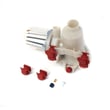
| Hums, no water movement | Drain pump | Pump 280187 |
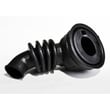
| Slow drain, intermittent drain | Hose restriction | Washer tub-to-pump hose WPW10467168 |
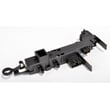
| Door will not unlock after drain attempt | Door latch system | Washer door lock assembly WP8182634 |
Forcing a drain the correct way protects the door lock system and helps prevent backflow or leaks from an improperly routed drain hose. Proper drain hose routing and an air gap also reduce the chance of dirty water siphoning back into the tub.
Last updated: February 2026
Is Kenmore Elite high end?
Yes. Kenmore Elite is Kenmore’s premium tier, and the Kenmore Elite washer model 11045088404 is built around higher-performance wash options and upgraded design features compared to many standard Kenmore washers. For the exact cycle set and operating details, use the 11045088404 owner’s manual.
This model’s “Elite” positioning shows up in cycle capability and performance features called out in the manual.
- Specialty cycles designed for specific loads (Sanitary, Bulky/Bedding, Heavy Duty, Whitest Whites)
- Extra high speed spin options to remove more water and shorten drying time
- A heater that warms water to the optimum temperature when a cycle calls for it
- Installation flexibility for common laundry locations (closet, recessed area, under a counter when requirements are met)
- Care and maintenance guidance aimed at long-term reliability (cleaning, hose care, storage)
| Feature area | Standard Kenmore (typical) | Kenmore Elite 11045088404 |
|---|---|---|
| Cycle selection | Everyday cycles | Adds specialty cycles (Sanitary, Bulky/Bedding, Heavy Duty) |
| Water temp management | Uses household hot water | Can heat water during certain cycles |
| Spin performance | Moderate to high | Extra high speed spin available |
| Setup options | Standard laundry room | More detailed location requirements and options |
A higher-end washer is about results and efficiency: better cycle targeting, stronger moisture removal in spin, and more control over wash conditions. That reduces re-washes and can cut dryer time.
- Match the cycle to the load (Bulky/Bedding for comforters; Heavy Duty for sturdy fabrics).
- Use the options the cycle is designed for (for example, Sanitary when you need maximum cleaning performance).
- Keep the washer level and installed to the location requirements to reduce vibration and “walking.”
- If you’re troubleshooting balance or spin issues, start with load size and distribution before replacing parts.
Last updated: February 2026
What does F21 mean on a Kenmore Elite washer?
On Kenmore Elite washer model 11045088404, F21 indicates a long drain condition: the washer is taking too long to pump water out. This is usually caused by a drain restriction, excess suds from non-HE detergent, or a failing drain pump.
- Press PAUSE/CANCEL twice to stop the cycle.
- Unplug the washer (or disconnect power) for safety.
- Check the drain hose for kinks, crushing, or freezing.
- Make sure the drain hose is not installed higher than 96 in. (2.4 m) above the floor.
- Check for a clog in the drain hose or household standpipe.
- If you also see SUD, switch to HE detergent only and reduce the amount.
This washer is designed for HE (High Efficiency) detergent. Too many suds can slow draining and trigger a suds routine, which can extend cycle time and contribute to drain errors. For detergent and error-code steps specific to this washer, use the 11045088404 owner’s manual.
If the hose and standpipe are clear and the washer still drains slowly, these parts are the most common suspects:
- Drain pump: pump 280187
- Clogged or restricted internal hose: washer tub-to-pump hose WPW10467168
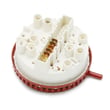
- Water level sensing issues that can affect drain behavior: washer water-level pressure switch WPW10514214
| What you notice | Most likely cause | What to do |
|---|---|---|
| Hums but drains slowly | Pump impeller jam or weak pump | Inspect pump, replace if needed |
| Drains sometimes, not always | Partial clog in hose/standpipe | Clear restriction, verify hose height |
| F21 plus lots of foam | Too much detergent or non-HE detergent | Use HE detergent, reduce dose |
A long drain leaves water in the tub, can prevent high-speed spin, and can lead to repeated cycle interruptions. Fixing the restriction or pump issue restores normal drain and spin performance.
Last updated: February 2026
What is the average lifespan of a Kenmore washer?
Most Kenmore washers last 10 to 15 years with normal household use. For the Kenmore Elite 11045088404, regular cleaning, correct loading, and prompt repair of wear items (like the drain pump or door boot) help you reach the high end of that range; see the 11045088404 owner's manual for care steps.
A washer’s service life depends more on use and maintenance than brand name alone.
- Loads per week: more cycles equals faster wear
- Overloading: strains the drive system and suspension
- Water quality: hard water can increase buildup and valve issues
- Detergent habits: too much HE detergent can cause residue and odors
- Drain care: coins, lint, and debris shorten pump life
These are common wear areas on front-load designs like the 11045088404:
- Drain problems: slow drain, standing water, grinding noise (often the pump 280187)
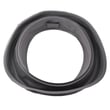
- Door sealing leaks/odors: water at the front, mildew smell (often the washer door boot WP8182119)
- No-start or door won’t lock: clicking, “door” symptoms (often the washer door lock assembly WP8182634)
- Vibration or banging: especially on spin (can involve suspension or loading)
Use the same care approach recommended in the manual’s washer care section.
| Maintenance task | How often | Why it helps |
|---|---|---|
| Clean the washer and gasket area | Monthly | Reduces odor, residue, and leaks |
| Check water inlet hoses | Yearly | Prevents leaks and flow issues |
| Keep loads balanced and sized correctly | Every load | Protects bearings, belt, and suspension |
| Leave door slightly open between loads | Ongoing | Helps prevent mildew |
Once a washer reaches the 10-year mark, small issues (leaks, draining, door lock faults) can turn into bigger damage if ignored. Replacing a failing part early often costs less than repairing secondary damage to the tub area or controls.
Last updated: February 2026
What model is my Kenmore Elite washer?
Your Kenmore Elite washer’s model number is printed on the appliance’s identification label. On model 11045088404, we typically see it on the cabinet opening (door jamb area), behind the door, or on the back or side of the main cabinet near the bottom. Use the exact model number to match the right parts and manual.
Check these common spots on Kenmore front-load washers:
- Behind the washer door on the cabinet frame (door jamb)
- Around the door opening, near the latch area
- On the back of the control panel area
- On the side panel near the bottom edge
- Occasionally behind the lower access panel (kick plate)
If the label is worn, wipe it gently with a damp cloth and read it under a bright light.
Kenmore model numbers are usually a short string of numbers (often with dots in manuals). For this washer family, the manual lists models like 110.45085 (with a color code). Your full model on the parts page is 11045088404.
| Where you see it | Example format | What to do with it |
|---|---|---|
| On the washer label | 11045088404 | Use this for parts lookup and service |
| In the manual | 110.45085 (color code) | Use as a family reference; match to your full label |
We use the model number to ensure parts like the door boot, drain pump, and control boards match your exact Kenmore Elite configuration. Even small differences can change fit, wiring, or mounting.
- Compare every digit of the model number before ordering parts
- Write the model number down and take a photo of the label
- Use the 11045088404 owner's manual to confirm label location and model family details
Last updated: February 2026
What would cause a Kenmore washing machine not to agitate?
If your Kenmore Elite washer model 11045088404 won’t agitate, the most common causes are a drive system problem (belt or pulley), a door not locking, or a control issue that prevents the motor from running the wash action. Start with the simplest checks, then move to parts testing.
- Confirm the cycle selected actually includes agitation/tumbling (some cycles have long soaks).
- Make sure the door closes firmly and the washer starts normally (a lock problem can stop tumbling).
- Reduce the load size and redistribute items; severe imbalance can interrupt motion.
- Unplug the washer for 2 minutes, then restore power and try a normal cycle.
- If the tub fills but never moves, focus on the belt, pulley, and motor control.
These are the parts we see most often when a Kenmore front-load style washer won’t agitate:
| Symptom | Most likely cause | What to check next |
|---|---|---|
| Fills and drains, but no tumbling | Slipping/broken drive belt | Inspect washer drive belt WPW10388414 for cracks, glazing, or slack |
| Door closes but cycle won’t run correctly | Door lock not engaging | Check washer door lock assembly WP8182634 and the door strike alignment |
| Starts to move then stops, or acts erratic | Control not driving the motor | Look for loose wiring; consider the electronic control if other checks pass |
| Fills slowly or seems to “pause” during fill | Fill sensing issue | Check inlet screens; flow meter and pressure switch can contribute |
- Unplug power before removing panels or touching wiring.
- Remove the lower access panel and look for a thrown belt, belt dust, or a loose pulley.
- Check the door strike for damage and confirm it lines up with the lock.
- If the washer hums but the drum does not move, the belt and drive pulley are the first mechanical suspects.
- If the washer never transitions into wash motion after filling, a sensing or control problem is more likely.
A no-agitate condition is usually either a mechanical drive issue (belt/pulley) or a safety/control lockout (door lock, sensing). Finding which category you’re in prevents replacing the wrong parts and helps restore proper wash performance.
For model-specific troubleshooting flow and safety guidance, use the 11045088404 owner’s manual.
Last updated: February 2026
When was Kenmore Elite made?
Kenmore Elite is a premium product line under the Kenmore brand, and it has been produced across multiple years (not a single “made in” year). For your Kenmore Elite washer model 11045088404, the most accurate way to pin down its era is to use the model’s documentation and identification label details in the 11045088404 owner's manual.
We use the model and serial information together because Kenmore Elite models were sold for many years, and the serial number typically carries the date code.
- Check the model and serial tag (commonly on the door opening, behind the door, or on the cabinet edge)
- Write down the full serial number exactly as shown
- Compare the serial format/date code guidance in the 11045088404 owner's manual
- If you have it, match the purchase date to the warranty section for a practical timeline
- Keep the model and serial handy when ordering parts like a drain pump or door boot
“Kenmore Elite” identifies a higher-feature Kenmore line (often front-load designs, higher spin speeds, and upgraded components). It does not indicate a single launch year for all Elite washers.
| Item | What it tells you | Where to find it |
|---|---|---|
| Model number (11045088404) | Exact design family for parts and manuals | Rating label, paperwork |
| Serial number | Best clue to build date | Rating label |
| Purchase date | When your unit went into service | Receipt, delivery record |
Knowing the approximate production timeframe helps us match the correct version of common replacement parts (for example, a drain pump 280187 or a door seal like the washer door boot) and avoid ordering a look-alike part that fits a different revision.
Last updated: February 2026
Who is Kenmore Elite made by?
Kenmore Elite is a Sears house brand, and the appliances are built for Sears by multiple manufacturers rather than one single company. For Kenmore Elite washer model 11045088404, the exact manufacturer varies by product line and production run; we use the model number to match the correct parts and service information in the 11045088404 owner's manual.
Kenmore has sourced appliances from several major manufacturers over the years. Depending on the specific Kenmore Elite product (washer, dryer, refrigerator, range) and when it was made, the manufacturer can include:
- Whirlpool
- LG
- Samsung
- Electrolux
- Panasonic
- Winia
The most reliable way is to use the model and serial information on the appliance ID tag, then cross-check it with documentation and parts diagrams.
- Locate the model and serial tag (often on the door opening, behind the door, or on the cabinet frame)
- Confirm the full model number is 11045088404
- Use the manual and parts list to match components (pump, door boot, control boards)
- If you are ordering parts, match by model number first, not by appearance
Even when two Kenmore Elite washers look similar, internal components can differ. For example, this model has common service parts such as:
| Part type | Example part for model 11045088404 | What it affects |
|---|---|---|
| Drain system | Pump 280187 | Draining, spin performance |
| Door sealing | Washer door boot WP8182119 | Leaks, odors, door closure |
| Door safety/lock | Washer door lock assembly WP8182634 | Won’t start, won’t unlock |
Knowing who manufactured a Kenmore Elite appliance is useful, but using the exact model number is what ensures correct troubleshooting steps and correct replacement parts for your washer.
Last updated: February 2026
Why is my Kenmore Elite washer leaking water from the bottom?
Water leaking from the bottom of your Kenmore Elite washer model 11045088404 is usually caused by a drain or fill leak (pump, tub-to-pump hose, clamps) or by water running down from the door area. We start by checking for loose connections, cracks, and clogs, then replace the failed seal or part.
- Unplug the washer; then pull it forward and look for the exact drip point.
- Run a Rinse/Drain & Spin with the front lower access area visible (use a flashlight).
- Check household plumbing for leaks near the washer (supply hoses, standpipe, drain).
- Confirm the drain hose setup is correct; the drain outlet should be 30 to 96 inches above the floor per the 11045088404 owner's manual.
- If you see suds or overflow, switch to HE detergent and reduce the amount.
| Where you see water | Most likely cause | What to do |
|---|---|---|
| Center-front or under pump area | Drain pump or pump seal leaking | Inspect and replace the pump 280187 if it weeps from the housing |
| Left or right underside | Hose split or loose clamp | Inspect the washer tub-to-pump hose WPW10467168 and tighten/replace the clamp WP285655 |
| Front edge but only during wash/tumble | Door boot drip running down the cabinet | Inspect the door boot for tears, pinholes, or debris on the sealing lip |
| Near dispenser area | Dispenser leak running down inside cabinet | Verify additives are in the correct compartments and not overfilled |
A bottom leak can damage flooring and can also lead to drain problems or spin issues if water reaches wiring or the motor control area. Fixing a small seep early often prevents a larger repair.
- Water is pooling fast (more than a cup in a few minutes)
- You smell burning or see water near electrical components
- The washer will not drain or stops mid-cycle
Last updated: February 2026