Installation guide
 Owner’s manual
 Error Codes



Do side-by-side refrigerators have a freezer?
Yes. The Frigidaire FRS6LF7JM3 is a side-by-side refrigerator with a freezer compartment on one side and a fresh food (refrigerator) compartment on the other, each with its own temperature control. For control locations and recommended settings, use the FRS6LF7JM3 owner's manual.
How a side-by-side freezer is set up
In a side-by-side design, the freezer is a full-height compartment, so you get easy access to frozen foods without bending as much as a bottom-freezer style.
Common features you will typically see:
- Full-height freezer section with shelves and door bins
- Separate freezer and fresh food temperature controls
- Ice maker and dispenser components located in or fed from the freezer side
- Door gaskets on both compartments to keep temperatures stable
What to expect for freezer space and organization
Side-by-side models usually trade wide shelves for vertical storage. That means pizza boxes and wide platters can be tighter, but bagged items and stacked containers organize well.
| Storage need | Side-by-side freezer performance | Tip |
|---|---|---|
| Tall, stacked frozen items | Very good | Use door bins for quick-grab items |
| Wide items (pizza boxes, trays) | Fair | Rotate shelves or use the lower basket area |
| Frequent access | Very good | Keep most-used items at eye level |
Why it matters
Knowing you have a dedicated freezer compartment helps with setup and food safety. After installation or a power interruption, allow proper cool-down time and then adjust temperatures gradually so frozen foods stay solid and safe.
Quick setup checks we recommend
- Install with proper airflow clearances (sides/top and back) per the manual
- Level the refrigerator so both doors seal evenly
- Keep doors closed during the initial cool-down period before loading food
- Adjust temperature controls in small steps and wait for temperatures to stabilize
Last updated: February 2026
Is side by side better than a French door?
A side-by-side like the Frigidaire FRS6LF7JM3 is better when you want easy freezer access, strong door storage, and a narrower door swing; a French door is better when you want wider fresh-food shelves and easier access to large platters. Use your kitchen layout and shopping habits to decide.
Quick comparison (what you will notice day to day)
| Feature | Side-by-side (FRS6LF7JM3 style) | French door style |
|---|---|---|
| Fresh-food space | Tall, narrower shelves | Wide shelves for trays and pizza boxes |
| Freezer access | Eye-level, organized vertical sections | Lower drawer; can hold bulky items |
| Door swing | Typically less clearance needed per door | Often needs more clearance for wide doors |
| Energy use | Similar by size and features | Similar by size and features |
| Price/value | Often lower for comparable capacity | Often higher for comparable capacity |
Choose a side-by-side if you want
- More convenient freezer access without bending
- Better organization for frozen foods (bins and shelves)
- Strong door-bin storage for bottles and condiments
- A refrigerator that fits tighter walkways because each door is narrower
- A familiar layout that is easy to keep sorted
Choose a French door if you want
- Wide refrigerator shelves for party trays and meal prep
- More flexible fresh-food storage (common for families who cook often)
- A freezer drawer that can hold large, awkward items
- A layout that keeps fresh food at eye level most of the time
Why it matters
“Better” comes down to how you use the refrigerator. Door clearance, how often you reach for freezer items, and whether you store wide platters in the fresh-food section usually matter more than brand or styling.
For model-specific setup and door/leveling tips that affect day-to-day usability (door sealing, leveling, clearances), follow the FRS6LF7JM3 owner’s manual.
Last updated: February 2026
How to identify a Frigidaire model?
To identify your Frigidaire model number, we look for the appliance ID label on the refrigerator cabinet (not the doors). On the Frigidaire FRS6LF7JM3 side-by-side refrigerator, it is typically inside the fresh food compartment along a side wall or near the door opening; match the exact letters and numbers shown.
Where to look on a side-by-side refrigerator
Check these common label locations first:
- Inside the fresh food section on the left or right side wall
- Along the front frame (mullion) where the door seals meet the cabinet
- Near the top interior ceiling of the fresh food compartment
- Behind the lower toe grille or near the bottom hinge area (less common)
Use the exact Model No. and Serial No. from the sticker, even if your owner’s manual or receipt shows something slightly different.
What the model number label looks like
Most Frigidaire labels include:
- Model (example format: FRS6LF7JM3)
- Serial (a longer mix of letters and numbers)
- Electrical ratings (volts/amps)
- Sometimes a bar code
Quick check table
| What you need | Why you need it | Where you use it |
|---|---|---|
| Model number | Ensures parts fit your exact unit | Parts lookup and diagrams |
| Serial number | Identifies production run details | Service and compatibility checks |
| Product type | Confirms you are in the right category | Troubleshooting steps |
Why it matters
We use the model number to match the correct Frigidaire parts and configurations (ice maker, dispenser, door gasket color, and shelving). A single character difference can change the correct replacement part.
Helpful next step
If you are already working from the correct model page, keep the manual handy for feature and control references: FRS6LF7JM3 owner’s manual.
Last updated: February 2026
How to defrost a Frigidaire side by side refrigerator?
On the Frigidaire FRS6LF7JM3 side-by-side refrigerator, defrosting is normally automatic; the unit periodically enters a defrost cycle that typically lasts about 30 minutes. For heavy frost buildup, we recommend doing a safe manual defrost to clear ice and restore normal airflow.
Manual defrost (safe steps)
- Move perishable food to a cooler with ice.
- Turn the temperature controls to OFF (or 0) and unplug the refrigerator.
- Prop both doors open to speed melting.
- Place towels in the freezer bottom and near the front to catch meltwater.
- Use a hair dryer on a low setting to gently warm frosted areas (keep it moving; do not overheat plastic).
- Never chip ice with a knife or screwdriver; that can puncture the evaporator and ruin the sealed system.
- When ice is gone, wipe everything dry, plug back in, and allow 8 to 12 hours to fully cool.
What to check if frost keeps coming back
Frequent frost usually means warm, moist air is getting in or airflow is restricted.
- Door not sealing (gasket torn, dirty, or not seated)
- Door left ajar or opened often
- Food packages blocking vents
- Defrost system issue (heater, defrost thermostat, timer/control)
- Evaporator fan issue reducing circulation
If you suspect a sealing problem, follow the steps in how to fix a fridge door seal.
Quick reference: automatic vs manual defrost
| Situation | What we recommend | What you should expect |
|---|---|---|
| Light frost, normal operation | Let automatic defrost run | About a 30-minute defrost cycle periodically |
| Heavy frost blocking airflow | Manual defrost (unplug, doors open) | Faster cooling recovery after ice is removed |
| Frost returns within days | Inspect gasket and airflow; troubleshoot defrost components | Problem will persist until the cause is corrected |
Why it matters
Frost buildup blocks airflow across the evaporator, so the refrigerator section warms up, the freezer may struggle, and the compressor can run longer than normal. Defrosting and fixing the root cause protects food temperatures and energy use.
For model-specific control locations and operating details, use the FRS6LF7JM3 owner's manual.
Last updated: February 2026
What is the most common problem with a Frigidaire refrigerator?
The most common problem we see on Frigidaire refrigerators like model FRS6LF7JM3 is a cooling complaint, often tied to restricted airflow (dirty condenser coils, doors not sealing) or a defrost issue that leads to frost and warmer fresh food temperatures. Water and ice dispenser issues are also frequent.
Most common symptoms customers report
- Freezer is cold but fresh food section is too warm
- Refrigerator runs too much or too long
- Frost or ice buildup inside the freezer
- Door ajar alarm beeps (door left open over 5 minutes)
- Water dispenser flow is weak or tastes off
- Ice maker is slow or not making ice
Quick checks that fix many “not cooling” complaints
- Confirm doors seal and close fully: A slightly open door or worn gasket makes the unit run longer and warms temps.
- Clean the condenser coils: The manual calls out a dirty condenser as a common cause of warm temperatures and long run times.
- Reduce door openings: Warm air entering during frequent openings is a top cause of “too warm” temps.
- Give temps time to stabilize: After changing controls, allow about 24 hours for temperatures to stabilize.
- Listen for alarms and indicators: The “Door Ajar” alarm can beep repeatedly until the door is closed.
| Problem pattern | Most likely cause | What to do first |
|---|---|---|
| Fresh food warm, freezer OK | Airflow restriction or dirty condenser | Clean coils; check vents and door seal |
| Both sections warm | Doors opened often, condenser dirty | Limit openings; clean coils |
| Runs constantly | Door leak or dirty condenser | Inspect gasket; clean coils |
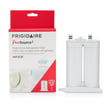
| Water tastes bad or flow drops | Clogged water filter | Replace Frigidaire puresource2 refrigerator water filter WF2CB |
Why it matters
Cooling and airflow issues can make food spoil faster and force the compressor to run longer than necessary. Fixing door sealing, coil cleanliness, and filtration usually restores normal temperatures and performance.
Helpful model-specific references
- Use the troubleshooting charts and temperature control guidance in the FRS6LF7JM3 owner's manual.
- For filter selection and replacement steps, follow how to replace the water filter in a Frigidaire refrigerator.
Last updated: February 2026
Is a Frigidaire considered high end?
Frigidaire is generally considered a reliable, mainstream appliance brand rather than a true high-end (luxury) brand. For the Frigidaire FRS6LF7JM3 side-by-side refrigerator, you can expect practical features and solid everyday performance, with value focused more on function than premium finishes.
What “high end” usually means for refrigerators
High-end refrigerators typically emphasize premium materials, advanced temperature management, quieter operation, and more customization.
Common high-end traits include:
- Built-in or counter-depth designs with premium trim
- Dual evaporators or advanced humidity control systems
- Very low noise levels and higher-end compressors
- More precise digital controls and specialty zones
- Premium interior lighting and upgraded shelving/fit-and-finish
Where Frigidaire (and the FRS6LF7JM3) fits
Frigidaire side-by-side models like FRS6LF7JM3 are usually positioned as mid-range: strong core refrigeration, common convenience features, and widely available replacement parts.
A practical way to judge “tier” is by what you maintain and replace over time:
| Category | Mainstream (typical) | High-end (typical) |
|---|---|---|
| Parts availability | Broad, affordable | Often pricier, sometimes limited |
| Features | Core ice/water, standard controls | Specialty zones, advanced cooling |
| Ownership focus | Value and serviceability | Premium experience and design |
Why it matters
If you are deciding whether to repair or replace, a mainstream refrigerator often makes sense to maintain because parts and service procedures are straightforward. For example, routine items like a water filter are normal ownership costs, not a “luxury-only” feature.
Helpful next steps for owners
- Use the FRS6LF7JM3 owner’s manual to confirm which features your exact unit has (some features vary by configuration).
- If you use the dispenser, replace the filter on schedule; the Frigidaire puresource2 refrigerator water filter WF2CB is a common maintenance item for this model.
- Keep the condenser area clean; a dirty condenser can make the refrigerator run longer and feel “less efficient.”
- If you are comparing brands, focus on layout, noise, and parts cost, not just the badge.
Last updated: February 2026
What is the average lifespan of a Frigidaire refrigerator?
A Frigidaire refrigerator typically lasts 10 to 15 years. With consistent care (good airflow, clean condenser coils, solid door seals, and on-time filter changes), many units run longer; the same maintenance approach applies to your FRS6LF7JM3. For model-specific care intervals and features, use the FRS6LF7JM3 owner's manual.
Typical lifespan and what affects it
Most refrigerator life is determined by how hard the sealed system and compressor have to work day to day.
- Heat and ventilation: hot kitchens and tight clearances shorten life
- Dirty condenser coils: forces longer run times
- Door gasket leaks: warm air infiltration increases compressor cycling
- Ice maker and dispenser use: adds load and run time
- Power quality: frequent outages or surges stress electronics
Maintenance that helps you reach (or beat) 10 to 15 years
These are the highest-impact steps we recommend for Frigidaire side-by-side refrigerators like the FRS6LF7JM3:
- Vacuum and brush condenser coils regularly
- Keep doors closing tightly; clean and condition gaskets
- Set stable temps (avoid extreme cold settings unless needed)
- Replace the water filter on schedule; use the Frigidaire puresource2 refrigerator water filter WF2CB
- Minimize long door openings; let hot food cool before loading
Quick reference: symptoms that shorten lifespan
| What you notice | What it usually means | What to do first |
|---|---|---|
| Runs “all the time” | Dirty coils, gasket leak, warm room | Clean coils; inspect door seal |
| Temps swing widely | Airflow blockage, control issue | Clear vents; verify settings |
| Loud fan noise | Evaporator fan issue or ice buildup | Check for frost; clear obstructions |
| Water/ice issues | Filter restriction or supply problem | Replace filter; purge air |
Why it matters
When the refrigerator runs too long, internal components (compressor, fans, defrost system) accumulate more wear. The manual notes that longer run times are normal in heat, after power loss, and with frequent door openings, but reducing those conditions helps extend service life.
Last updated: February 2026