Installation guide
 Owner’s manual
 Error Codes




How many years does a GE washing machine last?
A GE washer typically lasts 10 to 14 years. For your GE GTWP1800D0WW top-load washer, consistent maintenance (level installation, correct loading, and good water conditions) is what most directly determines whether you land closer to 10 years or push beyond it.
Typical lifespan and what changes it
Most washer life comes down to how hard the machine works and how well key wear items are protected.
- Load size and frequency: frequent heavy loads shorten life
- Out-of-balance spinning: increases stress on suspension and tub components
- Water quality: hard water and sediment accelerate wear and buildup
- Installation and leveling: reduces vibration and bearing stress
- Basic upkeep: keeping hoses, seals, and the tub area clean prevents secondary damage
Quick checklist to help your GTWP1800D0WW reach full life
We recommend these practical habits for a GE top-load washer like this one:
- Install on firm flooring and keep the washer level (reduces vibration)
- Avoid overloading; distribute items evenly to prevent repeated off-balance events
- Use the right amount of detergent; excess suds can contribute to poor rinsing and residue
- Periodically inspect for leaks around the tub and pump area
- Address early symptoms quickly (new noises, burning smell, slow drain, or excessive shaking)
Parts that commonly affect “end of life” decisions
When a washer starts shaking, leaking, or not draining, repairs often involve a few high-impact components.
| Symptom | Common area involved | Example part for this model |
|---|---|---|
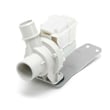
| Won’t drain or drains slowly | Drain system | Washer drain pump WH23X10043 |
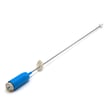
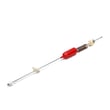
| Excessive vibration or banging | Suspension system | Washer suspension rod, rear WH16X10159 |
| Water leaking from tub area | Sealing/bearing area | Washer tub seal assembly WH02X10383 |
Why it matters
A washer that is level, drains correctly, and stays balanced puts less strain on the drive system, tub bearing, and suspension. That directly improves cleaning performance, reduces noise, and helps you get the full expected 10 to 14 years.
For model-specific operating and care guidance, follow the maintenance and use recommendations in the GTWP1800D0WW owner's manual. You can also order replacement parts for this washer from the parts list for this model, or search by model number on Sears PartsDirect.
Last updated: February 2026
How do I find out what size my washer is?
Your GE GTWP1800D0WW washer “size” usually means capacity (cubic feet). The quickest way is to check the model’s rating information and specifications in the GTWP1800D0WW installation guide or the GTWP1800D0WW owner’s manual; you can also estimate capacity by measuring the wash basket and calculating volume.
Fast ways to identify washer size (capacity)
- Check the manual specs: Look for “capacity” or “cubic feet (cu. ft.)”.
- Look for the rating plate: Many top-load washers list key electrical and model data on a rating plate; for this model, the installation guide notes the rating plate is on top of the backsplash.
- Measure the basket (good estimate): Measure inside diameter and depth of the basket.
- Use model number when shopping parts: Capacity is separate from parts fit; always match parts to GTWP1800D0WW.
- Avoid guessing by exterior size: Cabinet dimensions do not reliably indicate capacity.
How to estimate capacity by measuring the basket
- Unplug the washer.
- Measure the inside radius (half the inside diameter) of the basket in inches.
- Measure the usable depth of the basket in inches.
- Calculate:
- Basket volume (cubic inches) = π × radius² × depth
- Capacity (cu. ft.) = cubic inches ÷ 1,728
Quick reference table
| What you have | What it tells you | Best for |
|---|---|---|
| Manual capacity spec | Exact capacity for GTWP1800D0WW | Comparing washer sizes |
| Basket measurements | Close estimate of capacity | When you do not have specs handy |
| Exterior dimensions | Not a reliable capacity indicator | Space planning only |
Typical capacity ranges (for context)
| Washer type | Typical capacity |
|---|---|
| Compact top load | Under ~3.5 cu. ft. |
| Standard top load | ~3.5 to 4.5 cu. ft. |
| Large top load | ~4.6 cu. ft. and up |
Why it matters
Capacity affects how much laundry you can wash per load, how well items circulate during agitation and spin, and how you should load bulky items to reduce out-of-balance vibration.
Last updated: February 2026
How do I reset the error code on my GE washer?
On your GE GTWP1800D0WW washer, the most reliable way to clear an error is a power reset: turn the control to OFF, unplug the washer for 10 minutes, then plug it back in and restart a cycle. Use the code chart in the GTWP1800D0WW owner's manual to address the cause if the code returns.
Quick reset steps (safe first)
- Turn the cycle selector to OFF; push the timer knob in if your model has a push-in knob.
- Unplug the washer for 10 minutes.
- Plug into a properly grounded 115V, 15- or 20-amp outlet (no extension cords).
- Start a cycle and watch for the code to reappear.
If the code comes back, check the common causes
A reset only clears the display; the control will show the code again if it still senses the problem.
- Drain problem: Check for a kinked drain hose, a clogged standpipe, or a slow drain; a failing pump can also trigger repeat errors (see washer drain pump WH23X10043).
- Lid not sensing closed: If it will not spin or stops mid-cycle, inspect the lid strike area and wiring; the switch is a common fix (see washer lid switch assembly WH12X10334).
- Out-of-balance/banging: Redistribute the load; if the tub still slams, suspension parts may be worn (see washer suspension rod, rear WH16X10159).
Installation specs that can trigger fill or drain errors
| Item | Spec | Why it matters |
|---|---|---|
| Water pressure | 20 to 150 psi | Low pressure can cause slow-fill errors |
| Drain height | 30 inches minimum; 6 ft maximum above base | Prevents siphoning and drain faults |
| Electrical | 115V, 15 or 20 amp; grounded | Helps prevent control and safety issues |
Why it matters
Clearing the code without fixing the underlying issue often leads to repeat shutdowns, no-spin, or poor draining. A reset plus a targeted check (drain path, lid switch, load balance) restores normal operation.
Last updated: February 2026