


Are all GE dishwashers the same size?
No. GE dishwashers are not all the same size; most built-in models are designed for a standard 24-inch cabinet opening, but GE also makes compact 18-inch units and some models vary slightly in height and depth. For GE model GSD5940D01SS, measure your cabinet opening and the dishwasher cutout before ordering parts or planning a replacement.
Most GE built-in dishwashers fall into these common size groups:
- Standard built-in: about 24 inches wide
- Compact built-in: about 18 inches wide
- Height and depth: can vary by model and installation style (leveling legs, countertop height, toe-kick clearance)
| Type | Nominal width | Best for |
|---|---|---|
| Standard built-in | 24 in. | Most kitchens and full-size loads |
| Compact built-in | 18 in. | Apartments, small kitchens, light loads |
Use a tape measure and confirm the opening, not just the old dishwasher’s outer shell.
- Measure opening width at the front and back
- Measure opening height from floor to underside of countertop
- Measure opening depth to the back wall (watch for plumbing and wiring)
- Check door clearance so the door can open fully without hitting an island or nearby cabinet
- If you are replacing racks or seals, confirm the part is listed for your exact model
Dishwashers can look “standard” but small differences in height, depth, and mounting style affect fit, door alignment, and leak prevention. If you are troubleshooting leaks or poor draining on GSD5940D01SS, correct fit and sealing also help parts like the dishwasher door seal WD08X10057 and dishwasher drain hose WD24X10014 do their job.
Last updated: January 2026
What is the average lifespan of a GE dishwasher?
Most GE dishwashers, including model GSD5940D01SS, typically last 10 to 12 years. With consistent cleaning and prompt repair of leaks or draining problems, it’s common to reach 12 to 15 years; heavy daily use can shorten lifespan.
- Water quality (hard water speeds up scale buildup)
- Cleaning and maintenance (tub, spray paths, and seals)
- How often it runs (multiple loads daily adds wear)
- Drain performance (standing water strains the pump)
- Door sealing (leaks can damage components and flooring)
- Run a monthly cleaning routine using a dishwasher cleaner (or a manufacturer-approved descaler).
- Keep the door seals clean; wipe the tub lip and gasket area after messy loads.
- Make sure the dishwasher drains fully after each cycle.
- Avoid overloading; blocked spray patterns reduce cleaning and increase re-washing.
- Fix small leaks early; a worn seal is cheaper than a damaged motor.
| Symptom | What it often points to | Example part for GSD5940D01SS |
|---|---|---|
| Won’t drain or drains slowly | Drain path restriction or drain solenoid issue | Dishwasher drain hose WD24X10014 |
| Leaks at the door | Door seal wear or misalignment | Gasket WD08X10057 |
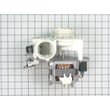
| Loud grinding or weak wash action | Pump/motor wear or seal failure | Mechanism WD26X10013 |
A dishwasher near the 10 to 12 year mark can still be a great candidate for repair if the tub is solid and the racks are usable. Replacing a wear item like a door seal or drain hose often restores reliable performance and helps prevent bigger failures.
For troubleshooting help when performance drops, use our GE dishwasher error codes guide.
Last updated: January 2026
Can a clogged drain cause an FTD error?
Yes. On the GE GSD5940D01SS dishwasher, an FTD (fail to drain) error commonly happens when water cannot leave the tub because the drain path is restricted, such as a clogged hose, blocked air gap/disposal inlet, or debris at the pump area.
- Cancel the cycle and wait a few minutes; listen for the drain pump running.
- Remove standing water (cup or wet/dry vac) so you can inspect the sump area.
- Check the sink drain/disposal connection for a plug or blockage.
- If you have an air gap, remove the cap and clear any buildup.
- Inspect the drain hose for kinks, crushing, or a high loop that fell down.
| Where the clog is | What you may notice | What usually fixes it |
|---|---|---|
| Drain hose | Slow drain, water returns to tub | Clear hose, correct routing, replace if collapsed |
| Pump area / impeller zone | Humming, intermittent draining | Remove debris; check for broken pieces |
| Disposal or sink tailpiece inlet | Dishwasher drains poorly right after install or disposal replacement | Clear inlet; remove knockout plug |
| Drain solenoid linkage (if equipped) | Drains sometimes, then stops | Inspect linkage; replace worn components |
If the drain path is clear but the dishwasher still throws FTD, we focus on the drain components that move water out.
- Dishwasher drain hose WD24X10014: replace if it is split, soft, or internally restricted.
- Dishwasher drain solenoid kit WD21X10060: helps actuate draining on designs that use a solenoid; a stuck plunger or failed coil can mimic a clog.
- Mechanism WD26X10013: if the pump and motor assembly is weak or jammed, it may not push water out consistently.
An FTD condition leaves dirty water in the tub, can redeposit soil on dishes, and can stop the cycle mid-program. Clearing the restriction quickly also helps prevent pump strain and repeat drain errors.
Related help: GE dishwasher error codes, dishwasher not draining video
Last updated: January 2026
What is the most common problem with a GE dishwasher?
The most common problem we see on GE dishwashers like model GSD5940D01SS is a drain or wash-performance issue caused by buildup or a restriction (food debris in the sump area, a kinked/clogged drain path, or a weak pump). “Won’t start” problems from a door-latch or power issue are also very common.
- Water left in the bottom: drain hose restriction, drain solenoid issue, or a blockage in the drain path
- Not cleaning well: weak circulation, clogged spray path, or pump/motor wear
- Won’t start or stops mid-cycle: door not latching, power supply issue, or control problem
- Leaks at the door: worn door seal or misaligned rack loading
- Bad odor: trapped food debris and grease buildup
- Reset power: turn the breaker off for 1 minute, then back on.
- Confirm the door closes firmly: racks should not interfere with the door.
- Check the drain path: look for kinks behind the unit and ensure the drain line is routed high (high loop).
- Run a cleaning cycle: use a dishwasher cleaner and remove visible debris from the bottom area.
- Listen during wash: a healthy unit has a steady wash “spray” sound; a weak hum can indicate circulation trouble.
| Symptom | Common fix area | Example part for this model |
|---|---|---|
| Not draining | Drain path or drain actuator | Dishwasher drain hose WD24X10014 or dishwasher drain solenoid kit WD21X10060 |
| Poor cleaning | Pump and motor circulation | Mechanism WD26X10013 |
| Door leaking | Door sealing surface | Dishwasher door seal WD08X10057 or dishwasher door seal insert WD08X10015 |
Drain and circulation problems usually get worse over time; the dishwasher can start leaving grit on dishes, holding dirty water, or developing odors. Catching restrictions early helps protect the pump, motor, and seals.
- Use GE dishwasher error codes or GE electronic dishwasher error codes if your dishwasher is flashing lights or showing a fault pattern.
- If the unit is holding water, follow dishwasher not draining video for a step-by-step diagnostic flow.
Last updated: January 2026





