Owner’s manual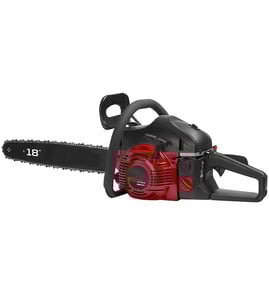








Is a 16 or 18 inch chainsaw better?
A 16-inch chainsaw is better for most homeowners because it’s lighter, easier to control, and ideal for limbing and cutting smaller firewood; an 18-inch saw is better when you regularly cut thicker wood and want more reach. For Craftsman model 358360681, match bar length to the work and prioritize safe handling per the 358360681 owner's manual.
How to choose the right bar length
- Choose 16-inch for pruning, storm cleanup, and frequent overhead or awkward-angle cuts.
- Choose 18-inch for larger rounds, more reach, and fewer repositioning cuts.
- If you value control and reduced fatigue, go shorter.
- If you routinely cut near the saw’s max capacity, go longer.
- Always keep the chain sharp and properly tensioned; a dull or loose chain makes any length feel “worse.”
16-inch vs 18-inch: quick comparison
| Feature | 16-inch bar | 18-inch bar |
|---|---|---|
| Best for | Limbing, trimming, small firewood | Larger firewood, small tree felling, thicker logs |
| Handling | More maneuverable | Heavier feel, more leverage at the tip |
| Typical cut capacity | Up to about 14 inches in one pass | Up to about 16 inches in one pass |
| User fit | Most homeowners | Frequent cutters who want more reach |
Safety and performance tips that matter more than bar length
The manual emphasizes protective gear, safe work area setup, and kickback awareness. We also recommend these basics every time you run the saw:
- Wear eye protection, hearing protection, gloves, and protective footwear.
- Keep bystanders at least 30 feet away.
- Check chain tension before use and after the first minute of operation.
- Use reduced-kickback components when available and keep the chain brake working properly.
- Avoid tip contact and pinching the chain along the top of the guide bar (common kickback triggers).
Why it matters
Bar length affects control, fatigue, and kickback risk. A slightly shorter bar that you can control confidently usually cuts faster overall because you stay accurate, keep steady throttle, and avoid binding.
Last updated: January 2026
Should I use 40 1 or 50 1 fuel for a chainsaw?
For the Craftsman chainsaw model 358360681, we use a 40:1 fuel mix (unleaded gasoline plus synthetic 2-cycle air-cooled engine oil). That ratio equals 3.2 oz of 2-cycle oil per 1 gallon of gas, and it is the correct mix to protect the engine and keep it running properly per the 358360681 owner's manual.
Correct mix amounts (quick reference)
Use this chart when you are measuring fuel for your 2-cycle gas chainsaw:
| Gasoline amount | 40:1 oil amount | Notes |
|---|---|---|
| 1 gallon | 3.2 oz | Standard mix for model 358360681 |
| 1/2 gallon | 1.6 oz | Good for small batches |
| 1 quart | 0.8 oz | Useful for test runs |
How to mix fuel the right way
We recommend mixing in an approved, marked fuel container and doing it outdoors.
- Use fresh unleaded gasoline
- Use a good quality synthetic 2-cycle air-cooled engine oil
- Measure oil first, then add gasoline and mix thoroughly
- Wipe up spills before starting the saw
- Move at least 10 feet away from the fueling area before starting
Why 50:1 is not the right choice for this model
A 50:1 mix contains less oil than 40:1. On a saw designed for 40:1, that reduced lubrication can increase wear and raise the risk of scoring the piston and cylinder, especially under heavy cutting.
Related maintenance that prevents “fuel problems” symptoms
Fuel mix issues often get blamed for problems that are actually maintenance-related. These checks help the saw start and run consistently:
- Keep the air filter clean (a clogged filter makes the engine run rich)
- Use fresh fuel; do not store mixed fuel for long periods
- For storage 30 days or longer, drain the tank and run the engine until the fuel system is empty
- Inspect fuel lines for cracking or leaks; replace as needed
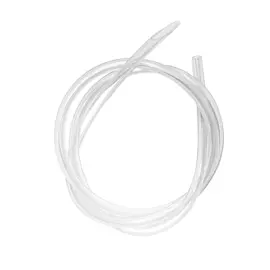
If you are replacing cracked or leaking lines, use the exact-size parts listed for this model, such as the ayp lawn & garden equipment fuel line, large 530069216.
Why it matters
The correct 40:1 ratio gives the engine the lubrication it was designed to have. That protects internal parts, improves reliability, and helps you avoid hard-starting, rough running, and premature engine damage.
Last updated: January 2026
What kind of gas goes into a Craftsman chainsaw?
For the Craftsman 358360681 gas chainsaw, we use unleaded gasoline mixed with synthetic 2-cycle air-cooled engine oil at a 40:1 ratio (3.2 oz oil per 1 gallon gas). Use fresh, properly mixed fuel to help the engine start easily and run smoothly; see the 358360681 operator's manual.
Correct fuel mix for this model
Use this mix every time you refuel:
- Unleaded gasoline (fresh)
- Synthetic 2-cycle oil labeled for air-cooled engines
- Mix ratio: 40:1
- Shake the fuel container after adding oil so the mix is uniform
- Do not use automotive oil or marine (boat) oil; those can damage the engine
Quick mix chart (40:1)
| Gasoline amount | 2-cycle oil to add |
|---|---|
| 1 gallon | 3.2 oz |
| 1/2 gallon | 1.6 oz |
| 1 quart | 0.8 oz |
Bar and chain oil is separate (do not mix it with gas)
This chainsaw has a separate bar oil tank for lubricating the guide bar and chain. We fill bar oil whenever we fill the fuel tank.
- Use chainsaw bar oil when available
- SAE 30 oil works as a temporary substitute
- Running low on bar oil can quickly ruin the bar and chain
Why it matters
A correct 40:1 fuel mix protects the 2-cycle engine from overheating and premature wear. Fresh fuel and the right oil also reduce hard-starting, rough running, and plug fouling.
Last updated: January 2026