Owner’s manual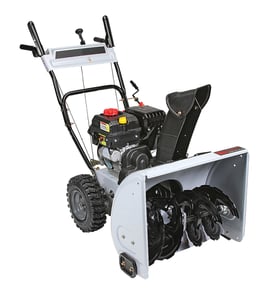


Where is Craftsman Snowblower model number?
On Craftsman snow thrower model 247985370, the model number is printed on the product identification label (often called the model tag). On many units, you will find it on the rear of the machine near the wheel area or on the frame near the auger housing; confirm the exact label location using the 247985370 owner's manual.
Look for a sticker or metal tag that includes the model and serial number. Typical locations include:
- Rear of the snowblower frame between or just above the wheels
- Side of the main frame near the auger housing
- Handle support area (lower handle tubes or handle panel region)
- Near the engine mounting area (on the frame, not on the plastic shrouds)
- Under the belt cover area (sometimes on the frame rail)
The tag typically includes both a model number and a serial number.
| Item on label | What it’s used for | Example for this unit |
|---|---|---|
| Model number | Identifies the exact Craftsman snowblower version for parts diagrams | 247985370 |
| Serial number | Identifies production run details for service and support | Varies by unit |
We use the model number to match the correct parts and diagrams for your snowblower, especially for wear items like a shear pin, skid shoe, scraper blade, belts, and clutch cables.
Before ordering, write down the model and serial number exactly as shown on the tag, including any dots or dashes. If the auger stops turning or the drive will not pull, the model number helps us match the correct clutch cable and belt style.
Last updated: January 2026
What happens if you don't drain gas from a snowblower?
If you do not drain the gas in your Craftsman snow thrower model 247985370 before storage, the fuel can deteriorate and form gum or varnish in the fuel system. That commonly leads to hard starting, rough running, and carburetor service or replacement when you try to use the snowblower again.
When gasoline sits for 30 days or longer, it breaks down and leaves deposits that restrict fuel flow and clog small carburetor passages.
Common results include:
- Engine will not start after storage, even with choke and primer
- Engine starts but surges, stalls, or runs rough
- Primer feels ineffective because fuel is not moving correctly
- Fuel line, tank cap, or fittings may show leaks or cracking over time
- You end up needing fuel-system cleaning or carburetor work
Our best practice is to follow the storage steps in the 247985370 operator's manual. The manual’s storage procedure is designed to prevent fuel deterioration and gum formation.
Typical storage steps (summary):
- Run the engine until it stops to remove fuel from the tank (do not pour fuel out)
- Change the engine oil
- Remove the spark plug and add about 1 oz (30 ml) of clean engine oil to the cylinder
- Pull the recoil starter several times to distribute oil, then reinstall the spark plug
| How long you will store it | Best fuel action | Why |
|---|---|---|
| Less than 30 days | Use fresh fuel and keep the tank sealed | Reduces moisture and contamination risk |
| 30 days or longer | Run engine until it stops to drain fuel from the tank | Prevents gum and varnish in the carburetor |
| End of snow season | Follow full storage procedure | Protects fuel system and internal engine parts |
The carburetor on a gas snowblower has very small fuel passages. Once stale fuel leaves deposits, the engine may not get the right fuel mixture for cold starts, which is why “ran fine last season” often turns into “won’t start this season.”
Last updated: January 2026
How long does a gas-powered snow blower last?
For the Craftsman snow thrower model 247985370, the operator’s manual lists an Average Useful Life of 7 years or about 60 hours of operation. With consistent maintenance and proper off-season storage, many gas snowblowers continue to run well beyond that baseline.
The manual’s useful-life statement is a planning benchmark, not a hard stop date. If you use your snowblower lightly (for example, a few storms per season), 60 hours can span many winters.
| Usage pattern | Approx. hours per season | 60 hours equals about |
|---|---|---|
| Light residential | 5 hours | 12 seasons |
| Typical residential | 10 hours | 6 seasons |
| Heavy residential | 20 hours | 3 seasons |
We see the longest-lasting snowblowers get routine checks, clean fuel practices, and seasonal lubrication.
- Clear snow from the machine before storage to help prevent auger or impeller freeze-up.
- Check the fuel line, tank, cap, and fittings for cracks or leaks; replace worn parts promptly.
- Lubricate the drive hex shaft at least once per season or every 25 hours (keep oil off the friction wheel and drive plate).
- Remove wheels at least once per season; clean and grease the axles before reinstalling.
- For storage over 30 days: run the engine until it stops to use up fuel, then change oil and protect the cylinder per the manual.
If you notice these issues, maintenance or parts replacement often restores performance:
- Auger or drive slips, squeals, or will not engage
- Poor throwing distance (even with correct chute aim)
- Excessive vibration, rattling, or repeated shear pin breaks
- Fuel smell, wet spots, or visible cracking on fuel components
Knowing the expected service life helps you decide when to invest in maintenance items (oil, spark plug, lubrication) versus larger repairs. It also supports safer operation by encouraging annual inspections as wear increases.
For model-specific maintenance intervals and storage steps, follow the 247985370 owner’s manual.
Last updated: January 2026
How many horsepower is good for a snow blower?
For a Craftsman snow thrower like model 247985370, “good horsepower” depends on snow depth and driveway size; most homeowners do well with a mid-range two-stage machine, and performance is often better judged by engine displacement (CC), torque, and intake width than by HP alone. See the 247985370 owner's manual for your model’s engine and operating details.
- Light, powdery snow; small driveway: about 5 to 8 HP
- Moderate snow; typical suburban driveway: about 8 to 10 HP
- Heavy, wet snow; long driveway or plow berms: about 10+ HP
- Frequent storms or deep drifts: prioritize two-stage design, traction, and auger/impeller condition
Horsepower can be listed differently across brands and years, so we focus on the factors that directly affect throwing ability and drive performance.
- Engine displacement (CC) and torque: better indicator of “push” under load
- Intake width and housing height: determines how much snow you can process per pass
- Impeller and auger condition: worn components reduce throwing distance
- Shear pins: broken pins stop the auger from driving properly (common after hitting ice chunks)
- Drive system condition: a worn friction wheel can cause slipping and weak forward drive
| Your situation | Good target | What to prioritize |
|---|---|---|
| 1 to 2 car driveway, occasional storms | 5 to 8 HP | Maneuverability, easy starting |
| 2 to 4 car driveway, regular use | 8 to 10 HP | Two-stage, traction, intake width |
| Long driveway, heavy snow, plow banks | 10+ HP | Torque/CC, impeller performance, durable drive |
Choosing enough power helps prevent stalling in wet snow, improves throwing distance, and reduces clogging. It also lowers strain on wear items like belts, cables, and shear pins.
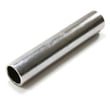
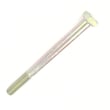
If throwing performance drops, check for auger binding or damage and keep the auger protected with the correct shear pins, such as the Craftsman snowblower shear pin 738-04124A.
Last updated: January 2026