Owner’s manual
 Error Codes


How wide is a Kenmore side by side refrigerator?
Most Kenmore side-by-side refrigerators are about 32 to 36 inches wide; your Kenmore 10657903700 is in that typical range. For the exact cabinet width and the clearance needed for door swing and ventilation, use the dimensions listed in the owner's manual.
Typical width ranges (what you can expect)
Most side-by-side refrigerator widths fall into these common buckets:
- 32 to 33 inches: narrower cabinets, tighter kitchen cutouts
- 35 to 36 inches: most common full-size side-by-side width
- 42 inches: built-in style (less common)
Don’t forget clearance (it affects the real space you need)
Even if the cabinet width fits, you still need room for airflow and the doors to open.
- Plan for 1/2 inch of space on each side and at the top for ventilation
- If the refrigerator sits next to a fixed wall, allow at least 2 inches on the hinge side so the door can swing open
- If you have an ice maker, allow extra space behind the unit for the water line
Quick planning table
| What you’re measuring | What to include | Why it matters |
|---|---|---|
| Cabinet width | Refrigerator body only | Determines if it fits the cutout |
| “Fits in opening” width | Cabinet width + side clearance | Prevents overheating and noise |
| Door swing space | Extra room near walls/cabinets | Prevents doors from binding and shelves from hitting |
How to measure your refrigerator width accurately
- Measure the widest point of the cabinet (usually across the doors)
- Measure at front and back (walls can be out of square)
- If you are replacing an older unit, measure the opening and compare to the refrigerator’s listed dimensions
Why it matters
Width is only part of fit. Side-by-side refrigerators need ventilation space and door-swing clearance; skipping those clearances can cause poor cooling performance and everyday usability problems.
Last updated: February 2026
What temperature should a Kenmore refrigerator be?
For your Kenmore 10657903700 side-by-side refrigerator, we recommend setting the fresh food (refrigerator) section to 37°F and the freezer to 0°F. After any adjustment, give the controls about 24 hours to stabilize before deciding whether to change them again (see the 10657903700 owner's manual).
Recommended temperature targets
- Refrigerator: 37°F (food stays fresh without freezing)
- Freezer: 0°F (best for ice production and long-term storage)
- Convertible meat drawer (if used for meat): 28°F to 32°F (meat-chilling range noted in the manual)
How to check and fine-tune the temperature
- Put a refrigerator thermometer in a glass of water on a middle shelf; check after 24 hours.
- Put a freezer thermometer between frozen items; check after 24 hours.
- If food is freezing in the refrigerator, raise the temperature slightly (warmer setting).
- If ice cream is soft or ice production is slow, lower the freezer temperature slightly (colder setting).
- Keep vents inside the compartments unblocked so cold air can circulate.
Quick guide: symptoms and what to adjust
| What you notice | Most likely adjustment | What to do first |
|---|---|---|
| Milk and deli items freezing | Refrigerator too cold or airflow hitting food | Move items away from vents; raise fridge setting slightly |
| Condensation or food spoiling fast | Refrigerator too warm or door not sealing | Lower fridge setting slightly; check door seal |
| Soft ice or slow ice maker | Freezer too warm | Lower freezer setting slightly; confirm 0°F |
| Meat drawer freezing produce | Drawer set too cold | Slide drawer control toward VEG (warmer) |
Why it matters
Correct temperatures reduce food spoilage, prevent accidental freezing in the fresh food section, and help the ice maker and water dispenser perform consistently.
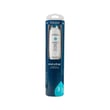
If you are also replacing your filter while dialing in taste and flow, the genuine Kenmore refrigerator water filter EDR3RXD1 is a common maintenance item for this model.
Last updated: February 2026
Where is the model number on a Kenmore side by side refrigerator?
On Kenmore side-by-side refrigerator model 10657903700, the model number is printed on the appliance identification label (the same label that lists the serial number). Check the label locations shown in the 10657903700 owner's manual to match what you see on your unit.
Common places to check first
We typically see the model and serial label in one of these spots on a side-by-side refrigerator:
- Inside the fresh food (refrigerator) compartment on a side wall
- Along the ceiling of the fresh food compartment near the light housing
- On the door frame (hinge side) when you open the refrigerator door
- Behind the base grille area at the bottom front (less common, but possible)
- Inside the freezer compartment on a side wall (occasionally)
What the label looks like (and what to write down)
The identification label usually includes both a model number and a serial number. Write down both exactly as shown; they help us match the correct Kenmore parts list and diagrams.
| Item on label | What it’s used for | Example format |
|---|---|---|
| Model number | Identifies the exact refrigerator design and parts | 10657903700 |
| Serial number | Identifies the production run and date code | Letters plus numbers |
Why it matters
Kenmore side-by-side refrigerators can look similar across multiple model numbers, but parts like the water filter, ice maker, and inlet valve can vary by model. Using the exact model number helps ensure you get the right replacement part the first time.
If you still cannot find it
- Look for a white or silver sticker, not a stamped plate
- Use a flashlight and check the door frame edges carefully
- Remove items from the top shelf so you can inspect the ceiling area
- If the label is worn, copy the clearest characters first, then compare to the format shown in the manual
Last updated: February 2026
What are the most common problems with Kenmore refrigerators?
The most common problems we see on Kenmore refrigerators like model 10657903700 are cooling issues, water leaks, ice maker or dispenser failures, and unusual noises. These usually trace back to airflow problems, a defrost-system fault, or a water-supply component that is restricted or failing; use the 10657903700 owner's manual troubleshooting section to narrow it down.
Most common symptoms and what they usually mean
- Not cooling or warm temperatures: dirty condenser coils, evaporator fan not running, or a defrost problem causing ice buildup
- Water leaking or puddles: clogged defrost drain, cracked water line, or a leaking inlet valve
- Ice maker not making ice: water supply issue, inlet valve problem, or ice maker assembly failure
- Water dispenser slow or not dispensing: clogged water filter, frozen water tube, or inlet valve restriction
- Buzzing, rattling, or clicking: fan blade hitting ice, failing fan motor, or compressor start components
Quick checks we recommend first (fast, high impact)
- Confirm temperatures: set fresh food to about 37°F and freezer to about 0°F.
- Clean condenser coils: poor heat release is a top cause of weak cooling.
- Check door sealing: look for gaps, torn gasket areas, or doors not closing fully.
- Inspect for frost buildup on the freezer back panel (points to defrost issues).
- Verify water supply: the manual notes the refrigerator must be connected to a cold water pipe, and water temperature can take up to 24 hours to cool after installation or heavy use.
Common part-related fixes for this model
When symptoms match, these are frequently replaced parts for model 10657903700:
| Symptom | Likely system | Example part on this model |
|---|---|---|
| Slow/no water at dispenser | Filtration or supply | Genuine Kenmore refrigerator water filter EDR3RXD1 |
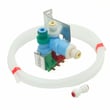
| No ice and no water fill | Water inlet | Refrigerator inlet valve W10408179 |
| Ice maker dead or inconsistent | Ice maker assembly | Refrigerator ice maker 2198597 |
| Frost buildup, warm fridge | Defrost heat | Refrigerator defrost heater WP2323198 |
| Warm temps, noisy airflow | Evaporator fan | Refrigerator evaporator fan motor WP2315549 |
Why it matters
Catching the root cause early prevents food spoilage, reduces compressor run time, and helps avoid repeat failures (for example, a clogged filter can mimic a bad inlet valve, and a frosted evaporator can mimic a sealed-system cooling problem).
Last updated: February 2026
What causes a side-by-side refrigerator to stop cooling?
On Kenmore side-by-side refrigerator model 10657903700, a “stopped cooling” problem is usually caused by loss of power, the refrigerator control being set to OFF, blocked air vents that prevent airflow between compartments, or a failed cooling component such as the evaporator fan or defrost system. Use the checks in the owner's manual to pinpoint the cause.
Quick checks (fastest fixes first)
- Confirm the power cord is fully plugged into a grounded 3-prong outlet.
- Test the outlet by plugging in a lamp.
- Reset a tripped breaker or replace a blown fuse.
- Make sure the refrigerator control is ON (the unit will not cool if the control is set to OFF).
- Check that food packages are not blocking the freezer bottom air inlet or the refrigerator top vent.
- If this is a new install or the unit was unplugged, allow 24 hours to cool before judging performance.
Airflow problems that mimic “no cooling”
Your 10657903700 is designed to circulate cold air from the freezer into the fresh food section and back again. When vents are blocked, temperatures rise and moisture issues can follow.
What to look for
- Frosted-over vents or weak airflow at the refrigerator top vent
- Items packed tightly against the back wall (especially on models with multiple rear vents)
- Warm refrigerator section while the freezer seems closer to normal
When it is likely a part failure
If power and venting are good and temperatures keep climbing, these are common culprits:
| Symptom | Most likely system | Common related parts for this model |
|---|---|---|
| Freezer warm and no air movement | Evaporator fan system | Refrigerator evaporator fan motor WP2315549 |
| Heavy frost on freezer back panel, warming temps | Defrost system | Refrigerator defrost heater WP2323198, refrigerator bi-metal thermostat WPW10225581 |
| No ice and no water dispense (or weak flow) plus warming concerns after service | Water supply (not a cooling cause by itself, but often noticed together) | Refrigerator inlet valve W10408179 |
Why it matters
A refrigerator that is not cooling can spoil food quickly, and blocked airflow can also create temperature swings that make the compressor and fans run longer than normal. Restoring proper airflow and correct control settings prevents repeat problems.
Last updated: February 2026