
Can I use a dado blade on DW744?
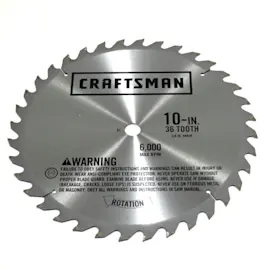
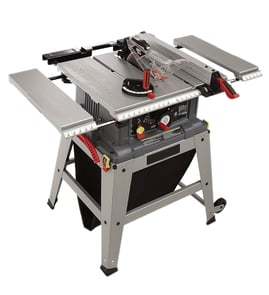
No. For the Dewalt DW744 10-inch benchtop table saw, we do not recommend using a dado blade set; this saw is designed for standard 10-inch saw blades, and dado stacks commonly require a longer arbor and wider throat clearance than benchtop saws provide.
What to use instead (safe, common options)
- Use a standard 10-inch blade and make multiple passes to cut a dado or rabbet.
- Use a router with a straight bit and edge guide for clean dados.
- Use a table saw jig (for example, a tenoning jig) with repeated passes when appropriate.
- Use a sacrificial fence when cutting rabbets with a standard blade.
Quick fit check: why dado sets usually do not work on this saw
Most dado stacks need extra arbor length and a wider opening at the blade. If either is missing, the blade cannot be mounted safely or the workpiece can bind.
| Item to check | Standard blade setup | Typical dado stack need | What it affects |
|---|---|---|---|
| Arbor length | Fits one blade plus washer/nut | Fits stacked chippers + shims | Proper nut engagement |
| Throat plate opening | Narrow | Wide | Clearance and kickback risk |
| Guard/riving knife | Designed for one kerf | Often incompatible | Safety and alignment |
If you are trying to cut dados anyway
- Unplug the saw before inspecting the arbor, flange, and nut.
- Confirm the arbor nut fully threads on with several full turns when a blade is installed.
- Keep the blade guard and riving knife installed whenever the cut allows.
- Use a push stick and featherboard; keep hands out of the line of cut.
Why it matters
A dado stack that does not fit correctly can reduce arbor nut thread engagement, interfere with guarding, and increase binding and kickback risk. Using repeated passes with a standard blade keeps the saw in its intended configuration.
For replacement parts and diagrams for your DW744, start with the model parts list, or search by model number on Sears PartsDirect.
What are the key features of DW744?
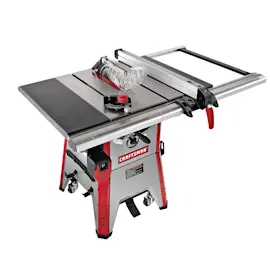
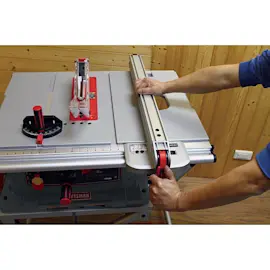
The Dewalt DW744 10-inch benchtop table saw (model DW744) is built around a high-power jobsite motor and a rack-and-pinion style fence system for fast, repeatable rip cuts. It’s designed to keep blade speed steady under load and start smoothly for better control.
Key features you can expect on the DW744
- 15-amp, high-torque motor for cutting hardwoods and pressure-treated lumber
- 3,650 RPM no-load speed for efficient ripping and crosscutting
- Electronic feedback to help maintain blade speed during tougher cuts
- Soft start to bring the blade up to speed smoothly
- Telescoping fence system with a 24-1/2 inch rip capacity (typical DW744 configuration)
Quick spec snapshot
| Feature | What it means in real use |
|---|---|
| 15A motor | Better performance in thick stock and long rips |
| 3,650 RPM (no-load) | Cleaner cuts when paired with the right blade |
| Electronic feedback | Less bogging down in demanding cuts |
| Soft start | Reduced startup jerk and improved control |
| 24-1/2 in. rip capacity | Handles sheet goods and wider boards more easily |
Why it matters
These features work together to improve cut consistency and control. For example, electronic feedback and a solid fence system help you stay on-line during rips, while soft start reduces sudden movement at startup (especially helpful on a benchtop saw).
Parts and maintenance note
If you’re shopping for replacement parts (blade guard components, fence parts, switches, or motor-related items), start with the DW744 parts list for your exact type/version, then use Sears PartsDirect to search by model number and confirm fit.
Last updated: February 2026
Which DeWALT table saw is best?
The best Dewalt table saw depends on how and where you’ll use it: for jobsite portability and high rip capacity, a rolling-stand saw is usually the best fit; for small shops and DIY projects, a compact benchtop saw is typically the best value. For DW744 owners, we focus on keeping your Dewalt DW744 running accurately and safely with the right maintenance and replacement parts from Sears PartsDirect.
How to choose the “best” Dewalt table saw for your needs
Use these decision points to match the saw style to your work.
- Rip capacity: Choose a larger rip capacity if you regularly cut sheet goods.
- Portability: Rolling stands help if you move the saw daily; benchtop models suit occasional transport.
- Power source: Corded 15-amp saws are common for consistent power; cordless is best when outlets are limited.
- Fence system: A rack-and-pinion style fence is popular for repeatable accuracy.
- Dust collection: Better dust port design matters for indoor work and motor longevity.
Quick comparison: common Dewalt table saw “best for” categories
| Best for | What to look for | Why it fits |
|---|---|---|
| Pros cutting plywood and trim | High rip capacity, stable stand | Faster, safer handling of larger stock |
| DIYers and small spaces | Compact benchtop footprint | Easier storage and setup |
| Mobile crews | Rolling stand, durable frame | Less lifting, quicker moves |
| No-outlet jobsites | Cordless platform compatibility | Work anywhere with fewer constraints |
If you already own a Dewalt DW744: what matters most
Even if another model is “best” on paper, your DW744 can stay a top performer when it’s tuned and maintained.
- Verify the blade is parallel to the miter slot.
- Confirm the fence is parallel to the blade to reduce burning and kickback risk.
- Check the blade condition (dull or gummed blades cut poorly and strain the motor).
- Inspect the power cord and switch for wear.
- Keep the arbor area clean so the blade seats correctly.
Why it matters
The “best” table saw is the one that matches your material size, workspace, and accuracy needs. Choosing the right style reduces binding, improves cut quality, and helps you work safer and faster.
Last updated: February 2026