Owner’s manual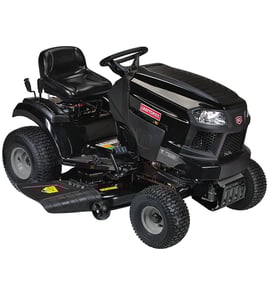



What year did Craftsman make the 917258920?
Craftsman model 917258920 does not map to one single “model year”; it was produced across a range of years. The most accurate way to date your specific tractor is to use the product identification label (model and serial) and confirm the date code details shown in the owner's manual.
How to find the build date on your tractor
Look for the product ID label in common locations for this Craftsman riding tractor:
- Under the seat (seat pan area)
- On the rear fender, near the seat
- On the frame rail near the engine compartment
- Near the transaxle area on the frame
Once you find it, record:
- Model number (should read 917258920)
- Serial number
- Any printed date code (if present)
What the manual confirms about this model
Your documentation identifies the unit as TRACTOR, MODEL NUMBER 917.258920 and includes detailed repair parts diagrams and lists (chassis, seat assembly, lift assembly, decals, and a Kohler engine section). That confirms you have the correct model family, but the parts pages themselves are not a single-year identifier.
Helpful cross-checks (quick sanity checks)
Use these items to confirm you are looking at the right tractor configuration:
| Area | What to check | Why it helps |
|---|---|---|
| Engine | Kohler CV25S (type 69511) | Narrows the configuration used on this model |
| Seat/safety | Seat switch and interlock wiring | Helps match the correct harness and switches |
| Deck/drive | Belt routing and lift parts | Confirms the correct chassis and deck setup |
Why it matters
Knowing the exact build date helps us match the correct parts and diagrams when Craftsman made mid-run changes (for example, wiring, safety interlock switches, belt routing, or steering components). That prevents ordering the wrong PTO switch, belt, or steering part.
Last updated: February 2026
What are the parts of a lawn mower engine?
On the Craftsman 917258920 front-engine lawn tractor, the “engine” system includes fuel and ignition components plus the operator controls that manage starting and engine speed (choke, throttle, ignition switch). Your owner's manual also shows related tractor controls like the clutch/brake pedal and attachment clutch switch.
Common lawn tractor engine components
Most riding mower engines use these core parts to store fuel, mix air and fuel, create spark, and turn the crankshaft:
- Fuel tank and fuel line (stores and delivers gasoline)
- Carburetor (meters fuel into the intake air)
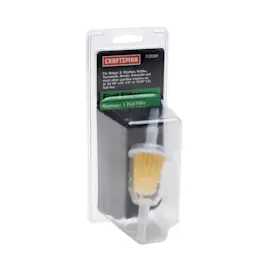
- Air filter (keeps dirt out of the engine)
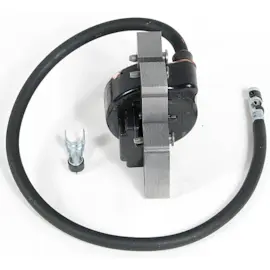
- Spark plug and ignition coil (creates spark to ignite the mixture)
- Flywheel (helps smooth engine rotation and supports ignition timing)
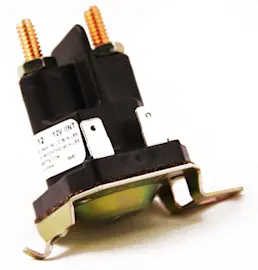
- Starter system (starter motor and solenoid, or recoil starter on some engines)
- Crankcase and crankshaft (houses oil and converts combustion into rotation)
Controls on model 917258920 that affect starting and running
Your tractor’s engine operation depends on several controls and safety circuits. The manual calls out these items:
- Ignition switch: starts and stops the engine
- Choke control: helps start a cold engine
- Throttle control: sets engine speed
- Clutch/brake pedal: used for declutching, braking, and starting the engine
- Parking brake lever: locks the brake for starting and parking
Quick troubleshooting guide (engine-related symptoms)
Use this as a fast way to narrow down what “engine problem” you actually have:
| Symptom | Most common area to check first | Typical next step |
|---|---|---|
| Clicks but won’t crank | Battery, cables, starter solenoid | Charge battery, clean/tighten connections |
| Cranks but won’t start | Fuel delivery, carburetor, spark | Check fresh fuel, air filter, spark plug |
| Starts then dies when brake released | Safety interlock circuit | Inspect brake switch and wiring |
Why it matters
Knowing the main engine parts helps you diagnose faster and order the right replacement the first time. For example, a “no start” can be fuel-related (tank/carburetor) or ignition-related (spark plug/coil), and the fix is completely different.
Last updated: February 2026
How to find Craftsman parts?
To find the right Craftsman parts for your Craftsman model 917258920 front-engine lawn tractor, we match parts to your exact model number and diagrams so you get the correct fit the first time. Use the parts list and diagrams for 917258920, then confirm part details in the owner's manual.
Fast way to find the correct part
- Locate the full model number on the tractor’s model tag and use 917258920 exactly.
- Use the parts diagrams to identify the system you’re working on (mower deck, steering, drive, electrical).
- Click into the diagram section and match the callout number to the part listing.
- Compare the part name and part ID before ordering (this prevents wrong-size belts, nuts, and switches).
- If you are replacing a wear item, check nearby hardware in the diagram (nuts, retainers, caps) that often gets damaged during removal.
Common parts customers replace on model 917258920
These are examples of parts shown for this model that customers often search for:
| Repair area | Example part | What it affects |
|---|---|---|
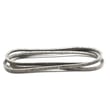
| Mower deck drive | Lawn tractor ground drive belt, 1/2 x 84-1/2-in 532140218 | Tractor movement and drive performance |
| Blade/deck routing | Husqvarna lawn tractor drive belt, 1/2 x 83-3/4 in 532139573 | Blade engagement and cutting consistency |
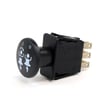
| PTO engagement | Switch.pto.3 582107601 | Turning the mower deck on and off |
| Steering | Drag link 532175572 | Steering response and alignment |
Confirm fit before you buy
We recommend verifying these details so the part matches your tractor:
- Deck size and belt routing shown in the diagrams
- Hardware size and thread type (for example, lock nuts and crownlock nuts)
- Electrical connector style for switches (PTO and interlock)
- Whether you need a complete assembly (like a mandrel) or a single component
Why it matters
Riding mower parts are highly model-specific; using the exact 917258920 diagrams helps you avoid ordering a belt with the wrong length, a switch with the wrong connector, or steering parts that do not match your front axle setup.
Last updated: February 2026