Installation guide
 Owner’s manual



Can a clogged drain cause an FTD error?
Yes. On the GE ZBD6880N20SS dishwasher, a clogged drain path can trigger an FTD (drain-related) error because the unit cannot pump water out fast enough. The most common clogs are in the filter area, the drain hose (kinked or blocked), the disposer connection, or a plugged air gap; see the owner's manual.
What to check first (fast, no parts)
- Cancel the cycle and let the dishwasher attempt to drain.
- Open the door and confirm whether most of the water drained out.
- Check the sink and disposer: if the sink drains slowly, the dishwasher often will not drain well.
- If the dishwasher drains through a disposer, make sure the disposer inlet plug was removed.
- If you have an air gap, clean it (a dirty air gap can prevent proper draining).
- Inspect the drain hose for kinks, crushing, or a high loop problem.
Parts that commonly affect draining on this model
If the drain path is clear but the dishwasher still will not drain, these model-matched parts are the next most common suspects:
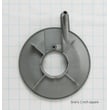
- Dishwasher filter WD12X10109 (clogged filter restricts water flow to the pump)
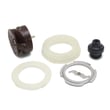
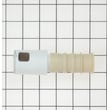
- Dishwasher drain pump adapter assembly WD12X10189 (can leak or restrict flow if damaged)
- Mechanism assembly WD26X10053 (pump and motor assembly; weak pumping can mimic a clog)
| Symptom | Most likely cause | Best next step |
|---|---|---|
| Standing water after drain | Air gap or hose/disposer restriction | Clear air gap; check hose routing and disposer inlet |
| Drains slowly, then errors | Filter or sump area debris | Clean filter and sump area; re-test |
| Hums but barely drains | Pump issue or blockage at pump | Check for obstruction; consider pump/motor replacement |
Why it matters
FTD is usually a “water did not drain” condition. Clearing the restriction protects the pump and motor, prevents dirty water from redepositing on dishes, and helps the dishwasher complete cycles normally.
For step-by-step drain and air gap guidance specific to GE dishwashers, use GE dishwasher error codes.
Last updated: February 2026
How do I reset the H20 code on my GE dishwasher?
To clear an H20 (water-related) code on your GE ZBD6880N20SS dishwasher, we reset the cycle using the START/RESET pad and then do a quick power reset at the breaker. If the code returns, focus on water fill causes like supply, float, or inlet components.
Reset steps (fast and safe)
- Open the door slowly.
- Press START/RESET to cancel the cycle.
- Close the door; the dishwasher should pump out and shut off in about 70 seconds.
- After it stops, select a cycle and press START/RESET once to ready the dishwasher, then close the door to start.
- If the H20 code comes back, turn off power at the circuit breaker for 30 seconds, then restore power and try again (this clears many control glitches).
For the exact button sequence and what the flashing START/RESET light means on this model, use the owner's manual.
What usually triggers H20 on this model
H20 points to a water fill problem: not enough water entering, water entering too slowly, or the dishwasher sensing an abnormal fill.
Check these common causes:
- House shutoff valve under the sink is fully open
- Fill hose is not kinked or pinched (especially after pushing the dishwasher back)
- Inlet water temperature is at least 120°F for proper operation
- Float moves freely (a stuck float can stop filling)
- Filter area is not packed with debris that can affect circulation and sensing
Parts to consider if the code returns
If resets do not hold and water supply is good, these parts are common next checks:
| Symptom you notice | Most likely area | Example part on this model page |
|---|---|---|
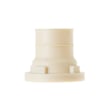
| H20 appears early, little or no water sound | Fill path restriction | Funnel WD49X25081 |
| Overfilling or no fill (float stuck behavior) | Float system | Dishwasher float assembly WD12X10047 |
| Poor wash plus fill related errors | Sump and filtration | Dishwasher filter WD12X10109 |
Why it matters
Running with an H20 condition can stop the cycle mid-wash, leave detergent undissolved, and reduce cleaning performance because the dishwasher cannot reach the right fill level and wash action timing.
Last updated: February 2026
What is the most common problem with a GE dishwasher?
The most common GE dishwasher problems are the dishwasher not running, not draining, or not cleaning well. On the GE ZBD6880N20SS, these symptoms are most often tied to basic issues like a door that is not fully latched, a tripped breaker, low water temperature, or a clogged filter and wash system.
Most common symptoms and what usually causes them
- Won’t run or start: door not fully closed and latched; wall switch (some installs) off; breaker tripped
- Not draining: clogged filter area, drain path restriction, or a drain connection issue
- Not cleaning: low inlet water temperature, improper loading, clogged spray arm ports, or a dirty filter
- Spots/film: hard water minerals, rinse aid empty, or water not hot enough
- Poor drying: rinse aid empty, heated dry not selected, or water not hot enough
For model-specific operating checks and the built-in problem solver, use the ZBD6880N20SS owner's manual.
Quick checks we recommend first (fast, no tools)
- Confirm the door closes firmly and clicks into the latch.
- Check the home electrical panel for a tripped breaker.
- Run hot water at the nearest sink before starting; the manual calls for at least 120°F (49°C) incoming water.
- Clean the filter area; if the filter is damaged or won’t come clean, replace the dishwasher filter WD12X10109.
- Inspect the spray arm holes for debris; replace a cracked or warped arm with the dishwasher spray arm WD22X10047.
Symptom-to-part cheat sheet (when a part is likely)
| Symptom | Most likely area | Parts on this model page that often help |
|---|---|---|
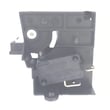
| Won’t run | Door closure and power | Dishwasher door latch assembly WD13X10031 |
| Not cleaning | Filtration and spray | Dishwasher filter WD12X10109, dishwasher spray arm WD22X10047 |
| Leaks at door | Door sealing surface | Dishwasher door seal WD08X10055 |
| Weak wash or unusual wash noise | Pump and motor | Mechanism assembly WD26X10053 |
Why it matters
Most “common problems” are really performance symptoms caused by water temperature, loading, and restricted flow through the filter and spray system. Fixing those basics first prevents unnecessary part replacement and restores normal wash pressure and heating performance.
Last updated: February 2026