Owner’s manual

How to replace a Whirlpool range hood filter?
On the Whirlpool WVU37UC0FS0 range hood, replacing the filter is a quick, tool-free job: turn off the hood, support the filter, release it from the retainer, and install the correct replacement filter so it seats securely before you run the fan again. See the WVU37UC0FS0 owner's manual for the exact filter style and retention method.
Which filter are you replacing?
This model can use different filters depending on how it is installed.
- Vented (ducted) setup: uses a metal grease filter that is cleaned and reinstalled.
- Non-vented (recirculating) setup: uses a charcoal filter to reduce odors (this is replaced, not washed).
- If your hood has a filter retainer, release the retainer first, then remove the filter.
| Filter type | Typical purpose | Typical maintenance |
|---|---|---|
| Metal grease filter | Captures grease before air exits the hood | Clean regularly, reinstall when dry |
| Charcoal filter | Reduces odors in recirculating mode | Replace on a schedule based on cooking |
Steps to remove and install the filter
- Turn the hood off and let the lights and surfaces cool.
- Support the filter with one hand.
- Release the filter from the filter retainer (the manual shows the retainer location).
- Remove the filter and note its orientation.
- Install the replacement so it sits flat and locks into the retainer.
- Run the fan and confirm there is no rattling or vibration.
If you need a replacement filter
For recirculating installations, the correct charcoal filter for this model is the range hood charcoal filter, 30-in W10905734. For vented installations, clean and reuse the metal grease filter unless it is damaged.
Why it matters
A properly seated grease or charcoal filter helps the blower move air efficiently, reduces grease buildup inside the hood, and helps keep fan noise and vibration down.
Last updated: February 2026
Is Whirlpool a good brand for range hoods?
Whirlpool is a solid, dependable brand for range hoods, and the Whirlpool WVU37UC0FS0 is built for typical residential cooking needs. In real-world use, customers commonly like the quieter operation, clean stainless look, and lighting, while some wish for stronger suction on heavier smoke and grease.
What to expect from the WVU37UC0FS0 in everyday use
Whirlpool designed this hood for standard home kitchens; the use and care information also notes it is for residential use and recommends pairing it with cooktops up to 55,000 BTUs total. For many households, that aligns well with normal cooking and ventilation demands.
Common owner takeaways:
- Quieter fan performance compared with older or budget hoods
- Good task lighting over the cooktop
- Clean, modern appearance that fits many kitchens
- Installation tends to be straightforward when you follow the WVU37UC0FS0 owner’s manual
- Some users want more airflow for high-heat searing or frequent frying
Vented vs. recirculating: performance depends on setup
A “good” hood is as much about installation type and maintenance as the brand.
| Setup | Best for | What you’ll notice | Key maintenance |
|---|---|---|---|
| Vented (ducted) | Maximum odor and smoke removal | Strongest real exhaust | Keep grease filter clean; keep duct clear |
| Recirculating (non-vented) | Apartments or no duct access | More odor reduction than smoke removal | Replace charcoal filter regularly |
If you run WVU37UC0FS0 as recirculating, it requires a charcoal filter kit; for 30-inch models that is the range hood charcoal filter, 30-in W10905734.
Why it matters
Choosing a Whirlpool hood like the WVU37UC0FS0 usually pays off when you match the hood to your cooking style and keep filters clean. Most “weak suction” complaints trace back to a clogged grease filter, an overdue charcoal filter (recirculating), or duct restrictions (vented).
Quick checks if suction seems weak
- Clean the grease filter on schedule (more often if you fry frequently)
- If recirculating, replace the charcoal filter when odors linger
- Confirm the damper opens freely and ducting is not crushed or blocked
- Use the highest fan speed during heavy smoke, then let it run a few minutes after cooking
Last updated: February 2026
What are the parts of a range hood called?
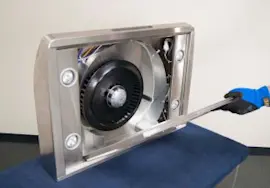
On the Whirlpool WVU37UC0FS0 range hood, the main parts are typically the hood body (canopy), venting components, the blower (fan and motor), the control panel, lights, and filters. These parts work together to capture grease and move smoke, heat, and odors away from the cooktop.
Common range hood parts (and what they do)
- Hood canopy (housing): the main body that captures cooking vapors
- Vent system (ducting or recirculation path): routes air outside or back into the kitchen
- Damper (backdraft damper): helps prevent outside air from flowing back in
- Blower assembly: moves air; includes the motor and blower wheel/fan
- Control panel (touch controls or switches): turns the blower and lights on and off
- Lights (LED lamps or light assembly): illuminates the cooktop
- Grease filter and retainer: traps grease before air reaches the blower
- Charcoal filter (recirculating setups): reduces odors when not venting outdoors
Parts you will see referenced for WVU37UC0FS0
| Part group | What it affects | Example part for this model |
|---|---|---|
| Grease filtration | Grease capture, airflow | Filter, grease (30" model only) W11100656 |
| Odor filtration (recirculating) | Odor reduction | Range hood charcoal filter, 30-in W10905734 |
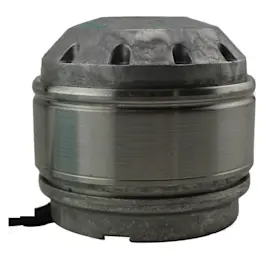
| Air movement | Suction and noise level | Range hood blower motor W11099715 |
| Venting | Prevents backdraft | Range hood damper WPW10291572 |
Why it matters
Knowing the correct part names helps you match symptoms to the right component. For example, weak airflow often points to a clogged grease filter, a blocked damper, or a blower issue, while odor problems in recirculating mode usually point to the charcoal filter.
Quick tips when identifying parts
- Check inside the hood for the model/serial/rating plate; it helps confirm clearances and configuration.
- If your hood is set up as non-vented (recirculating), it uses a charcoal filter.
- Keep filters clean; restricted airflow can make the blower louder and less effective.
- For control locations and filter placement, use the diagrams in the WVU37UC0FS0 owner's manual.
Last updated: February 2026
Why is the fan not working on my Whirlpool range hood?
On the Whirlpool WVU37UC0FS0 range hood, a fan that will not run is usually caused by a tripped breaker/blown fuse, a loose wiring connection at the hood’s terminal box, or a failed control (touch controls/switching) that is not sending power to the blower.
Quick checks we recommend first
- Confirm the hood has power; reset the kitchen circuit breaker or replace the household fuse.
- Try each blower speed button (min, medium, max) to rule out a single-speed control issue.
- If the hood was recently installed or moved, disconnect power and recheck the wiring connections at the hood terminal box (per the WVU37UC0FS0 owner’s manual).
- Make sure the grease filter is seated correctly and not interfering with the blower area.
- If the hood is vented, check for a stuck damper or blocked ducting that can make the blower seem “dead” or overloaded.
What to inspect next (most common causes)
| What you notice | Likely cause | What to do |
|---|---|---|
| Fan and lights both dead | No power supply, tripped breaker, loose wiring | Verify power, then recheck terminal box connections with power disconnected |
| Lights work but fan does not | Failed control input or blower circuit issue | Test controls; if unresponsive, replace the control |
| Fan hums but will not spin | Blower wheel jam, failing motor/capacitor | Check for obstruction; inspect motor and capacitor |
| Fan runs but airflow is weak | Grease buildup, blocked vent, damper stuck | Clean filters, confirm damper opens, reduce duct restrictions |
Parts that commonly fix a “fan not working” complaint
If power is good and the controls respond but the blower still will not run, these model-matched parts are common repair paths:
- Range hood blower motor W11099715 (motor will not start, overheats, or stalls)
- Capacitor W11099740 (motor hums or struggles to start)
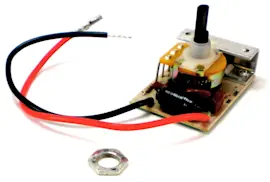
- Electronic control W11100652 (touch buttons do not reliably command the blower)
Why it matters
A non-working range hood fan leaves smoke, moisture, and grease in the kitchen. It also increases heat and odor buildup around the cooktop, and a struggling blower can become noisier and wear out faster.
For step-by-step symptom-based troubleshooting, use our range hood fan doesn’t work guide to narrow the failure to power, controls, or the blower system.
Last updated: February 2026