Owner’s manual
 Error Codes


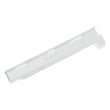


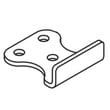
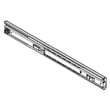
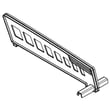
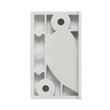
How to remove bottom grille on GE refrigerator?
On the GE GNE27JYMKFFS bottom-mount refrigerator, the bottom grille (base grille) typically comes off by releasing the retaining clips or removing a couple of screws (model variations exist). Once released, pull the grille straight out from the bottom front of the cabinet.
Before you start
- Unplug the refrigerator to reduce shock risk while working near wiring and fans.
- If you need to roll the refrigerator out for access, raise the front leveling legs first.
- Pull the refrigerator straight out (not sideways) to help prevent floor damage.
- Watch the power cord and water line so you do not roll over them.
- Keep screws and trim pieces together so reinstallation is easy.
For the safest model-specific handling and moving instructions, follow the GNE27JYMKFFS owner's manual.
How to remove the bottom grille (most common method)
- Look along the top edge of the grille for screws (often Phillips-head). Remove them if present.
- If there are no screws, feel for clip points along the top edge.
- Pull the grille straight toward you; use steady, even pressure near the clip locations.
- If the grille resists, check both corners for hidden fasteners and confirm the leveling legs are not blocking removal.
Reinstalling the grille
- Align the grille tabs with the slots in the cabinet.
- Push the grille straight in until it seats.
- Reinstall any screws and tighten snugly (do not overtighten).
Quick troubleshooting if it will not come off
| What you notice | What to do |
|---|---|
| Grille flexes but will not release | Check for screws along the top edge and corners; then pull straight out at the clip points |
| Grille hits the floor | Raise the front leveling legs slightly, then try again |
| You need more access behind the grille | Pull the refrigerator straight out after raising leveling legs |
Why it matters
The bottom grille helps protect components and directs airflow. Removing it correctly prevents broken tabs, stripped screws, and air leaks that can affect cooling performance.
Last updated: February 2026
What is the most common problem with a GE refrigerator?
The most common problem we see with GE refrigerators like model GNE27JYMKFFS is a cooling complaint: the fresh food section gets too warm, the freezer temperature drifts, or airflow is weak. In many cases, the fix is restoring airflow and temperature control, not replacing major sealed-system parts.
Most common causes of poor cooling
Start with the issues that cause the most day-to-day temperature problems:
- Air vents blocked by food; the manual notes food too close to the rear air vent can cause freezing or uneven temps
- Dirty condenser coils (reduces heat removal and makes the compressor run longer)
- Evaporator fan problem (weak or no airflow through the refrigerator)
- Defrost system issue (frost buildup blocks airflow)
- Temperature sensing or control issue (sensor or control board misreading temps)
Quick checks we recommend first
These steps solve a large share of “not cold enough” calls without parts swapping:
- Confirm the doors close fully and seals are making contact all the way around
- Move items away from the back wall vents to restore airflow
- Clean condenser coils and the area around the condenser fan
- Listen for the evaporator fan in the freezer area when the doors are closed
- Give temperature changes time to stabilize (several hours) after adjusting settings
Parts that commonly relate to cooling symptoms (for this model)
If airflow and cleaning do not help, these parts are frequent next suspects for GNE27JYMKFFS:
| Symptom | What it often points to | Example part on this model page |
|---|---|---|
| Temps swing, unit runs too long | Temperature feedback problem | GE profile refrigerator temperature sensor WR55X10025 |
| Frost buildup, warm fridge | Defrost control issue | Refrigerator defrost bi-metal thermostat WR50X10069 |
| Warm fridge, freezer OK or uneven temps | Airflow control issue | Refrigerator air damper WR60X27396 |
| Random cooling issues, dead display, odd behavior | Control problem | Main control board assembly WR55X46945 |
Why it matters
Cooling problems are usually airflow, defrost, or sensing related. Fixing the root cause protects food, reduces energy use, and helps prevent the compressor from running excessively.
Helpful model-specific reference
For temperature setting guidance and troubleshooting tips (including airflow notes), use the GNE27JYMKFFS owner's manual. For broader DIY diagnosis, we also use GE refrigerator error codes to match symptoms to likely failures.
If you need to order a replacement part, we list compatible parts for GNE27JYMKFFS on this page; you can also search by model number on Sears PartsDirect.
Last updated: February 2026
What are the disadvantages of a bottom freezer refrigerator?
Bottom-freezer refrigerators like the GE GNE27JYMKFFS keep fresh food at eye level, but the tradeoffs are mostly about freezer access and layout. The biggest disadvantages are more bending to reach frozen items, deep-drawer organization challenges, and a higher chance of drawer-related icing or drain issues if maintenance is neglected (see the GNE27JYMKFFS owner's manual for model-specific features and care).
Common disadvantages you may notice
- More bending and lifting: You reach down into a lower drawer for heavy frozen foods.
- Deep drawer organization: Items can stack and get buried; baskets can also stick if overfilled.
- Slower “grab-and-go” freezer access: A pull-out drawer takes more steps than a swing door.
- Potential for drawer icing or water issues: Bottom-freezer designs can be more sensitive to door openings, humidity, and drain/defrost conditions.
- Kid safety and convenience: Children can access heavier frozen items more easily when the freezer is low.
What to do to reduce the downsides
We see most complaints improve with a few habits and quick checks:
- Keep the freezer baskets filled no higher than the rim to prevent sticking or jamming.
- Use smaller bins inside the drawer to separate meats, vegetables, and quick snacks.
- Minimize long door openings; humidity and warm air increase frost and moisture.
- Level the refrigerator so doors close consistently and seals seat evenly.
- If you use the dispenser, replace the water filter on schedule; a restricted filter can reduce water flow and ice production.
Bottom freezer vs. top freezer: quick comparison
| Feature | Bottom freezer | Top freezer |
|---|---|---|
| Fresh food access | Easier (eye level) | More bending |
| Freezer access | More bending | Easier |
| Organization | Deep drawer, can bury items | Shelves, easier to see |
| Typical complaints | Drawer sticking, icing, clutter | Less fresh-food convenience |
Why it matters
Choosing a freezer layout affects daily ergonomics and food waste. If you use fresh foods more than frozen, a bottom-mount like the GNE27JYMKFFS can feel more convenient; if you access frozen items constantly, the bending and drawer organization can become a real annoyance.
If you are troubleshooting cooling, icing, or temperature swings, common related parts for this model include the GE profile refrigerator temperature sensor WR55X10025 and the refrigerator air damper WR60X27396. For parts shopping beyond the list for this model, search by model number on Sears PartsDirect.
Last updated: February 2026