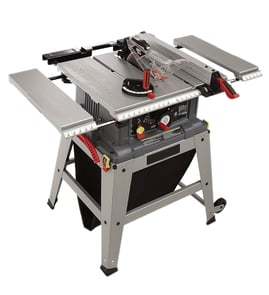

What is the best table saw on the market?
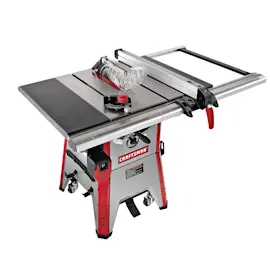
For most people, the best table saw is the one that matches the work you actually do: a stable fence for accurate ripping, the right blade size and capacity, and strong safety features. If you already own a Makita 2708, the “best” move is often keeping it tuned and safe rather than switching saw types.
How we recommend choosing the “best” saw
- Safety first: riving knife, blade guard, anti-kickback pawls, and an easy-to-hit paddle switch
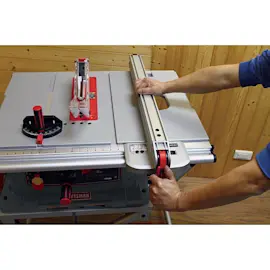
- Fence accuracy: a fence that locks parallel and stays square after transport
- Capacity fit: rip width and depth of cut that match your typical stock
- Power match: 120V jobsite saws for portability; heavier saws for smoother cuts
- Dust control: a usable dust port and shrouding around the blade
Where the Makita 2708 fits (and what to prioritize)
The Makita 2708 is an 8-inch table saw, which is a strong choice when you want compact storage and lighter weight. It can still deliver accurate results when the fence is aligned, the blade is sharp, and the safety gear is installed correctly.
If you are comparing upgrades, focus on capacity and stability, not brand names.
Quick comparison (what changes as you move up)
| Saw type | Best for | What you give up |
|---|---|---|
| 8-inch compact (like Makita 2708) | Small spaces, lighter transport | Less capacity than many 10-inch saws |
| 10-inch jobsite | Versatile all-around use | More noise and vibration than heavier saws |
| Contractor/cabinet | Precision and smooth cuts | Cost, weight, and dedicated space/power |
Why it matters
Choosing based on fence stability, safety features, and capacity reduces kickback risk and improves cut quality. For many owners, maintaining the Makita 2708 properly delivers better results than replacing it.
For help confirming you are shopping for the correct diagrams and components, use how to find your appliance model number (and what it means for parts).
Last updated: February 2026
What size blade is a Makita 2708 table saw?
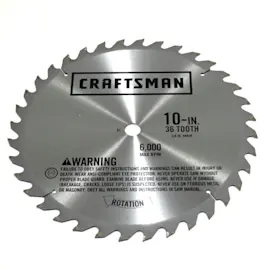
The Makita 2708 is an 8 inch class table saw; it’s designed to use an 8 inch blade (with the correct arbor hole for the saw). For the exact blade diameter and arbor size for your specific 2708, match what’s printed on your current blade and the saw’s blade guard label.
How to confirm the correct blade size on your 2708
- Unplug the saw before checking anything near the blade.
- Read the blade diameter printed on the blade (for example, “8 in” or “8-1/4 in”).
- Check the arbor hole size printed on the blade (common sizes are 5/8 in or 1/2 in, depending on the saw).
- Verify the blade’s maximum RPM rating meets or exceeds the saw’s no-load RPM.
- Make sure the blade kerf and tooth style fit your work (rip, crosscut, combination).
Blade fit checklist (what must match)
| Item to match | What to look for | Why it matters |
|---|---|---|
| Blade diameter | 8 inch class | Controls max cutting depth and guard clearance |
| Arbor hole | Must match the arbor shaft | Prevents wobble and unsafe mounting |
| RPM rating | Blade rating at or above saw RPM | Reduces risk of blade failure |
| Kerf thickness | Thin vs full kerf | Affects motor load and cut quality |
Why it matters
Using the correct blade diameter and arbor hole helps the blade seat flat on the arbor flange, keeps the guard and splitter/riving knife aligned, and reduces vibration. That improves cut accuracy and helps protect the motor on an 8 inch class Makita table saw.
Helpful DIY reference
If you’re troubleshooting a saw that won’t start after a blade change, use how to tell if a fuse is blown to rule out a simple power issue before digging deeper.
Last updated: February 2026
What type of cutting is never permitted with a table saw?
Freehand cutting is never permitted on a table saw, including the Makita 2708, because guiding the workpiece without the rip fence or miter gauge makes kickback and loss of control far more likely. We also never permit cuts that force the blade to bind, such as curved cuts or drop cuts.
Cuts we never permit (and what to do instead)
- Freehand cuts (no fence, no miter gauge, no sled): use the rip fence for ripping or a miter gauge/sled for crosscuts.
- Curved cuts on the table saw: use a band saw or jigsaw, then clean up the edge.
- Drop cuts / plunge-style cuts (lowering the wood onto a spinning blade): start with the workpiece on the table and use proper setup, or use a different tool designed for plunge cutting.
- Ripping severely warped, twisted, or bowed stock: joint/straighten the board first or break it down with a safer method.
- Cutting pieces too small to control safely by hand: use push sticks, push blocks, and a zero-clearance style support approach.
Quick safety checklist before you cut
- Set the blade height so gullets clear the top of the workpiece (typically about 1/8 to 1/4 inch above).
- Keep the rip fence parallel to the blade; don’t “toe in” the fence.
- Use a push stick/push block for narrow rips.
- Stand slightly to the side of the blade path to reduce exposure if kickback occurs.
- Keep the table clear; support long boards with outfeed support.
What “freehand” means (examples)
| If you are doing this | It is considered freehand? | Safer alternative |
|---|---|---|
| Pushing a board through with no fence or miter gauge | Yes | Rip fence or crosscut sled |
| Holding a board at an angle by hand to “trim” an edge | Yes | Jig, sled, or different tool |
| Trying to steer a curve through the blade | Yes | Band saw/jigsaw |
Why it matters
Most table saw injuries start with loss of control: the blade grabs the wood, the kerf closes and binds, or the workpiece twists. Eliminating freehand and binding-prone cuts is the fastest way to reduce kickback risk.
For general DIY safety best practices, see are diy appliance repairs safe.
Last updated: February 2026