 Installation guide
 Owner’s manual
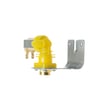


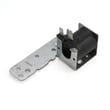
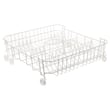
What is the average life expectancy of a GE dishwasher?
A GE dishwasher typically lasts 10 to 12 years. With consistent care (proper loading, correct water temperature, and routine cleaning), many units reach the higher end of the normal 8 to 15 year range; this applies to GE model GSD4060N20SS as well.
- Water quality and temperature: GE recommends incoming water around 120°F to 150°F for effective cleaning.
- Detergent and rinse aid use: Using dishwasher-approved detergent and a rinse agent helps reduce film buildup.
- How often you run it: Multiple loads per day shortens lifespan compared to light weekly use.
- Maintenance habits: Keeping spray paths clear and seals clean reduces strain on the pump and motor.
- Installation quality: A stable, correctly installed dishwasher is easier to service and less prone to leaks.
- Run hot water at the sink until it is hot before starting a cycle.
- Check and clean the lower spray arm holes if you see poor wash results.
- Keep the door seal area clean and free of debris.
- Use rinse agent to reduce spotting and help drying.
- Avoid overloading; make sure spray arms can rotate freely.
| Symptom | What it often points to | Example part for this model |
|---|---|---|
| Not draining or standing water | Drain path restriction or drain mechanism issue | GE dishwasher drain solenoid assembly WD21X10268 |
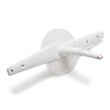
| Poor cleaning | Spray arm wear or blockage | Dishwasher spray arm, lower WD12X10244 |
| Not drying well | Heating circuit or element issue | Dishwasher heating element WD05X26780 |
Knowing the typical lifespan helps you decide whether to repair or replace. If your GSD4060N20SS is near the 10 to 12 year mark, focusing on high-impact maintenance and targeted part replacement can extend service life and improve cleaning performance.
For model-specific use and care guidance, follow the GSD4060N20SS owner’s manual.
Last updated: February 2026
Can I replace dishwasher parts myself?
Yes, for the GE GSD4060N20SS dishwasher we see many customers successfully replace common wear parts themselves (like racks, spray arms, hoses, and some seals) by shutting off power and water and following the steps in the installation guide and owner's manual. For electrical repairs, we recommend using a qualified technician.
These repairs are typically straightforward with basic hand tools and careful reassembly:
- Dishwasher racks (fit and slide issues)
- Spray arms (poor cleaning, clogged jets)
- Drain hose (leaks, kinks, restricted draining)
- Heating element (poor drying, water not heating)
- Drain solenoid assembly (drain problems on some designs)
The manual notes that turning the dishwasher off does not disconnect it from power, so we treat power shutoff as a separate step.
- Turn off the circuit breaker (or have power disconnected at the junction box)
- Shut off the water supply valve under the sink
- Protect the floor with towels; expect some water in the sump and hoses
- Wear gloves and safety glasses during installation or service work
- Take photos of wire and hose routing before removal
If your symptom matches, these model-specific parts are common DIY replacements:
| Symptom | Common DIY part to check | Example part for GSD4060N20SS |
|---|---|---|
| Not cleaning well | Lower spray arm | Dishwasher spray arm, lower WD12X10244 |
| Not draining or drains intermittently | Drain solenoid assembly or drain hose | GE dishwasher drain solenoid assembly WD21X10268, dishwasher drain hose WD24X10014 |
| Not drying or water stays cool | Heating element | Dishwasher heating element WD05X26780 |
DIY replacement can restore cleaning and draining performance quickly, but dishwashers combine water, electricity, and tight cabinet installs. Following the documented steps helps prevent leaks, poor wash performance from improper leveling, and electrical shock risk.
Last updated: February 2026
What is the most common problem with GE dishwashers?
The most common problems we see with GE dishwashers like model GSD4060N20SS are not draining, leaking at the door, and poor cleaning or drying. These issues are often caused by a blocked drain path, a worn door seal, or spray-arm and water-temperature problems.
- Not draining: check for a kinked drain hose, a clogged sink/disposer connection, or a blocked pump area.
- Leaking: inspect the door seal for tears, flattening, or debris stuck along the sealing surface.
- Not cleaning well: confirm spray arms spin freely and the incoming water is hot enough.
- Not drying: verify rinse aid use and look for heating-related symptoms.
- Won’t start or stops mid-cycle: try a power reset at the breaker for about 30 seconds, then restart.
The owner documentation for this GE dishwasher calls out a few basics that directly affect performance:
| Symptom | Fast check | What it points to |
|---|---|---|
| Cloudy or dirty dishes | Incoming water should be 120°F to 150°F | Water heater setting, hot water supply |
| Plastic items warped or damaged | Keep plastics from contacting the heater | Loading practices, rack placement |
| Intermittent control issues | Reset breaker for ~30 seconds | Temporary control glitch vs. service need |
For cycle features, loading guidance, and operating tips specific to this unit, use the GSD4060N20SS owner's manual.
If your checks point to a failed component, these model-matched parts are common fixes:
- Drain problems: GE dishwasher drain solenoid assembly WD21X10268, plus inspect the drain path and hose routing.
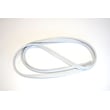
- Leaks at the door: dishwasher door seal WD08X10057.
- Poor wash coverage: dishwasher spray arm, lower WD12X10244.
- Poor drying or water not heating: dishwasher heating element WD05X26780.
Drainage, sealing, and water temperature are the foundation of dishwasher performance. When any one of these is off, you can get standing water, leaks, or gritty dishes even if the dishwasher still runs.
Last updated: February 2026





