


Does a Whirlpool front load washer have a filter to clean?
Yes. Most Whirlpool front load washers, including model WFW560CHW1, have a drain pump cleanout (often called a filter) that you can open periodically to remove lint, coins, and small items that can cause slow draining or drain errors.
Where the “filter” is on a front load washer
On many Whirlpool front load designs, the cleanout is part of the drain pump system and is accessed from the lower front area.
Typical access points:
- Behind a small lower access door (kick panel area)
- Behind the lower front panel (some versions require panel removal)
- At the drain pump cleanout cap (you turn it counterclockwise to open)
If your washer is not draining well, the drain pump itself can also be the issue; see the model-matched washer drain pump assembly W11458345.
How we recommend cleaning it (safe, low-mess method)
Before opening the cleanout, plan for water.
- Unplug the washer.
- Put towels down and use a shallow pan.
- If your model has a small drain tube near the cleanout, drain into a container first.
- Slowly loosen the cleanout cap counterclockwise to let water trickle out.
- Remove debris from the trap and check the pump impeller for obstructions.
- Reinstall the cap firmly (hand-tight) and run a quick rinse and drain.
What symptoms a clogged filter can cause
A dirty pump cleanout commonly leads to:
- Washer will not drain or drains slowly
- Standing water left in the tub
- Loud humming or grinding during drain
- Spin won’t start because the washer can’t drain
Quick troubleshooting: cleanout vs. failed pump
| What you notice | More likely cause | What to do next |
|---|---|---|
| Drains better after cleaning | Clogged cleanout | Clean every 1 to 3 months if you wash lots of linty items |
| Hums but won’t move water | Jammed or failing pump | Inspect impeller; consider washer drain pump assembly W11458345 |
| Intermittent drain issues | Partial blockage | Recheck cleanout; inspect the drain hose for kinks |
Why it matters
Keeping the drain pump cleanout clear helps your WFW560CHW1 drain and spin correctly, reduces odor from trapped debris, and prevents small items from damaging the pump.
Last updated: February 2026
Is the Whirlpool WFW560CHW1 stackable?
Yes. The Whirlpool WFW560CHW1 is a front-load washer that can be stacked with a compatible Whirlpool dryer when you use the correct stacking kit made for that washer and dryer pair; the dryer should never sit on the washer without the proper hardware.
What “stackable” means for WFW560CHW1
Stacking puts the dryer on top to save floor space. The washer stays on the floor; the stacking kit locks the dryer to the washer so the pair stays stable during high-speed spin.
- Stack only a compatible dryer on top of the washer
- Keep the washer on a solid, level floor
- Do not use makeshift brackets or screws through the cabinets
- Leave space behind the units for hoses, drain, and venting
- Recheck washer leveling after moving it into a closet
What to confirm before you stack
Use this checklist to avoid vibration, noise, and fit issues.
| Check | What you want | Why it matters |
|---|---|---|
| Washer style | Front-load (WFW560CHW1) | Front-load designs support stacking |
| Dryer match | Compatible Whirlpool dryer and correct stacking kit | Prevents mounting and alignment problems |
| Water supply | Hoses in good condition | Reduces leak risk in tight spaces |
| Drain setup | Drain hose secured, no kinks | Prevents slow drain and overflow |
Parts that commonly help during a stack install
These are not stacking kits, but they are common “while we’re here” replacements when moving a washer into a stacked closet setup.
- Replace aging fill hoses with washer fill hose set 8212545RP
- If the drain hose is cracked, kinked, or too short, use washer drain hose assembly W11549455
- If the washer won’t fill after being moved, check hose screens and consider new hoses such as washer water inlet hose, 2-pack 8212487RP
Why it matters
A correct stacked installation keeps the washer stable during high-speed spin and helps prevent leaks and drain problems that can show up after the unit is repositioned.
Last updated: February 2026
What is the most common problem with Whirlpool washers?
The most common Whirlpool washer problems are draining failures, leaks, and spin issues. On the Whirlpool WFW560CHW1 front-load washer, these symptoms most often trace back to a clogged or failing drain pump, a door lock that will not latch, or a worn door boot (bellow) that lets water escape.
Most common symptoms and what they usually mean
- Washer will not drain or stops mid-cycle: drain pump blockage, kinked drain hose, or a weak pump motor.
- Door will not lock or cycle will not start: door lock or door strike problem.
- Water leaking from the front: torn or mis-seated door boot (bellow), or a loose clamp.
- Clothes still wet after spin: out-of-balance load, drain restriction, or door lock not staying engaged.
- Error codes on the display: often point to drain, lock, or control issues; use Whirlpool duet high efficiency front load washer error codes to match the code to the likely failure.
Quick checks we recommend before replacing parts
- Reduce suds: Use HE detergent and the correct dose; excess suds can mimic drain and spin problems.
- Check the drain path: Make sure the standpipe is not clogged and the drain hose is not pinched.
- Confirm the door closes firmly: Look for a cracked strike or a latch that feels loose.
- Run a rinse and spin: If it drains slowly or not at all, focus on the pump and drain hose.
Parts that commonly solve these problems on WFW560CHW1
| Symptom | Common fix | Part to consider |
|---|---|---|
| Not draining, F9-type drain errors, water left in tub | Replace drain pump | Washer drain pump assembly W11458345 |
| Door will not lock, won’t start, intermittent stopping | Replace door lock or strike | Ha15g janus- W11565030, strike, door W11316914 |
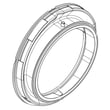
| Leak at door area, musty smell around opening | Replace door boot (bellow) | Bellow, d412 W11314648 |
| Slow drain or siphoning issues | Replace damaged drain hose | Hose assy-dr W11549455 |
Why it matters
Drain, leak, and lock problems can stop the washer from completing a cycle, leave clothes soaking wet, and cause water damage. Catching the root cause early also helps prevent secondary issues like control board faults or repeated error codes.
Last updated: February 2026