Owner’s manual
 Error Codes


How wide is a 25.6 cubic foot refrigerator?
A 25.6 cubic foot refrigerator is typically about 35 to 36 inches wide. For your GE GSS25WSTMSS side-by-side, the installation guidance also notes that if an entrance is less than 38 inches wide, the doors must be removed to move the refrigerator through. See the owner's manual.
Typical width ranges (what you can expect)
Most 25 to 26 cu. ft. refrigerators fall into one of these common width bands:
- Standard full-width: 35 3/4 in. to 36 in.
- Slightly narrower models: about 33 in. (less common at 25.6 cu. ft.)
- Counter-depth styles: often 35 3/4 in. wide, but shallower front-to-back
Why the 38-inch doorway note matters
The 38-inch figure is a practical moving guideline, not the cabinet width. It accounts for things like:
- Door swing and hinge geometry
- Handles and trim clearance
- The angle needed to maneuver on a hand truck
- Protecting door gaskets and cabinet corners
Quick planning table
| What you’re measuring | What to use | Typical value |
|---|---|---|
| Refrigerator cabinet width | Tape measure across the case (doors closed) | ~35 to 36 in. |
| Minimum opening to roll through | Doorway width and turning clearance | Often 36 in. is tight |
| “Remove doors if under” guideline (GSS25WSTMSS) | Entrance width | 38 in. |
Tips to measure correctly
- Measure the narrowest point of the path (door jambs, trim, railings).
- Measure the refrigerator at the widest point (often the doors or hinges).
- Plan for air clearance after install; the manual lists small side clearance and 1 inch at the top and back for airflow.
Last updated: February 2026
What is the average lifespan of a GE refrigerator?
Most GE refrigerators average 12 to 15 years of service life with normal household use and basic maintenance. For your GE GSS25WSTMSS side-by-side, keeping airflow clear and staying on top of cooling and defrost issues helps you reach the high end of that range; see the owner's manual for care and operating guidance.
Typical lifespan ranges (what to expect)
- Average: 12 to 15 years
- Often achievable with good maintenance: 15 years
- Replace-or-repair tipping point: major sealed-system or compressor failures late in life
| Appliance age | What’s common | What we recommend |
|---|---|---|
| 0 to 5 years | Minor adjustments, occasional part replacement | Keep coils clean, verify temps |
| 6 to 10 years | Fans, sensors, icemaker or water system wear | Address symptoms early |
| 11 to 15 years | Higher chance of cooling and defrost problems | Compare repair cost vs. age |
What shortens (or extends) refrigerator life
These items have the biggest impact on lifespan for a side-by-side refrigerator:
- Dirty condenser area reducing heat removal
- Door gasket leaks causing long run times
- Poor airflow (overpacked shelves, blocked vents)
- Water filter restrictions and low water flow to the dispenser
- Defrost system problems leading to frost buildup and warm temps
Quick maintenance checklist for longer life
- Set temps to 37°F fresh food and 0°F freezer
- Keep vents inside both compartments unobstructed
- Clean the condenser area periodically (more often with pets)
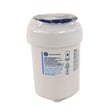
- Replace the water filter on schedule; use the refrigerator water filter MWFP
- If you see frost buildup or warming, troubleshoot defrost components early (heater, thermostat, fan)
Why it matters
A refrigerator that runs longer than it should (from dirty coils, air leaks, or frost buildup) puts extra stress on the compressor and fans. Reducing run time and keeping stable temperatures is the most reliable way to extend service life.
Last updated: February 2026
Are GE side by side refrigerators good?
Yes. GE side-by-side refrigerators like model GSS25WSTMSS are a solid choice for everyday reliability and convenience; they typically deliver consistent cooling, easy organization with adjustable shelving and bins, and practical features like an ice and water dispenser when maintained per the owner's manual.
What “good” usually means for a side-by-side
A side-by-side design is considered “good” when it balances freezer performance, fresh-food temperature stability, and usable storage.
- Keeps both compartments at steady temperatures with proper airflow
- Makes frequently used items easy to reach at eye level
- Offers door storage for condiments and beverages
- Provides dispenser convenience (ice and chilled water)
- Runs with normal operating sounds (fans, ice maker cycling)
Common pros and tradeoffs
These are the most typical strengths and compromises customers notice with side-by-side refrigerators.
| Area | Typical strength | Typical tradeoff |
|---|---|---|
| Storage | Great organization, lots of shelves/bins | Narrower space for wide platters/pizza boxes |
| Freezer access | Easy access to frozen foods | Less “big bin” space than many bottom-freezers |
| Dispenser | Convenient ice and water | Ice maker can be louder and slower during heavy use |
| Maintenance | Straightforward routine care | Needs periodic filter changes and coil cleaning |
Maintenance that keeps performance “good”
Good performance depends more on upkeep than brand alone.
- Replace the water filter on schedule; use the correct filter such as GE refrigerator water filter MWFP
- If cooling becomes inconsistent, check sensors and airflow; a failed sensor like GE profile refrigerator temperature sensor WR55X10025 can cause temperature swings
- If frost builds up or airflow drops, defrost components may need attention (heater, thermostat)
- Clean spills with recommended methods; avoid harsh cleaners that can damage interior surfaces
- For vacations, unplug, clean with a baking soda solution, leave doors open, and turn off the ice maker and water supply (as outlined in the manual)
Why it matters
A “good” refrigerator is one that holds safe food temperatures, avoids excessive frost, and delivers water and ice reliably. Routine filter changes, proper cleaning, and addressing early cooling symptoms help your GSS25WSTMSS stay efficient and extend component life.
Last updated: February 2026
What is the most common problem with a GE refrigerator?
The most common issue we see with GE refrigerators like model GSS25WSTMSS is a cooling complaint (refrigerator or freezer too warm). In many cases, it is caused by control settings, doors being left open, or airflow problems; the troubleshooting steps in the owner's manual help you narrow it down fast.
Quick checks first (no tools)
- Make sure both temperature controls are set to a cooling setting (not OFF).
- Confirm the doors fully close and nothing is holding them open.
- Allow 24 hours after plugging in or changing settings for temperatures to stabilize.
- Avoid frequent, long door openings, especially in hot or humid weather.
- Listen for fans running; unusual silence can point to an airflow or fan issue.
Most common symptoms and what they usually mean
| Symptom | Most likely cause | What we recommend |
|---|---|---|
| Fresh food section warm | Door left open, controls not cold enough | Adjust controls, check door closure |
| Freezer warm and no ice | Freezer not cold enough yet, icemaker OFF | Wait 24 hours, turn icemaker ON |
| Small or hollow ice cubes | Clogged water filter | Replace the GE refrigerator water filter MWFP |
| Frost or ice crystals | Door left open | Check for packages blocking the door |
| Interior light out | Bulb burned out or no power | Check power; replace the refrigerator light bulb 40A15 |
When it is likely a part problem
If the temperatures drift up and basic checks do not help, these parts commonly affect cooling performance:
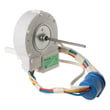
- Evaporator fan motor (moves cold air): refrigerator evaporator fan motor WR60X10307
- Defrost system components (prevent ice buildup on the evaporator): refrigerator defrost heater WR51X10055 and refrigerator defrost bi-metal thermostat WR50X10065
- Temperature sensing (can misread temps and affect run time): refrigerator temperature sensor WR55X10025
Why it matters
Cooling problems can quickly lead to food spoilage and can also cause secondary complaints like weak ice production, odd noises from longer run times, and moisture buildup. Catching a door or control issue early often prevents unnecessary part replacement.
Last updated: February 2026