
Get free shipping on your order, with any water filter subscription. Find my filter

Open Hamburger Menu
Sears Parts Direct
Tips to find your model number
York D1NH048N06506 heating & cooling unit

York D1NH048N06506 heating & cooling unit Parts

Here are the diagrams and repair parts for York D1NH048N06506 heating & cooling unit, as well as links to manuals and error code tables, if available.

By Schematic
SELECT DIAGRAM
?

This is the number corresponding to the part on the diagram / schematic

Browse Parts for D1NH048N06506 Heating & Cooling Unit

  • Burner, Gas (1-per Burner) for York D1NH048N06506 - Part 029-21198-000

    #30

    All parts diagram

    Burner, Gas (1-per Burner)

    Part #029-21198-000

    The manufacturer no longer makes this part, and there's no substitute part

  • Accessories--electrical: Pressure Safety Kit (see Note 3) for York D1NH048N06506 - Part 2PK04700824

    #NI

    All parts diagram

    Accessories--electrical: Pressure Safety Kit (see Note 3)

    Part #2PK04700824

    The manufacturer no longer makes this part, and there's no substitute part

  • Post Corner (front R/h) for York D1NH048N06506 - Part 073-14851-002

    #74

    All parts diagram

    Post Corner (front R/h)

    Part #073-14851-002

    The manufacturer no longer makes this part, and there's no substitute part

  • Oirifice, Gas Burner #40 (1-per Burner) for York D1NH048N06506 - Part 029-20423-040

    #34

    All parts diagram

    Oirifice, Gas Burner #40 (1-per Burner)

    Part #029-20423-040

    The manufacturer no longer makes this part, and there's no substitute part

  • Owner's Manual for York D1NH048N06506 - Part 1FA0406

    #NI

    All parts diagram

    Owner's Manual

    Part #1FA0406

    The manufacturer no longer makes this part, and there's no substitute part

  • Mount for York D1NH048N06506 - Part 026-31459-000

    #41

    All parts diagram

    Mount

    Part #026-31459-000

    The manufacturer no longer makes this part, and there's no substitute part

  • Com Isolator for York D1NH048N06506 - Part 028-10581-000

    #2

    All parts diagram

    Com Isolator

    Part #028-10581-000

    The manufacturer no longer makes this part, and there's no substitute part

  • Gas Valve for York D1NH048N06506 - Part 029-21180-000

    #29

    All parts diagram

    Gas Valve

    Part #029-21180-000

    The manufacturer no longer makes this part, and there's no substitute part

  • Flue Exhaust for York D1NH048N06506 - Part 073-19344-000

    #53

    All parts diagram

    Flue Exhaust

    Part #073-19344-000

    The manufacturer no longer makes this part, and there's no substitute part

  • Panel Access (elect. And Heat Ctl's) for York D1NH048N06506 - Part 073-14981-002

    #69

    All parts diagram

    Panel Access (elect. And Heat Ctl's)

    Part #073-14981-002

    The manufacturer no longer makes this part, and there's no substitute part

York Heating & Cooling Unit D1NH048N06506 FAQs

For a York packaged heating and cooling combined unit like model D1NH048N06506, a typical installed replacement lands in the mid four figures to low five figures. Packaged units usually cost less to install than split systems because everything is in one cabinet.

Typical installed cost ranges

These ranges reflect common residential packaged-unit replacements (equipment plus labor):

  • Packaged gas/electric or packaged heat pump: $7,000 to $14,000
  • Higher-efficiency packaged unit or premium controls: $12,000 to $18,000
  • Major add-ons (ductwork, curb adapter, electrical, gas, venting): +$1,000 to $6,000

What drives the price on a packaged unit

  • Capacity and efficiency (SEER/EER, AFUE, heat pump performance)
  • Rooftop vs ground placement (roof access, crane or lift needs)
  • Curb adapter and roof curb condition (common on rooftop installs)
  • Duct transitions and sealing (supply and return fitment)
  • Electrical and gas work (disconnect, breaker sizing, gas line, venting)
Replacement scenario What’s included Typical total cost
Like-for-like packaged swap Unit, basic reconnect, startup $7,000 to $14,000
Rooftop swap with curb/duct changes Curb adapter, duct transitions, sealing $9,000 to $18,000
Upgrade with controls/accessories Thermostat, air quality add-ons, wiring $10,000 to $20,000

Why it matters

Packaged units are often chosen for simpler installation and service access, but roof work, curb fit, and duct alignment can swing the final price more than the equipment itself.

Helpful DIY checks before you replace the whole unit

If you are troubleshooting first (no heat, no cooling, no power), these guides help you confirm basics safely:

Last updated: February 2026

A 20 SEER system is better than an 18 SEER system for efficiency; it uses less electricity for the same cooling. For your York D1NH048N06506 heating and cooling combined unit, “better” means choosing the efficiency level that matches your climate, run time, and budget, then confirming the actual SEER/SEER2 rating on the unit’s data plate.

What SEER (and SEER2) tells you

SEER is a seasonal cooling efficiency rating; higher numbers mean more cooling per watt-hour.

  • 20 SEER vs 18 SEER: 20 SEER is more efficient
  • SEER2 is the newer test method; ratings are not 1:1 with older SEER
  • Efficiency gains depend heavily on proper sizing, airflow, and duct condition
  • Comfort improvements usually come from two-stage or variable-speed operation, not the SEER number alone

18 vs 20 SEER: quick comparison

Item 18 SEER 20 SEER
Energy use Lower than standard Lowest of the two
Typical upfront cost Lower Higher
Best payoff Mild to moderate cooling seasons Hot/humid climates, long run times
Comfort potential Good (feature-dependent) Often better (feature-dependent)

How to decide for your home (and this York model)

  • Check the nameplate on the outdoor cabinet for the exact SEER/SEER2 rating and electrical specs
  • Compare installed cost vs savings: higher electric rates and longer cooling seasons favor 20 SEER
  • Prioritize installation quality: refrigerant charge, airflow, and duct sealing protect real-world efficiency
  • Match features to comfort goals: variable-speed or staged cooling improves temperature stability and humidity control
  • Avoid oversizing: it short-cycles, reduces dehumidification, and wastes efficiency

Why it matters

The difference between 18 and 20 SEER is real, but the biggest comfort and savings come from correct sizing and installation. Confirming the actual rating on your York D1NH048N06506 keeps you from comparing numbers that do not apply to your specific unit.

For help locating and decoding the full model information before comparing ratings or ordering parts, use how to find your appliance model number (and what it means for parts).

Last updated: February 2026

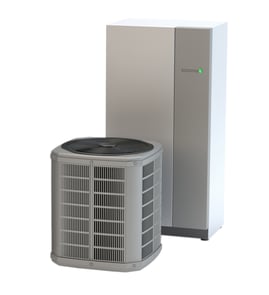
An AC system that provides both cooling and heating is typically called a heat pump. In a York heating and cooling combined unit like model D1NH048N06506, the heat pump moves heat in or out of your home depending on the season, rather than creating heat the way a furnace does.

Common names you will hear

  • Heat pump (most common)
  • Heat pump HVAC system
  • Heating and cooling packaged unit (when the components are in one outdoor cabinet)
  • Reverse-cycle air conditioner (another way to describe heat pump operation)

Heat pump vs. furnace and AC (quick comparison)

System type Cools Heats How it heats
Heat pump Yes Yes Transfers heat (reverses refrigerant flow)
AC + furnace Yes Yes Furnace generates heat (gas/electric)
Straight cool AC Yes No No heating function

How a heat pump provides both modes

  • Cooling mode: moves heat from inside to outside.
  • Heating mode: reverses operation and moves heat from outside to inside.
  • Uses key components such as the compressor, outdoor coil, indoor coil, and a reversing valve.
  • Many systems also use auxiliary or emergency heat (often electric heat strips) for very cold conditions.

Why it matters

Knowing whether your D1NH048N06506 is a heat pump helps you troubleshoot correctly (for example, defrost cycles and auxiliary heat behavior are normal on heat pumps) and helps you match the right replacement parts when servicing the heating and cooling functions.

For general electrical troubleshooting steps that often apply to HVAC equipment, we recommend using a meter safely and correctly; see our how to use a multimeter to test electrical parts video.

Last updated: February 2026
Most common symptoms to help you fix your heating & cooling combined units

Choose a symptom to see related heating and air conditioning system repairs.

Thermostat problems, bad compressor/condenser fan capacitor, lack of refrigerant, failed compressor…

Dirty air filter, clogged condenser coils, low refrigerant charge, faulty compressor…

Thermostat problem, clogged air filter, burner failure…

Main causes: errant thermostat settings, lack of electrical power, clogged drain line, wiring failure, control failure.…

Main causes: Errant thermostat settings, lack of power, bad interlock switches, lack of exhaust ventilation, wiring fail…

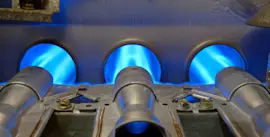
Dirty flame sensor, failed flame sensor, damaged burner, bad high limit switch…

Most common repair guides to help fix your heating & cooling combined units

These step-by-step repair guides will help you safely fix what’s broken on your HVAC system.

How to unclog the air conditioner drain line

How to unclog the air conditioner drain line

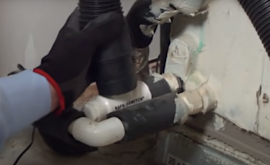
The condensate drain line for your central air conditioner can clog with mold and mildew. Water will back up and start d…

Repair time and Difficulty

 15 minutes or less
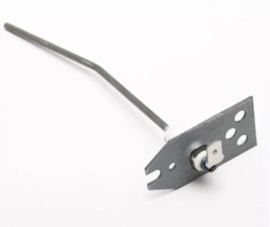
How to replace the furnace flame sensor

How to replace the furnace flame sensor

The flame sensor detects when furnace burner flames are lit. You may need to replace the flame sensor if flames only sta…

Repair time and Difficulty

 15 minutes or less
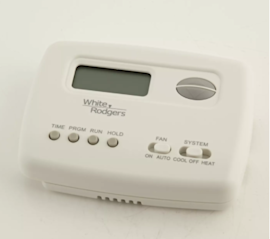
How to replace a heating and air conditioning system thermostat

How to replace a heating and air conditioning system thermostat

The control thermostat for your HVAC system can stop working. This repair guide shows how to replace it.…

Repair time and Difficulty

 30 minutes or less

Effective articles & videos to help repair your heating & cooling combined units

Use the advice and tips in these articles and videos to get the most out of your HVAC system.

Should I replace my gas furnace with an electric heat pump?

Should I replace my gas furnace with an electric heat pump?

Learn the reasons why you should consider replacing a gas furnace with an electric heat pump.…

Why is my furnace not igniting?

Why is my furnace not igniting?

Find out why the burner on your furnace isn't igniting.…

Can a furnace be repaired?

Can a furnace be repaired?

Learn about furnace repairs and how much they cost.…

Parts & More

Dishwasher
Dryer
Electric Cooktop
Fitness & Exercise
Gas Walk-Behind Mower
Household Fan
Parts
Washer