 Installation guide
 Owner’s manual




What is the most common problem with a Frigidaire dishwasher?
Drainage trouble is the most common issue we see with Frigidaire dishwashers like model FGID2466QB4A: water left in the bottom of the tub after a cycle. The FGID2466QB4A Use & Care Guide also notes that water remaining in the tub bottom is not normal and points to drain-related checks.
What to check first (fast, no parts)
- Confirm the cycle is fully complete and not paused.
- If connected to a food waste disposer, make sure the disposer is empty.
- Make sure the disposer inlet knockout plug was removed.
- Check the dishwasher drain hose for kinks or pinches.
- Clean and reinstall the internal trap or filter area so water can flow freely.
For model-specific operating and care steps, use the FGID2466QB4A owner's manual.
When it is likely a part problem
If the basics look good and the dishwasher still leaves water behind, these parts are common suspects on FGID2466QB4A:
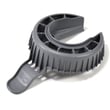
- Drain pump not running or weak: drain pump a A00126401
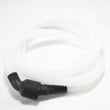
- Drain path restricted or leaking: dishwasher drain hose 807117001
- Dishwasher not filling correctly (can affect wash and drain performance): dishwasher water inlet valve 807047901
Quick symptom-to-cause guide
| Symptom | Most likely cause | What we do next |
|---|---|---|
| Water left in tub after cycle | Drain restriction or drain pump issue | Check hose/disposer, then test drain pump |
| Hums but won’t drain | Pump jam or blockage | Inspect sump area, then consider drain pump |
| Intermittent draining | Kinked hose or partial clog | Re-route hose, clear restriction |
| Poor cleaning plus standing water | Filter/trap buildup | Clean filter area and verify spray action |
Why it matters
Standing water can lead to odors and poor wash results, and it is a strong sign the dishwasher is not draining properly. Fixing the drain path early helps protect the pump and keeps cycles performing normally.
Last updated: January 2026
How do I know what Frigidaire model I have?
Your Frigidaire model number is printed on the appliance’s identification label. For the Frigidaire dishwasher model FGID2466QB4A, the label is typically found on the tub frame around the door opening; record the full model number exactly as shown so you get the correct parts and service information.
Where to look (by appliance type)
Use these common label locations to find the model and serial number:
- Dishwasher: On the tub frame at the door opening (top or side edge), sometimes on the side wall of the tub
- Refrigerator: Inside the fresh food compartment on a side wall or ceiling area
- Range/oven: Around the oven door frame or behind the storage/warming drawer
- Washer/dryer: Around the door opening, behind the door, or on the back panel
For model-specific details and operating information once you find the number, check the FGID2466QB4A owner’s manual.
What to write down (so parts match)
Copy the information exactly from the label:
- Model number (letters and numbers, for example FGID2466QB4A)
- Serial number (helps confirm production run and compatible revisions)
- Brand (Frigidaire)
- Any suffixes or extra characters after the model number (if shown)
Quick ID checklist
If you are standing at the dishwasher, this is the fastest way to confirm you are reading the right tag.
| Item on label | What it’s used for | Why it matters |
|---|---|---|
| Model number | Parts lookup | Ensures correct fit and electrical compatibility |
| Serial number | Service identification | Helps match the correct version of the same model |
| Electrical ratings | Installation/service checks | Confirms safe power requirements |
Why it matters
Frigidaire often uses similar-looking designs across multiple dishwashers, but internal parts like the electronic control board, water inlet valve, and drain pump can vary by model. Using the exact model number prevents ordering the wrong replacement part.
Last updated: January 2026
How can I force my Frigidaire dishwasher to drain?
On the Frigidaire FGID2466QB4A dishwasher, you can force a drain by pressing START/CANCEL to cancel the cycle; the dishwasher then runs an approximately 90-second drain. After the drain finishes, you can select a new cycle and start it again (see the FGID2466QB4A owner's manual).
Steps to force a drain (and what to expect)
- Press START/CANCEL once to cancel the current cycle.
- Close the door fully so the dishwasher can run the drain.
- Wait about 90 seconds while it pumps water out.
- When the drain ends, choose the next cycle you want.
- If the dishwasher is in Delay Start, press START/CANCEL twice to cancel the delay and start the selected cycle.
If it still will not drain
A forced drain only works if water can flow out through the drain path. Check these common causes:
- Drain hose is kinked, sharply bent, or pinched behind the dishwasher.
- Food disposer connection still has the knockout plug installed.
- Disposer is clogged or full.
- Filter or internal trap area is clogged with debris.
- Drain hose is loose or not properly secured to the drain connection.
Quick drain-path checklist
| What to check | What “good” looks like |
|---|---|
| Drain hose routing | No kinks, no sharp bends, not crushed |
| Sink/disposer connection | Knockout plug removed, connection clear |
| Hose attachment | Secure at the drain connection with a clamp |
| Pumping sound | You hear the drain pump running during the 90 seconds |
Why it matters
Canceling to force a drain is the fastest way to clear standing water before troubleshooting. If the drain hose is kinked or the disposer inlet is blocked, the drain pump can run but water will stay in the tub. The drain-hose routing and attachment details in the FGID2466QB4A installation guide help prevent repeat drain problems.
Last updated: January 2026
Why does my dishwasher keep having power failure?
On the Frigidaire FGID2466QB4A dishwasher, repeated “power failure” is usually caused by an intermittent power interruption (breaker, loose junction-box wiring, or outlet issue) or a control/door circuit that momentarily drops power. After power is restored, the display can show PF until you clear it. See the FGID2466QB4A owner’s manual for PF behavior and reset steps.
What “PF” means and how to clear it
The status window can show PF when the dishwasher is first connected to power or when power is restored after an interruption. To clear it:
- Press START/CANCEL, or
- Close the dishwasher door (depending on what the control is prompting)
If PF returns during cycles, treat it as a real power drop, not just a one-time message.
Most common causes to check first
- Tripped or weak circuit breaker: A breaker that is failing can trip under load and reset.
- Loose wiring in the junction box: A loose wire nut or ground can cause intermittent shutdown.
- Door not fully latched: If the door opens slightly, the unit can stop mid-cycle.
- Moisture or corrosion at connections: Especially at the junction box or terminal connections.
- Control issue: A failing control can reboot when it senses unstable voltage.
Quick diagnostic checklist (safe, practical steps)
- Reset the breaker fully (OFF, then ON) and run a short cycle.
- Confirm the dishwasher is on a dedicated circuit (common for dishwashers).
- If hardwired, have power disconnected at the breaker and verify junction-box connections are tight and enclosed (per the FGID2466QB4A installation guide).
- Check that the door closes firmly and nothing is preventing a full latch.
- If PF happens when the unit should be heating or draining, suspect a load-related power drop or a component drawing extra current.
Parts that can be involved (when symptoms match)
| Symptom you notice | What it often points to | Example part for FGID2466QB4A |
|---|---|---|
| PF appears during drain, water remains | Drain circuit problem | Drain pump a A00126401 |
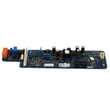
| PF appears with dead or erratic controls | Control power/reset issue | Dishwasher electronic control board 5304514670 |
Why it matters
Intermittent power loss can stop washing, leave water in the tub, and increase the chance of control resets. Fixing the underlying power or connection issue prevents repeat PF messages and mid-cycle shutdowns.
Last updated: January 2026





