Owner’s manual
 View engine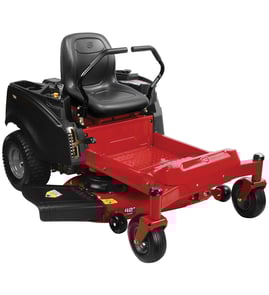

What model number is the Craftsman 42 riding mower?
For the Craftsman 42-inch riding mower shown in the documentation for this page, the model number is 127.28876 (often written without the dot as 12728876). You can confirm it on the mower’s serial/model tag and in the 12728876 owner's manual.
Where to find the model number on the mower
The model number is printed on sales literature and manuals, and it’s also tied to the serial number tag on the machine.
- Look under the seat
- Check the far back wall of the frame
- From the operator’s view, it’s left of the battery
- Write down both the model number and serial number for parts lookup
42-inch model number vs. other sizes (quick comparison)
The operator’s manual groups several similar Craftsman zero-turn mowers by deck size and engine.
| Deck size | Model shown in manual | Typical way it appears online |
|---|---|---|
| 52-inch | 127.28875 | 12728875 |
| 42-inch | 127.28876 | 12728876 |
| 36-inch | 127.28877 | 12728877 |
Why it matters for parts and repairs
Using the exact model number ensures you get the right diagrams and the right replacement parts for your Craftsman riding mower.
- Belt routing and deck configuration can differ by deck size
- Electrical parts (switches, wiring) can vary by production run
- The serial number helps narrow down the correct part versions
- It reduces returns and downtime during repairs
Ordering parts
Once you confirm the model number as 12728876, use the parts list for this model first; if you’re searching more broadly by model number, we also support model search on Sears PartsDirect.
Last updated: February 2026
What brand engine does Craftsman use?
For the Craftsman riding mower model 12728876, the operator’s manual lists a 22 HP B&S (Briggs & Stratton) engine. Craftsman has used several engine suppliers across different mower lines and years, but this specific model is equipped with Briggs & Stratton.
What your model uses (12728876)
From the 12728876 owner's manual, this mower is identified as:
- Model: 12728876
- Engine brand: Briggs & Stratton (B&S)
- Engine power: 22 HP
- Deck style: Side discharge
Common engine brands Craftsman has used
Across Craftsman riding mowers and tractors, you’ll commonly see engines from:
- Briggs & Stratton (very common on many Craftsman models)
- Kohler (often on higher-end or specific series)
- Kawasaki (less common, typically on select models)
Quick comparison: what to check when identifying an engine
| What to look for | Where you’ll find it | Why it helps |
|---|---|---|
| Engine brand badge | Engine shroud/top cover | Fast visual confirmation |
| Engine model/type code | Engine label or stamped tag | Needed for engine-specific parts |
| Mower model number (12728876) | Frame tag under seat or rear frame area | Ensures you’re matching the correct parts list |
Why it matters
Engine brand and engine model codes determine the correct maintenance parts (spark plug, air filter, fuel filter) and repair parts (starter, carburetor, ignition components). Using the mower model number alone is not always enough for engine-specific parts.
Ordering parts the right way
We recommend matching both identifiers before you buy:
- Use 12728876 to find mower chassis and deck parts
- Use the engine’s model/type code for engine parts
- If you’re searching beyond the model parts list, use Sears PartsDirect and search by the exact model number or engine identifiers
Last updated: February 2026
How to find Craftsman mower parts?
To find the right parts for your Craftsman riding mower, match the exact model number on the product label to the parts list for model 12728876, then confirm the part by diagram location and description in the 12728876 owner's manual. For broader searching by model number, use Sears PartsDirect.
Where to find the model number on the mower
For Craftsman model 12728876, the model/parts label is typically on the rear frame between the wheels. Once you have that number, use it exactly as shown (including any punctuation).
- Look on the rear frame between the back wheels
- Wipe off grass and dirt so the label is readable
- Write down the full model number: 12728876
- Record any additional numbers on the label (often a serial or product number)
- Use the model number to match diagrams before ordering
How we recommend matching the correct part
Use the model number first, then verify the part in the diagrams and parts list so you do not order the wrong belt, blade, or electrical component.
| Step | What to check | Why it helps |
|---|---|---|
| 1 | Model number: 12728876 | Ensures you are in the correct parts breakdown |
| 2 | Section diagram (deck, drive, steering, electrical) | Narrows to the right system |
| 3 | Reference number on the diagram | Prevents mix-ups between similar-looking parts |
| 4 | Part description and notes | Confirms fit and any special requirements |
Quick tips before you order
These checks save time, especially on common wear items like belts and blades.
- Compare the old part to the diagram (shape, mounting holes, connectors)
- For belts, confirm whether you are replacing the cutterdeck belt or hydro transaxle drive belt
- For blades, inspect for bends or cracks before deciding to sharpen or replace
- If you are troubleshooting an electrical issue, test fuses and switches before replacing parts
Why it matters
Riding mower parts often look similar across models, but small differences in deck size, pulley routing, or wiring connectors can cause poor performance or unsafe operation. Using the correct Craftsman 12728876 parts list helps ensure proper fit and reliable mowing.
Last updated: February 2026
What is the advantage of a rear engine mower?
A rear-engine riding mower like the Craftsman 12728876 puts the engine weight over the drive wheels, which improves traction on flat lawns and gentle slopes. The rear layout also keeps the front end lighter, so it can feel easier to steer around trees, beds, and other obstacles.
Key advantages you will notice
- Better traction: more weight on the rear tires helps reduce wheel spin on typical turf.
- Tighter maneuvering: a lighter front end can make turning and trimming easier.
- Good visibility for trimming: many operators find it easier to judge the front edge of the mower when lining up passes.
- Simpler, homeowner-friendly design: rear-engine riders are commonly built for routine residential mowing.
Trade-offs to consider
Rear-engine riders are a great fit for many yards, but they are not ideal for every situation.
| Situation | Rear-engine rider (like 12728876) | What it means for you |
|---|---|---|
| Flat to gently sloped lawns | Strong fit | Stable traction and consistent cut |
| Very steep slopes | Not recommended | Higher risk of loss of control |
| Heavy towing or ground-engaging work | Limited | Use only approved hitch points and manageable loads |
| Tall or overgrown grass | Needs technique | Plan on mowing in stages for best results |
Safe operation reminders that matter with any riding mower
The biggest “advantage” is only an advantage when the mower is operated safely and consistently.
- Keep the discharge chute, mulcher, or grass catcher installed while mowing.
- Do not engage blades until you are ready to mow.
- Stop blades to cross gravel areas to reduce thrown-object risk.
- Keep the area clear of people and pets; never direct discharge toward bystanders.
- If grass is extremely tall, mow twice (first pass higher, second pass to final height).
Why it matters
Choosing the right mower layout affects cut quality, traction, and how confidently you can mow around landscaping. For model-specific operating guidance, safety labels, and mowing tips, use the Craftsman 12728876 Owner's manual. For parts lookup by model number, we also support search on Sears PartsDirect.
Last updated: February 2026
How much does it cost to replace a riding lawn mower engine?
For the Craftsman 12728876 rear-engine riding mower, a complete engine replacement (engine plus typical shop labor) usually costs $900 to $2,500. The biggest price drivers are the replacement engine itself (commonly a 22 HP Briggs and Stratton on this model family) and any related parts needed to make the swap reliable. Confirm your exact engine details in the 12728876 owner's manual before you price parts.
What drives the total cost?
- Engine type and horsepower: higher HP and certain crankshaft sizes cost more
- New vs. remanufactured: new engines cost more; reman can reduce parts cost
- Crankshaft and mounting match: wrong shaft diameter/length or bolt pattern adds return delays and extra parts
- Add-on parts during install: fuel line, fuel filter, air filter, spark plug, battery cables, mounting hardware
- Shop labor rate: local hourly rates vary widely
Typical cost ranges (realistic planning numbers)
| Cost item | Typical range | What it covers |
|---|---|---|
| Replacement engine (parts) | $600 to $1,800 | Most of the total; varies by brand, HP, and configuration |
| Labor (shop) | $300 to $900 | Commonly 3 to 6 hours depending on access and rusted fasteners |
| Related parts and fluids | $50 to $300 | Filters, fuel line, clamps, oil, tune-up items |
Before you buy an engine
- Verify the engine model/type code and crankshaft specs (diameter, length, keyway) in the manual or on the engine label
- Compare the deck size and configuration; this model family includes 42-inch and 36-inch variants
- Inspect for cheaper root causes first: clogged fuel system, bad ignition coil, damaged wiring, weak battery
Why it matters
An engine is the most expensive component on a riding mower. Getting the correct crankshaft and mounting configuration prevents fit issues that can turn a straightforward repair into a costly rework.
Ordering parts
Use the parts list for model 12728876 first; for broader search by model number and diagrams, use Sears PartsDirect.
Last updated: February 2026