Owner’s manual
 View engine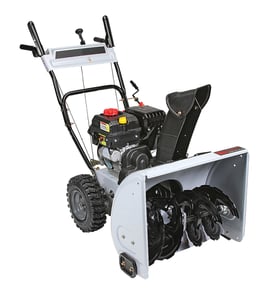



Should I spray my snowblower with WD-40?
Yes, you can use a spray to help snow slide through your Craftsman snow thrower model 536881651, but we recommend using a silicone-based spray (or a dedicated snowblower non-stick spray) on the discharge chute and inside the auger housing rather than regular WD-40, which tends to be short-lived.
Where it’s OK to spray (and where it’s not)
Use a light coat on clean, dry metal surfaces that contact snow:
- Inside the discharge chute
- Chute deflector area
- Inside the auger housing (not on belts)
- Painted exterior metal to help repel moisture after cleaning
Avoid spraying these areas:
- Drive belts, pulleys, and idlers (slip risk)
- Friction wheel and drive plate (loss of traction)
- Engine air intake, muffler area, or electrical connections
For model-specific safety reminders, follow the maintenance and safety steps in the 536881651 owner’s manual.
Best product choices for snow shedding
Here’s a quick comparison of common options.
| Option | Best use | How long it lasts | Notes |
|---|---|---|---|
| Silicone spray | Chute and auger housing | Longer | Best all-around for snow sticking |
| Regular WD-40 | Short-term water displacement | Short | Can work briefly but wears off fast |
| Non-stick snowblower spray | Chute and housing | Long | Designed for cold, wet snow |
| Wax (paste/paraffin) | Chute and housing | Long | Takes longer to apply but durable |
How to apply it (quick steps)
- Shut the engine off and let moving parts stop completely
- Brush out packed snow and wipe surfaces dry
- Apply a thin, even coat; do not soak
- Let it set a few minutes before starting
- Reapply as needed, especially in wet, heavy snow
Why it matters
Reducing snow buildup helps prevent clogs, improves throwing distance, and can reduce strain on the auger/impeller system. It also supports the “run it a few minutes after throwing snow” practice that helps prevent freeze-up.
Last updated: January 2026
How can I tell how old my Craftsman snowblower is?
For Craftsman model 536881651, the most reliable way to estimate age is to use the model and serial number from the product ID label on the snow thrower (and sometimes a separate label on the engine). Our 536881651 operator's manual confirms the model number, but it doesn’t include a built-in “year decoder,” so the serial number is the key.
Where to find the numbers on model 536881651
Check these common locations on this Craftsman snow thrower:
- Rear of the unit near the handles or frame
- Side of the auger housing
- Under or near the belt cover area
- On the engine shroud (engine model/serial is separate from the snowblower model)
- Near the chute or control panel area
How to use the serial number to estimate the year
Craftsman equipment can be built by different manufacturers over time, so serial-number formats vary. Here’s the practical approach:
- Write down the full model number (536881651) and the full serial number exactly as shown.
- Look for a date code pattern (often grouped digits or a letter-number sequence).
- If the snowblower serial number doesn’t clearly decode, use the engine identification as a secondary clue.
- Compare what you find to the manual revision date; your manual shows Rev. 1 09.19.05, which suggests the documentation was produced around September 19, 2005 (the unit could be from around that era, but the serial number is still the best indicator).
Quick “what to record” checklist
- Snowblower model number: 536881651
- Snowblower serial number
- Engine brand and model (often on the engine cover)
- Any date stamps on labels or tags
Why it matters
Knowing the approximate age helps us match the right parts and maintenance guidance, especially for wear items like belts, shear pins, and friction drive components.
| What you’re checking | What it tells you | Why it helps |
|---|---|---|
| Snowblower serial number | Best clue to build date | Confirms correct parts and revisions |
| Engine model/serial | Engine production info | Helps when ordering engine-related parts |
| Manual revision date | Documentation timeframe | Useful as a rough reference point |
Last updated: January 2026
Is it cheaper to repair or replace a snowblower?
For a Craftsman snow thrower model 536881651, repairing is usually cheaper when the fix is limited to normal-wear items (belts, shear bolts, scraper blade) and the machine is otherwise in good shape. If the repair estimate approaches about half the cost of a comparable new snowblower, replacement often makes more sense.
Quick decision checklist
- Repair if the problem is isolated (won’t self-propel, won’t throw snow, chute issues) and the engine runs well.
- Repair if you can do the work yourself using the steps in the 536881651 operator's manual.
- Replace if multiple major systems are failing (engine + drive + auger) or the frame/auger housing is badly damaged.
- Replace if parts and labor together are close to the price of a new unit.
- Repair if the unit meets your needs (this model is a 30-inch dual stage with electric start per the manual).
Common repairs on model 536881651 that are often cost-effective
These are typical “high value” fixes because parts are relatively affordable and the repair restores core performance.
- Replace a worn ground drive belt: snowblower drive belt 1733324SM
- Replace a worn auger belt: auger belt 37X120MA
- Replace broken shear bolts/pins after a jam: snowblower shear bolt kit 1501216MA
- Replace a worn friction wheel if it won’t move well: friction wheel 1501435MA
Cost comparison table (rule-of-thumb)
| Situation | Typical recommendation | Why |
|---|---|---|
| One worn belt or broken shear bolt | Repair | Low parts cost; restores function quickly |
| Won’t self-propel due to friction wheel/belt | Repair | Common wear item; usually straightforward |
| Engine has low compression or major internal damage | Replace (often) | Repairs can be expensive and time-consuming |
| Multiple issues plus heavy rust/structural wear | Replace (often) | Reliability and safety can suffer |
Why it matters
A snowblower that’s repaired with the right wear parts can be reliable for years, but sinking money into repeated major failures can leave you without a dependable machine during the next storm.
Last updated: January 2026
How many years should a snowblower last?
For a Craftsman snow thrower model 536881651, there is no model-specific “expected lifespan” stated in the documentation; how long it lasts depends mostly on hours of use, storage conditions, and whether you keep up with the maintenance schedule in the 536881651 operator’s manual. Many gas snowblowers can run for years when wear items are handled early.
What we can confirm for model 536881651
The manual gives maintenance intervals that directly affect longevity (especially engine and drive system care):
- Check engine oil level before use; change oil every 50 hours or at least once a year
- Check the spark plug every 25 hours; replace if worn or every 100 hours
- Adjust the auger drive belt after the first 2 to 4 hours of use, again about mid-season, and twice each season thereafter
- Check shear bolts and other fasteners frequently for tightness and damage
- For storage longer than 30 days, treat fuel with stabilizer or run the engine until the fuel system is empty
Quick maintenance schedule (from the manual)
| Maintenance item | Interval for 536881651 | Why it matters |
|---|---|---|
| Engine oil | Check before use; change every 50 hours or yearly | Reduces engine wear and helps cold starting |
| Spark plug | Check every 25 hours; replace every 100 hours or if damaged | Prevents hard starting and rough running |
| Auger drive belt | Adjust after 2 to 4 hours; mid-season; twice each season after | Helps prevent slipping and poor snow discharge |
| Fuel for storage | Empty system or stabilize for 30+ day storage | Helps prevent carburetor and fuel-system issues |
When parts replacement helps extend life
If performance drops, replacing common wear parts early can prevent bigger damage.
- Slipping or no self-propel: inspect the ground drive belt and friction wheel
- Poor snow throwing: inspect/adjust the auger belt and check for broken shear hardware
- Excess vibration: stop and inspect for loose or damaged components
If you need a common wear part, examples for this model include the snowblower drive belt 1733324SM and the friction wheel 1501435MA.
Why it matters
A snowblower’s “years” are usually determined by maintenance habits; following the model 536881651 service intervals helps protect the engine, belts, and auger drive so you avoid premature failures.
Last updated: January 2026