Owner’s manual
 Error Codes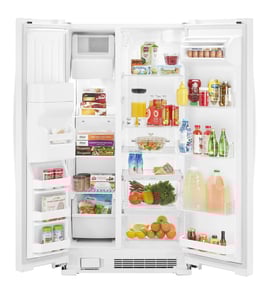




How to read Kenmore model numbers?
For Kenmore model 10650562992, we read the model number in sections: the prefix (first 3 digits) identifies the manufacturer family (106 is commonly associated with Whirlpool-built Kenmore refrigerators), and the remaining digits identify the specific design and feature variations. For service and parts, always use the full model number and serial number from the label.
Where to find the model and serial number
On Kenmore side-by-side refrigerators like 10650562992, the model and serial number label is typically on the inside wall of the refrigerator compartment. Our 10650562992 owner's manual shows where to record this information for faster service.
- Look on the inside wall near the fresh food section (not the freezer)
- Write down the full model number and serial number exactly as shown
- Keep the purchase date with your records
- Use the full number when ordering parts like an ice maker assembly or water inlet valve
How the Kenmore model number is structured
Kenmore model numbers are usually easiest to interpret as a prefix + product identifier.
| Model number section | Example from 10650562992 | What it tells you |
|---|---|---|
| Manufacturer prefix | 106 | Manufacturer family (commonly Whirlpool-built Kenmore) |
| Model identifier | 50562992 | Specific configuration, revision, and features |
Why it matters when ordering parts
Using the full model number helps us match the correct parts and diagrams for your exact refrigerator, especially for systems that vary by revision (ice maker, water system, defrost components, and door hardware).
Common examples on this model include:
- Ice production parts such as the ice maker assembly - refrigerator ice maker by whirlpool 4317943
- Water supply parts such as the refrigerator inlet valve W10408179
- Temperature control parts such as the refrigerator thermostat
Quick tips to avoid mix-ups
- Do not use only “106” when searching; always use 10650562992
- Match letters and numbers exactly (no spaces)
- If a part is color-specific (like door gaskets), confirm the color before ordering
Last updated: February 2026
What is the ER if code on a Kenmore Elite?
On Kenmore model 10650562992, the ER IF (or Er IF) code indicates an ice fan problem in the freezer area. That fan pushes cold air through the door air ducts to keep the ice maker and ice bin cold, so ice production and dispensing can be affected.
What you’ll notice when ER IF shows up
- Ice maker stops making ice or makes very little ice
- Ice in the bin melts, clumps, or refreezes into a solid mass
- Dispenser output is weak or inconsistent
- Freezer temperature may be normal, but the ice compartment is warm
- You may hear unusual fan noise (rubbing, buzzing) or no fan sound at all
Quick checks we recommend first
- Reset power: Unplug the refrigerator (or turn off the breaker) for 2 minutes, then restore power.
- Check for airflow blockage: Make sure packages are not blocking vents in the freezer.
- Look for frost buildup: Heavy frost near the fan area can slow or stop the fan.
- Inspect the ice bin area: Remove the bin and check for ice jams or broken pieces.
- Confirm door sealing: A poor seal can cause moisture and frost that interferes with airflow.
Parts that commonly relate to ice and airflow issues
If the code returns after basic checks, these model-compatible parts are often involved in ice maker and ice cooling complaints:
| Symptom | Common area to inspect | Example model-compatible part |
|---|---|---|
| No ice, intermittent ice | Ice maker system | Ice maker assembly - refrigerator ice maker by whirlpool 4317943 |
| No water to ice maker | Water supply control | Refrigerator inlet valve W10408179 |
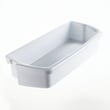
| Ice melts or clumps | Ice storage and door duct cooling | Refrigerator ice bin WPW10670845 |
Why it matters
The ice fan is what keeps the ice maker compartment cold by moving freezer air through the door ducts. When airflow stops, the ice maker can shut down, ice can melt and refreeze, and the dispenser can jam.
Where to find model-specific guidance
For control panel behavior, error indications, and access steps that match your exact configuration, use the 10650562992 owner's manual.
Last updated: February 2026
What is the cubic foot of my Kenmore refrigerator model 10650562992?
Your Kenmore side-by-side refrigerator model 10650562992 is typically listed at about 21.9 cubic feet of total capacity. For the exact capacity rating for your specific configuration, confirm it in the 10650562992 owner's manual.
How to confirm the exact capacity for your unit
We recommend checking the model-specific literature first because capacity can vary slightly by trim package and interior layout.
- Look in the specifications section of the 10650562992 owner's manual
- Check the model and serial label inside the fresh food compartment (often on an inside wall)
- Compare the listed total capacity to the fresh food and freezer breakdown (if shown)
- If you are measuring for a replacement, use cabinet dimensions, not just cubic feet
What “21.9 cubic feet” means in practical terms
Cubic feet is the total interior storage volume (fresh food plus freezer). It helps you compare overall size, but shelf design, ice bin size, and door bin layout affect usable space.
| Capacity type | What it includes | Why you care |
|---|---|---|
| Total capacity | Refrigerator + freezer | Overall size comparison |
| Fresh food capacity | Refrigerator section only | Day-to-day food storage |
| Freezer capacity | Freezer section only | Frozen food and ice storage |
Why it matters
Knowing the cubic feet helps when you are planning kitchen fit, comparing similar Kenmore 106 models, or choosing accessories that affect usable space (for example, an ice bin or door bins).
Last updated: February 2026
What's the average lifespan of a Kenmore refrigerator?
Most Kenmore refrigerators average 10 to 15 years of service life; for a Kenmore 10650562992 side-by-side refrigerator, regular care (cleaning, airflow, and sealing) is what most often determines whether it reaches the high end of that range. For model-specific care steps, use the 10650562992 owner's manual.
Typical lifespan and what changes it
A refrigerator’s lifespan is usually driven by how hard the sealed system and fans have to work, plus how well doors seal.
- 10 to 15 years is the normal expectation for most Kenmore refrigerators
- 15+ years is common when condenser coils are kept clean and doors seal tightly
- Frequent door opening, warm kitchens, and clogged coils can shorten life
- Ignoring temperature swings can overwork the compressor and evaporator fan
- Small issues fixed early (like a weak door seal) prevent bigger failures
Maintenance that extends life (high impact)
These are the same care items we see referenced in the “Caring for your refrigerator” section of the manual.
- Clean dust from condenser coil and grille area regularly
- Keep door gaskets clean and check for gaps or tearing
- Set and confirm temps: 37°F to 40°F fresh food; 0°F freezer
- Leave space for airflow around the cabinet and vents inside
- Replace water filters on schedule if your unit uses a filter system
Quick “repair or replace” guide
| What you’re seeing | Most likely category | What we recommend |
|---|---|---|
| Warm fridge, freezer OK | Airflow or defrost issue | Check vents, frost buildup, and fan operation |
| No ice or slow ice | Water supply or ice maker issue | Inspect supply line, valve, and ice maker |
| Water not dispensing | Filter, valve, or housing issue | Check filter seating and inlet valve |
| Doors not closing well | Door seal/cam/hinge wear | Inspect gasket and door closing parts |
Parts that commonly affect longevity on this model
When symptoms show up, these model-matched parts are common fixes that reduce strain on the cooling system.
- Refrigerator thermostat WP2198202 (temperature control issues)
- Refrigerator defrost bi-metal WPW10225581 (frost and defrost problems)
- Refrigerator inlet valve W10408179 (ice maker and water dispenser supply)
Why it matters
A refrigerator can run for years while slowly losing efficiency; cleaning coils, maintaining good door seals, and correcting defrost or water-supply problems early helps the compressor run fewer hours and protects food temperatures.
Last updated: February 2026