Owner’s manual


What is the average lifespan of a Kenmore washer?
Most Kenmore washers last 10 to 15 years with normal household use. Your Kenmore 11010502990 is a traditional top-load design; keeping it level, avoiding overloads, and fixing wear items early helps it reach the upper end of that range.
What affects washer lifespan the most
- Load size and frequency: frequent heavy loads shorten the life of the drive system.
- Out-of-balance operation: repeated banging stresses the suspension and tub support.
- Water quality and detergent use: excess suds and mineral buildup increase wear.
- Drain performance: slow draining makes the pump work harder and can leave residue.
- Small worn parts left unchecked: inexpensive wear parts can prevent bigger failures.
Maintenance that extends the life of model 11010502990
We recommend these habits for this Kenmore top-load washer:
- Use the right water level for the load size (this model offers multiple water level settings; see the owner's manual).
- Keep the washer level and the load evenly distributed.
- Do not pack the basket tight; allow clothes to circulate.
- Periodically check hoses and connections for seepage.
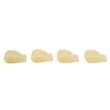
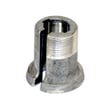
- If agitation gets weak or noisy, address it early (common wear items include the agitator dog 80040 and coupling 285753A).
Common “end-of-life” symptoms and likely areas
| Symptom | What it often points to | Example parts on this model |
|---|---|---|
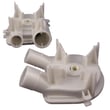
| Won’t drain or drains slowly | Drain pump or blockage | Washer drain pump WP3363394 |
| Agitator moves poorly | Agitator wear components | Agitator dog 80040, agitator cam 285748 |
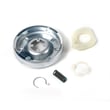
| Spins weak, smells hot, or slips | Drive coupling or clutch | Coupling 285753A, clutch 285785 |
| Loud during spin, leaks at tub | Bearing/seal or tub sealing | Washer bearing and seal kit 285203, washer tub gasket W10814296 |
Why it matters
A washer near the 10 to 15 year mark can still be a great candidate for repair when the issue is a normal wear part (pump, coupling, clutch, agitator components). Catching those problems early helps protect higher-cost assemblies like the gear case.
Last updated: February 2026
How to unclog drain hose on Kenmore washer?
To unclog the drain hose on your Kenmore washer model 11010502990, we unplug the washer, remove as much water as possible, then clear blockages from the drain hose and the drain pump inlet. Most clogs are lint, coins, or small clothing items trapped where the hose meets the pump.
Safety and prep
- Unplug the washer (do not rely on the timer being off).
- Turn off both water supply valves.
- Protect the floor with towels; keep a shallow pan nearby.
- If the tub is full, bail water out or use a wet/dry shop vacuum at the standpipe.
- Review access and panel removal notes in the 11010502990 owner's manual.
Step-by-step: clear the clog
- Check the external drain path first: make sure the hose is not kinked, crushed, or pushed too far down the standpipe.
- Remove the drain hose from the standpipe and look for a visible plug at the end.
- Flush the hose with hot tap water (outside or in a tub). If needed, run a flexible brush or small drain snake through the hose.
- Access the pump area and inspect the hose connection at the pump for debris.
- Inspect the pump inlet and impeller for strings, lint, or small objects.
Parts that commonly relate to draining problems
| Symptom | Most common cause | Part to consider (if damaged) |
|---|---|---|
| Hums but will not drain | Pump jammed or failed | Washer drain pump WP3363394 |
| Drains slowly | Partial clog in hose or pump inlet | Washer drain pump WP3363394 |
| Won’t drain and motor struggles | Drive system issue (less common for drain-only) | Coupling 285753A |
Why it matters
A restricted drain hose can cause long drain times, poor spin performance, and water left in the tub. Clearing the hose and checking the pump inlet prevents repeat clogs and helps protect the pump from overheating.
Quick checks to prevent repeat clogs
- Empty pockets (coins and hairpins are frequent culprits).
- Use the right amount of detergent to reduce suds and residue.
- Avoid washing small items loose; use a mesh laundry bag.
Last updated: February 2026
How to reset Kenmore washer model 11010502990 top loader?
To reset your Kenmore washer model 11010502990, we recommend doing a simple power reset: turn the washer off, disconnect power for a few minutes, then restore power and restart a cycle. This clears many temporary control and cycle issues.
Quick reset steps
- Press the control knob to the OFF position (or turn the cycle selector to OFF if your model uses a timer dial).
- Unplug the washer from the outlet.
- Wait 2 to 5 minutes.
- Plug the washer back in.
- Select a cycle (for example Normal or Heavy Duty) and pull the knob out or start the cycle.
For control locations and cycle selector details, use the owner's manual.
If the washer still will not run after a reset
A reset helps when the timer or controls get “stuck”, but it will not fix a failed part. Check these common causes next:
- Lid not closing or lid switch issue (washer will not agitate or spin)
- No fill or slow fill (water supply valves off, kinked hoses, inlet valve problem)
- No drain (clogged drain hose, pump issue)
- No agitation (worn agitator dogs or a drive coupling problem)
Parts that commonly relate to “won’t agitate” or “won’t drain”
| Symptom | What you may notice | Part to check for this model |
|---|---|---|
| Agitator moves poorly or “ratchets” | Clothes not rolling over | Agitator dog 80040 |
| Motor runs but washer will not agitate/spin | Burning rubber smell or intermittent drive | Coupling 285753A |
| Washer will not drain or drains slowly | Water left in tub | Washer drain pump WP3363394 |
Why it matters
Resetting first prevents unnecessary part replacement and helps you quickly separate a temporary control issue from a mechanical problem (like a drain pump, coupling, or agitator wear).
Last updated: February 2026
How many cubic feet is a Kenmore Model 11010502990 washer?
Kenmore washer model 11010502990 is labeled “Super Capacity Plus” in the owner's manual, which indicates an extra-large tub for bigger loads; the manual excerpt does not list an exact cubic-foot number. Most Kenmore top-load “super capacity” direct-drive washers are typically about 3.2 to 3.5 cu. ft.
How to confirm the exact capacity for your washer
Use one of these reliable methods:
- Check the specifications section in the owner's manual (often near the back or in a “product data” section).
- Look for a model/serial tag under the lid or on the cabinet opening; some versions list capacity or “super capacity” class.
- Measure the wash basket and calculate volume (good for older models where capacity is not printed).
- If you are comparing to a replacement washer, compare basket diameter and depth rather than marketing terms.
Quick tub-volume estimate (measurement method)
If you measure the inside of the wash basket:
- Measure diameter (in inches) and divide by 2 to get radius.
- Measure depth (in inches).
- Estimate cubic feet:
| What you measure | What it tells you |
|---|---|
| Larger diameter | Usually increases capacity more than depth |
| Greater depth | Helps with bulky loads but can affect turnover |
| Both larger | Typically “super capacity” class |
(For a cylinder, volume is based on radius and depth; convert cubic inches to cubic feet by dividing by 1,728.)
Why it matters
Capacity affects how much you can wash per load, how well items circulate around the agitator, and how much water you should select on the water level setting. Overloading can also contribute to poor agitation and extra wear on drive components.
If you are troubleshooting poor wash performance or weak agitation, common wear items for this style of Kenmore washer include the agitator dog 80040 and the coupling 285753A.
Last updated: February 2026