Owner’s manual
 Error Codes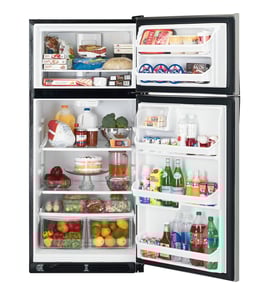


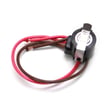
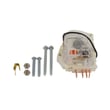
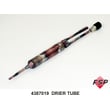
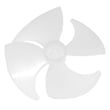

What is error 15 on Kenmore refrigerator?
On Kenmore model 10662522110, “error 15” is not a standard, universal Kenmore code; the meaning depends on the exact characters shown on the display (for example, “15,” “E15,” or “Er 15”) and the control style used in that series. Use the 10662522110 manual to match the display code to the correct fault description and test steps.
Identify the code correctly
Before troubleshooting, confirm exactly what you see:
- Write down every character (letters and numbers) and whether it flashes.
- Note where it appears (freezer display, refrigerator display, or both).
- Check if any lights are blinking (temperature, “ice,” “service,” or “alarm”).
- Power-cycle the refrigerator for 1 minute and see if the same code returns.
What “15” usually points to on refrigerators
Across many refrigerator designs, a “15” style code commonly relates to one of these areas (the manual tells you which applies to your control):
- Temperature sensing (freezer or refrigerator thermistor)
- Defrost system performance (heater, defrost thermostat, or defrost control)
- Fan or airflow problems (evaporator fan, blocked vents, heavy frost)
- Door switch or door not closing fully
Quick checks you can do safely
- Make sure doors seal and close fully; remove items blocking the door.
- Verify freezer temperature is set near 0°F and refrigerator near 37°F.
- Look for heavy frost on the freezer back wall (a defrost problem sign).
- Listen for the evaporator fan running when the freezer door switch is pressed.
Symptom-to-system guide
| What you notice | Most likely system | Common next step |
|---|---|---|
| Heavy frost, weak airflow | Defrost system | Test/replace defrost components |
| Warm freezer, fan silent | Evaporator fan circuit | Check fan motor and wiring |
| Temps swing, food freezing | Temperature sensor/control | Check thermistor placement and resistance |
Why it matters
A misread code leads to the wrong repair. Matching the exact display code to the correct diagnostic procedure prevents unnecessary parts replacement and gets cooling, defrosting, and ice production back to normal.
Last updated: January 2026
What is the upper part of a fridge called?
On the Kenmore 10662522110 top-mount refrigerator, the upper section is typically called the freezer compartment (or simply the freezer). It’s the insulated area designed to hold foods at freezing temperatures and often houses the ice maker and evaporator airflow components; see the 10662522110 owner's manual for your exact layout.
Common names you’ll hear
- Freezer compartment: the standard name for the upper section on a top-mount refrigerator
- Freezer section: another common term used in service and parts diagrams
- Freezer liner: the interior plastic “box” that forms the freezer cavity
- Evaporator area: the cooling zone behind the rear freezer panel (not a storage area)
- Fresh food compartment: the lower refrigerator section (not the upper part)
What the upper section does (and what’s usually inside)
The freezer is more than storage; it’s where the cooling system produces cold air that gets shared with the refrigerator section.
| Item in/near the freezer | What it does | Common symptom if it fails |
|---|---|---|
| Evaporator fan motor | Circulates cold air through freezer and fridge | Warm fridge, weak airflow |
| Defrost heater and defrost bi-metal | Prevents frost buildup on the evaporator | Frost wall, warming temps |
| Ice maker (if equipped) | Produces ice when water supply is connected | No ice, small cubes |
Why it matters
When customers say “the top of my fridge,” they usually mean the freezer. Using the right term helps you find the correct parts diagram, troubleshoot temperature issues faster, and order the right replacement parts for model 10662522110.
Related DIY help
If you’re troubleshooting cooling or airflow problems that seem to start in the upper section, use how to fix your evaporator cooling fan to narrow down whether the issue is the fan, frost buildup, or an airflow blockage.
Last updated: January 2026
What is the average lifespan of 10662522110?
A Kenmore top-mount refrigerator like model 10662522110 typically lasts 13 years with normal household use and basic maintenance (clean condenser area, good door seals, correct temperatures). Keeping airflow clear and fixing small issues early helps it reach that average.
Typical lifespan and what affects it
Most top-mount refrigerators land in the same range, but real-world life depends on usage and care.
- Maintenance: cleaning dust from the condenser area reduces compressor strain
- Door seal condition: a leaking gasket forces longer run times and can shorten life
- Temperature settings: refrigerator near 37°F and freezer near 0°F helps performance
- Room conditions: hot garages and tight enclosures increase run time
- Repairs done early: replacing a noisy fan motor or failed defrost part prevents bigger problems
Quick check: repair or replace?
Use this simple guide to decide what usually makes sense.
| Situation | What it usually means | Common next step |
|---|---|---|
| Unit cools well, but has a minor issue (noise, light, bin) | Normal wear item | Replace the worn part |
| Frost buildup, warm fridge section, fan noise | Airflow or defrost problem | Diagnose fan/defrost system |
| Poor cooling plus frequent running and high heat around cabinet | Efficiency or sealed-system stress | Check condenser airflow and door seals |
| Repeated major failures in a short time | End-of-life pattern | Compare repair cost vs replacement |
Maintenance that extends life
These steps are safe, fast, and make a measurable difference.
- Keep vents inside the refrigerator and freezer unblocked
- Clean and inspect door gaskets; use the door “paper test” to spot leaks
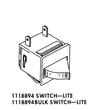
- Confirm the interior light turns off when the door closes (a bad switch can add heat); see refrigerator light switch W11384469
- If you have an ice maker, keep the fill area clear and address slow fills early
- Follow the care and cleaning schedule in the owner's manual
Why it matters
A refrigerator that runs longer than necessary uses more electricity and wears the compressor, evaporator fan, and defrost components faster. Simple airflow and seal checks protect cooling performance and help your 10662522110 reach its expected service life.
Last updated: March 2026