Owner’s manual
 Error Codes


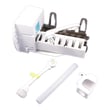
What is the average lifespan of a GE refrigerator?
Most GE refrigerators, including the GE GSS25JSRESS side-by-side, typically last 12 to 15 years with normal household use. Consistent maintenance (especially keeping airflow and temperatures stable) is what most often separates a 10-year fridge from a 15-year fridge; see the owner's manual for model-specific care and operating guidance.
Typical lifespan and what to expect
A refrigerator’s “lifespan” usually means the point where major repairs (sealed system, compressor, control board) become more common.
- Average range: 12 to 15 years
- Common long-life outcome with good care: 15+ years
- Most frequent age-related issues: cooling performance, ice maker and water dispensing, fan motors, defrost system
Quick reference
| Item | Typical expectation | What it means for you |
|---|---|---|
| Overall service life | 12 to 15 years | Normal for a modern side-by-side |
| Water filter system | Ongoing maintenance | Regular filter changes protect flow and taste |
| Cooling system wear | Increases after year 10 | Watch for warm temps, long run times |
What extends the life of a GE side-by-side
These steps reduce compressor run time, prevent overheating, and help the defrost system work correctly.
- Clean dust from the condenser area so heat can leave the cabinet efficiently
- Keep door gaskets clean and sealing to prevent warm air leaks
- Avoid overpacking; leave space for air circulation in both compartments
- Set stable temperatures (avoid frequent large adjustments)
- Replace the water filter on schedule to maintain water flow and reduce strain on the valve
Why it matters
A refrigerator that runs longer and more often (from dirty coils, poor door sealing, or warm air leaks) puts extra load on the compressor and fans. That added runtime is one of the biggest drivers of premature wear in side-by-side refrigerators.
Parts that commonly come up as a refrigerator ages
If you are troubleshooting temperature swings, weak water flow, or ice maker issues on the GSS25JSRESS, these are common service parts for this model:
- Refrigerator temperature sensor WR55X10025
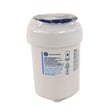
- Refrigerator water filter MWFP
- Refrigerator water valve WR57X33326
Last updated: February 2026
What is the most common problem with a GE refrigerator?
The most common GE refrigerator complaint is not cooling well enough (fresh food warm, freezer warming, or temperatures swinging). On the GE GSS25JSRESS side-by-side, the quickest wins are verifying temperature settings, making sure doors seal fully, and confirming fans and airflow are not blocked; see the owner's manual.
Quick checks we recommend first
- Confirm the refrigerator is plugged in and the breaker is on.
- Give it 24 hours to fully cool after first plug-in or after a long power outage.
- Make sure no packages are holding a door open.
- Set controls off the coldest setting if items are freezing in the fresh food section.
- Listen for normal operating sounds (modern compressors can run longer and sound different).
Common “problem” symptoms and what they usually point to
| Symptom | Most common cause | What to do next |
|---|---|---|
| Refrigerator warm, freezer OK | Airflow issue or control setting | Clear vents, verify settings, avoid overpacking |
| Freezer warm, ice production slow | Door left open, warm room, heavy use | Check door closure, allow 24 hours to recover |
| Strange noises | Normal operation (whoosh, hum, clicks) | Compare to normal sound descriptions in the manual |
| Small or hollow ice cubes | Clogged water filter or low water flow | Replace the refrigerator water filter MWFP |
| Door not closing smoothly | Gasket sticking or folding | Clean gasket; lightly condition per manual guidance |
Parts that commonly solve cooling and ice-maker complaints
If basic checks do not fix the issue, these model-matched parts are common next steps for diagnosis and repair:
- Refrigerator temperature sensor WR55X10025 (temperature feedback problems)
- Dc evaporator motor WR60X10185 (weak or no airflow from the evaporator)
- Refrigerator condenser motor WR60X10220 (poor heat removal, warm cabinet)
- Refrigerator defrost heater WR51X10055 and refrigerator defrost thermostat WR50X10068 (frost buildup restricting airflow)
- Refrigerator water valve WR57X33326 (no water to dispenser or ice maker)
Why it matters
Cooling issues can look like a “bad compressor,” but they are often caused by airflow, door sealing, defrost problems, or a clogged filter. Fixing the root cause protects food, improves ice production, and reduces long run times.
Last updated: February 2026
Are GE side-by-side refrigerators good?
Yes. GE side-by-side refrigerators like model GSS25JSRESS are a solid choice for everyday use because they typically offer dependable temperature control, easy access to both fresh food and freezer sections, and convenient dispenser features. For the exact features, clearances, and care guidelines for your unit, use the GSS25JSRESS owner's manual.
What “good” usually means for a side-by-side
A good side-by-side refrigerator keeps stable temperatures, circulates air well, and makes it easy to organize food without blocking vents.
Common strengths we see with this style:
- Consistent fresh food and freezer access without bending as much as a bottom-freezer design
- Adjustable door bins and shelves for flexible storage
- Built-in ice and water dispenser convenience (when connected to a cold water line)
- Good visibility with interior lighting
- Straightforward maintenance items (filters, bulbs, door gaskets)
What to check on your GSS25JSRESS to judge performance
Use these quick checks to decide if your refrigerator is performing the way it should.
- Fresh food holds about 37°F and freezer holds about 0°F (use a thermometer for a true reading)
- Doors seal tightly with no warm air leaks or heavy condensation
- Airflow is not blocked by overpacked shelves or items pushed against vents
- Ice maker and dispenser run without sputtering or long pauses after filter changes
- Unit has proper installation clearances for airflow (sides, top, and back)
Installation clearances (from the manual)
| Location | Typical clearance guidance |
|---|---|
| Sides | 1/8 in (4 mm) |
| Top | 1 in (25 mm) |
| Back | 1 in (25 mm) |
| Door opening | 3/4 in (19 mm) for a 90° opening |
Why it matters
Side-by-side refrigerators depend on steady airflow and correct clearances to cool efficiently. When airflow is restricted or doors do not seal, you can see temperature swings, frost buildup, and slower ice production.
Parts that commonly affect “how good it runs”
If performance is slipping, these model-matched parts are often involved:
- Refrigerator water filter MWFP (water taste, flow, dispenser performance)
- Refrigerator temperature sensor WR55X10025 (temperature regulation issues)
- Refrigerator defrost heater WR51X10055 and refrigerator defrost thermostat WR50X10068 (frost buildup, warm temps)
- Refrigerator water valve WR57X33326 (no water, weak water, no ice fill)
Last updated: February 2026