

What is the gap supposed to be on a lawn mower spark plug?
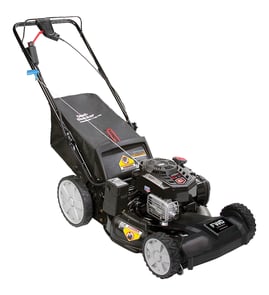
For the Poulan PO45N21RH walk-behind mower, most small-engine spark plugs are typically gapped around 0.030 in (0.76 mm). We set the gap to the engine manufacturer’s spec when available; otherwise, 0.030 in is the most common starting point for walk-behind mowers.
How to check and set the spark plug gap
- Turn the engine off, let it cool, and disconnect the spark plug wire.
- Remove the plug and inspect the tip; heavy carbon or oil fouling usually means it is time to replace it.
- Use a wire-style gap gauge (preferred) or a feeler gauge.
- Adjust by gently bending the ground electrode; do not pry against the center electrode.
- Recheck the gap after adjusting, then reinstall and snug the plug.
Quick gap reference (typical small-engine ranges)
| Engine type (common on walk-behind mowers) | Typical spark plug gap |
|---|---|
| Many 4-cycle mower engines | 0.020 to 0.030 in |
| Many modern OHV mower engines | 0.030 in |
| Some older or specialty engines | 0.025 in |
Why it matters
Spark plug gap affects spark strength and ignition timing consistency. Too wide a gap can cause hard starting and misfires; too tight a gap can reduce combustion efficiency and power, especially under load.
If it still runs rough after setting the gap
- Replace the spark plug if the electrode is worn or the porcelain is cracked.
- Check the air filter and fuel quality (stale gas is a common cause of surging).
- Inspect the blade and adapter for damage after impacts; a bent blade can cause vibration that feels like an engine problem. If you’re servicing the blade, use our guide: lawn mower blade removal tool.
Last updated: January 2026
How to find Poulan Pro model number?
Your Poulan Pro model number is printed on the mower’s model and serial tag; on a walk-behind mower like the Poulan PO45N21RH, it’s typically on the rear of the deck near the handle mounts or on the side of the deck, away from moving parts.
Where to look on a walk-behind mower
Check these common tag locations first:
- Rear of the mower deck, just below the handle brackets
- Left or right side of the deck near the rear wheel
- Near the engine mounting area on the deck (not on the muffler side)
- On the handle assembly near the lower handle bolts
- Under the rear discharge door area (if equipped)
What the label looks like and what to write down
Most Poulan and Poulan Pro tags are a sticker-style label or a small metal plate. Record:
- Model number (example: PO45N21RH)
- Serial number (needed to match production changes)
- Any product number or type code listed
Quick ID checklist
| What you see on the tag | What it’s used for | Why we need it |
|---|---|---|
| Model number | Identifies the mower family | Ensures parts diagrams match |
| Serial number | Identifies the build range | Prevents ordering the wrong revision |
| Product/type code (if shown) | Narrows exact configuration | Helps match engine and deck parts |
Why it matters
Poulan Pro mowers can have small design changes within the same model family (cables, wheels, blade adapters, fasteners). Using the exact model and serial from the tag helps us match the correct parts the first time.
Related DIY help
If you’re identifying parts because you’re servicing the cutting system, use how to sharpen a lawn mower blade to confirm safe blade handling and inspection steps.
Last updated: January 2026
Can I use regular 10w30 in my lawn mower?
Yes. For the Poulan PO45N21RH rotary lawn mower, 10W-30 is a common, safe choice for most mowing conditions. Use a quality 4-cycle engine oil and keep the oil level correct; the right oil helps prevent hard starting, smoking, and premature engine wear.
What oil to use (practical guidance)
Most walk-behind 4-stroke mowers run well on SAE 30 in warm weather and 10W-30 when temperatures vary. If you mow in cooler spring or fall weather, 10W-30 typically flows better at startup.
- Use 4-cycle engine oil (not 2-cycle mix).
- Choose SAE 30 for consistently warm temps.
- Choose 10W-30 for mixed temps and easier cold starts.
- Avoid overfilling; too much oil can cause smoke and fouled plugs.
- Check oil before each mow on level ground.
Quick oil selection table
| Outdoor temperature | Common choice | Why it works |
|---|---|---|
| Above ~40°F | SAE 30 | Stable viscosity in warm mowing |
| Varying temps | 10W-30 | Better all-around protection |
| Near freezing starts | 5W-30 (synthetic preferred) | Easier pulling and faster lubrication |
How to change oil cleanly
- Run the engine 1 to 2 minutes to warm the oil, then shut it off.
- Disconnect the spark plug wire for safety.
- Drain into an approved container; wipe spills from the deck.
- Refill slowly, recheck level, then start and recheck for leaks.
If you need to remove the blade for access or maintenance while you are servicing the mower, use our guide: lawn mower blade removal tool.
Why it matters
Using the right viscosity oil and keeping the level correct reduces internal friction and heat, which helps your PO45N21RH engine last longer and start more reliably.
Last updated: January 2026
Why is my push lawn mower not getting fuel?
On the Poulan PO45N21RH rotary lawn mower, “not getting fuel” is usually caused by stale gas, a blocked fuel cap vent, or varnish and debris in the carburetor that prevents fuel from flowing into the engine. A weak ignition can also mimic a fuel problem.
Quick checks we recommend first
- Drain old fuel and refill with fresh gasoline (old fuel is the most common cause after storage).
- Loosen the gas cap slightly and try starting; if it runs briefly, the tank vent is restricted.
- Confirm the engine stop or zone control is being held fully; a slack cable can prevent normal starting.
- Inspect the spark plug condition; a fouled plug can feel like “no fuel.”
- If the mower starts on prime (or runs for a second and dies), focus on carburetor fuel delivery.
Fuel-delivery troubleshooting steps (safe DIY)
- Turn the fuel valve on (if equipped) and make sure there is fuel in the tank.
- Check for kinks or pinches in the fuel line routing.
- Clean the fuel cap vent (or replace the cap if it will not vent).
- Remove the carburetor bowl and look for water, grit, or gelled fuel; clean and reinstall.
- If the carburetor is gummed up, a full carburetor cleaning or rebuild is typically needed.
Parts that can contribute to “no fuel” symptoms
These parts do not carry fuel, but they can prevent the engine from running or starting normally, which often gets mistaken for a fuel issue:
| Symptom you see | Likely area | Example part for PO45N21RH |
|---|---|---|
| Engine will not keep running unless you hold the control tightly | Zone control cable out of adjustment or damaged | Walk-behind lawn mower engine cable 532176556 |
| Engine starts, then dies when you release the handle | Zone control cable not pulling the brake off fully | Walk-behind lawn mower engine cable 532176556 |
| Hard starting after blade strike or heavy vibration | Blade and adapter damage affecting crankshaft load | Lawn mower blade adapter 581547901 |
Why it matters
Fuel problems on a walk-behind mower usually start as a simple restriction (venting, varnish, debris). Fixing the root cause prevents repeated no-starts, reduces carburetor damage, and helps the engine run smoothly under load.
Helpful DIY guides
- Use a safe method to remove the blade before working under the deck: lawn mower blade removal tool
- If the mower bogs or cuts poorly after you get it running, service the blade: how to sharpen a lawn mower blade
Last updated: January 2026