 Owner’s manual


How to tell if a Whirlpool dryer motor is bad?
On the Whirlpool WGD6200SW2 dryer, a bad drive motor usually shows up as the drum not turning, a humming motor that will not start, or the motor repeatedly shutting off on its internal thermal protector. If the motor’s thermal protector shows no continuity, replace the motor.
Quick checks before condemning the motor
We rule out common “no run” causes first because they can look like a motor failure.
- Confirm the dryer door is fully closed and the Start button is pressed firmly (some loads require holding Start 2 to 5 seconds).
- Check the household fuse or circuit breaker; a blown fuse or tripped breaker can stop the dryer.
- Verify the dryer is plugged into a grounded 3-prong outlet and power is present.
- Listen for a steady hum with no drum movement (often points to a seized drum, blower, or motor).
- If the dryer runs but shuts off and restarts after cooling, suspect the motor thermal protector or restricted airflow.
What “bad motor” symptoms look like
| Symptom | Most likely cause | What we do next |
|---|---|---|
| Hums but drum will not turn | Motor cannot start under load, or drum/belt is jammed | Check drum turns by hand; inspect belt/idler/rollers |
| Runs briefly then stops | Motor thermal protector opening | Check venting and blower for blockage; test motor |
| No sound at all when started | Power, door switch, start switch, or control issue | Follow electrical checks in the WGD6200SW2 owner’s manual |
| Loud squeal/rumble while running | Worn rollers/idler, not the motor | Consider a maintenance kit |
Parts that commonly get replaced with motor-related complaints
If the motor is fine, these parts often solve “won’t tumble” or noisy operation on this style of Whirlpool gas dryer.
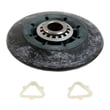
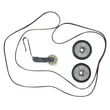
- Dryer repair kit 4392065 (common wear items that affect drum support and movement)
- Drum support rollers (worn rollers can overload the motor)
- Blower wheel (a jammed wheel can stall the motor)
Why it matters
A weak or overheating motor can stop mid-cycle and leave clothes damp; a mechanical drag (rollers, belt system, blower) can mimic a bad motor and cause repeat shutdowns.
Last updated: February 2026
What are the common problems with Whirlpool dryers?
Common problems on a Whirlpool gas dryer like model WGD6200SW2 are: it will not start, it runs but has no heat, it makes unusual noises, or it takes too long to dry. Most issues trace back to power supply, door/start operation, airflow restrictions, or a failing heat or drum-support component; see the WGD6200SW2 owner's manual for model-specific checks.
Most common symptoms and what they usually mean
- Dryer will not run: tripped breaker, blown fuse, door not fully closed, Start not held long enough
- No heat (drum turns): one leg of power is out, gas shutoff valve closed, heat circuit safety opened
- Unusual sounds: thumping after non-use, worn drum support rollers, blower wheel issues
- Long dry times: lint screen clogged, vent restriction, blower airflow problem
- Drum light out: burned-out bulb (this model uses a 10-watt appliance bulb)
Quick checks we recommend first (fast, no parts)
- Reset the house breaker; for electric supply issues, the dryer can tumble with no heat.
- Confirm the door closes firmly and press and hold Start for 2 to 5 seconds (large loads can require this).
- For gas models, confirm the gas supply shutoff valve is open.
- Clean the lint screen and check the vent for crushing, kinks, or heavy lint buildup.
- Listen for squealing or rumbling that changes as the drum turns.
Parts that commonly fix these problems on WGD6200SW2
| Symptom | Common part category | Example part for this model |
|---|---|---|
| Rumbling, squealing, thumping | Drum support and wear items | Support WPW10314173 or dryer repair kit 4392065 |
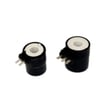
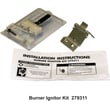
| No heat or intermittent heat | Gas ignition components | Dryer valve coil kit 279834 or igniter 279311 |
| Overheats, shuts off, no heat | Safety thermostat/fuse circuit | Dryer thermal cut-off kit W11050897 |
| Poor airflow, loud whoosh/rattle | Blower components | Dryer blower wheel WP694089 |
Why it matters
A dryer that runs with restricted airflow or a weak blower can overheat and trip safety devices, causing “no heat” and longer dry times. Catching worn rollers, a failing blower wheel, or gas ignition issues early helps restore normal drying and reduces repeat breakdowns.
Last updated: February 2026
What is the life expectancy of a Whirlpool dryer?
A Whirlpool dryer typically lasts 10 to 13 years. For your Whirlpool WGD6200SW2 gas dryer, consistent airflow maintenance (lint screen and venting) and avoiding overloads are the biggest factors that help it reach the upper end of that range.
Typical lifespan (what to expect)
Most household dryers fall into a predictable window when they are installed correctly and used normally.
| Usage and care level | Typical life expectancy | What usually ends the dryer’s life |
|---|---|---|
| Light use, excellent maintenance | 13 years | Wear parts (rollers, belt, motor) |
| Average family use | 10 to 13 years | Heat or airflow issues, drum support wear |
| Heavy use, poor venting/maintenance | 7 to 10 years | Overheating, repeated thermal cutoffs, motor strain |
What extends the life of a WGD6200SW2 dryer
These habits reduce heat stress and mechanical wear, which are the two main lifespan killers in a gas dryer.
- Clean the lint screen before every load; replace it if it is torn or warped (see dryer lint screen WP8572270).
- Keep the exhaust vent short, smooth, and clear; restricted venting makes drying times longer and overheats components.
- Do not overload; heavy loads strain the drive motor, belt, and drum supports.
- Listen for thumping or squealing; worn drum support rollers can damage the drum and increase motor load.
- Use the correct cycle and heat setting; excessive heat accelerates wear on sensors and safety devices.
Parts that commonly wear out first (and what they affect)
If your dryer is otherwise in good shape, replacing common wear parts often restores performance and helps you get more years out of it.
- Drum support rollers: rumbling or thumping (see support WPW10314173).
- Blower wheel: weak airflow, longer dry times (see dryer blower wheel WP694089).
- Thermal safety devices: no heat or overheating symptoms after vent restrictions (see dryer thermal cut-off kit W11050897).
Why it matters
A dryer that takes longer to dry is not just inconvenient; it runs hotter and longer, which shortens the life of the igniter, sensors, motor, and drum support system. Good airflow and routine cleaning are the simplest ways to protect your Whirlpool dryer investment.
For model-specific operation and care details, follow the maintenance guidance in the WGD6200SW2 owner’s manual.
Last updated: February 2026
How do I know if my Whirlpool dryer thermal fuse is blown?
If your Whirlpool WGD6200SW2 dryer won’t start at all, or the drum turns but you get no heat, a blown thermal fuse (or a related safety cutoff) is a top suspect; the sure way to confirm is a continuity test with a multimeter after disconnecting power.
Quick symptoms vs. what they usually point to
- Dryer won’t run: thermal fuse, door switch, start switch, power supply, or control issue
- Drum turns but no heat: gas supply shutoff closed, house fuse/breaker issue, igniter/sensor/coils, or thermal cutoff
- Runs 5 minutes but still no heat: gas shutoff closed or burner system problem
- Repeated fuse failures: restricted venting or airflow problem
How to test the thermal fuse (the definitive check)
- Unplug the dryer (or shut off power at the breaker).
- Access the fuse (location varies by design; use the WGD6200SW2 owner’s manual for access guidance).
- Pull at least one wire off the fuse terminal.
- Set your multimeter to continuity or ohms.
- Test across the fuse terminals:
- Good fuse: meter beeps or reads near 0 Ω
- Blown fuse: no beep or reads OL/infinite
Don’t miss these common “no heat” look-alikes (gas model)
The WGD6200SW2 is a gas dryer; before replacing parts, we check the basics the manual calls out:
- Confirm the gas supply line shutoff valve is open
- Check the household fuse/circuit breaker (the drum can turn even when heat is out)
- Run a Timed Dry heated cycle for about 5 minutes and feel for heat (do not use Air Only)
Common heat-related parts (when basics check out)
| Symptom | Common cause | Example part for this model |
|---|---|---|
| No ignition, no heat | Failed igniter | Igniter 279311 |
| Ignites once then stops heating | Weak gas valve coils | Dryer valve coil kit 279834 |
| No flame sensed | Radiant sensor issue | Dryer radiant sensor WP338906 |
| Overheats, then shuts down | Airflow restriction, cutoff opens | Dryer thermal cut-off kit W11050897 |
Why it matters
A thermal fuse or thermal cutoff is a one-time safety device; if it opens, we replace it and correct the root cause (most often a clogged vent, lint buildup, or blocked airflow) so the new part does not fail again.
Last updated: February 2026








