Owner’s manual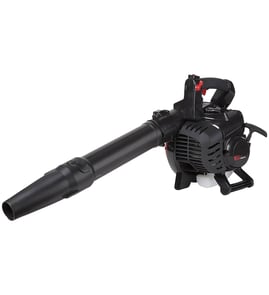






What is the life expectancy of a gas leaf blower?
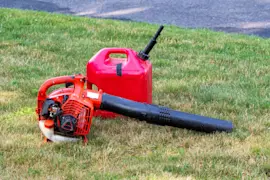
A gas leaf blower typically lasts about 10 years with normal homeowner use and consistent maintenance. For your Craftsman 358797300 gas blower, following the maintenance schedule and storage steps in the owner's manual is what most directly determines how long it runs reliably.
Typical lifespan (what to expect)
Most gas leaf blowers fall into these ranges:
| Use pattern | Typical life expectancy | What shortens life fastest |
|---|---|---|
| Homeowner, seasonal use | ~8 to 12 years | Old fuel, dirty air filter, running too lean |
| Heavy homeowner use | ~6 to 10 years | Overheating, clogged cooling/air intake |
| Commercial or daily use | ~2 to 5 years | High hours, vibration wear, deferred maintenance |
Maintenance that extends life the most
The manual’s “customer responsibilities” list is the right roadmap. These items have the biggest impact on engine life and starting reliability:
- Clean the air filter on schedule so the engine can breathe properly.
- Replace the spark plug when starting gets harder or performance drops.
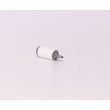
- Replace the fuel filter to prevent carburetor restriction.
- Check for loose fasteners and worn parts (vibration loosens screws over time).
- Keep air intake openings and tubes clear; restricted airflow increases heat and wear.
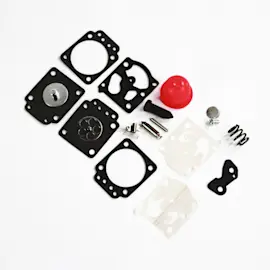
If you’re chasing fuel-related issues (hard starting, surging, stalling), replacing cracked or soft fuel lines is one of the most common fixes; the poulan lawn & garden equipment fuel line, small 530069247 is a frequently used replacement part for this model family.
Why it matters
Gas blowers usually “wear out” from fuel system problems and heat related wear, not from the housing or tubes. Clean airflow, fresh fuel, and routine tune-up items help the Craftsman 358797300 keep compression and run at the correct throttle without excessive strain.
Quick signs it’s nearing end-of-life (or needs major service)
- Compression feels weak when pulling the starter rope
- Won’t stay running even after fresh fuel and a new spark plug
- Persistent loss of power under load
- Excessive vibration that returns after tightening fasteners
Last updated: February 2026
Are gas leaf blowers being phased out?
Gas leaf blowers like the Craftsman 358797300 are not universally “phased out,” but many U.S. cities and states have adopted restrictions on when and where you can use gas-powered outdoor equipment due to noise and emissions. Check your local ordinance, then follow the operating and noise-reduction guidance in the owner's manual.
What “phased out” usually means
Most rules fall into one of these categories:
- Time-of-day limits (common in many communities)
- Noise limits (decibel caps or “nuisance” rules)
- Equipment-type limits (gas vs. electric, or 2-cycle vs. 4-cycle)
- Use-location limits (parks, schools, commercial zones)
- Commercial-use restrictions (landscaping crews may have different rules)
What your 358797300 manual already recommends (and why it matters)
Your Craftsman manual includes practical steps that align with many local noise ordinances, such as operating only at reasonable hours and using the lowest throttle that still gets the job done. Following these practices reduces complaints, helps you stay compliant, and makes the blower more neighbor-friendly.
Noise and courtesy checklist
- Operate at reasonable hours (many ordinances target early morning and late evening)
- Use the lowest effective throttle for the task
- Limit how many loud tools run at the same time
- Loosen debris with a rake or broom before blowing
- In dusty areas, lightly dampen surfaces when possible
Quick compliance guide
Use this table to decide what to check first.
| If your area has… | What to do first | What to adjust on the blower |
|---|---|---|
| Time restrictions | Confirm allowed hours | Plan work windows; avoid early/late use |
| Noise limits | Look for dB rules or “nuisance” language | Lower throttle; shorten run time |
| Gas equipment bans | Confirm if it applies to homeowners or commercial use | Consider switching to electric for restricted areas |
Related maintenance that helps reduce issues
A poorly running 2-cycle engine can be louder, smokier, and harder to start. If you are troubleshooting fuel-related problems, these model-compatible parts are commonly involved:
- Poulan lawn & garden equipment fuel line, small 530069247
- Ayp lawn & garden equipment fuel line, large 530069216
- Craftsman lawn & garden equipment engine fuel filter 530095646
Last updated: February 2026
What company makes Craftsman leaf blowers?
Craftsman is a brand owned by Stanley Black & Decker; Craftsman leaf blowers (including model 358797300) are produced for the Craftsman brand by manufacturing partners, and the exact maker can vary by model and production run. For model-specific identification details, use the product labeling and the parts information in the owner's manual.
How to identify who made your specific 358797300
Use these checks on the blower itself; they are the most reliable for confirming the actual manufacturer behind a specific unit:
- Look for the data label on the housing or near the starter cover; note any “manufactured for” or “assembled by” wording.
- Match the model number and any engine family or emissions label codes.
- Compare the illustrated parts list and diagrams to what you see on your unit.
- If you are ordering maintenance items, match by part ID, not by appearance alone.
Parts clues that help confirm the platform
Many Craftsman gas blowers share common fuel-system and starter components across related platforms. If you are troubleshooting or refreshing the fuel system, these parts are commonly involved:
- Poulan lawn & garden equipment fuel line, small 530069247
- Ayp lawn & garden equipment fuel line, large 530069216
- Craftsman lawn & garden equipment engine fuel filter 530095646
- Starter kit 545150201
Quick reference: common “who made it” signals
| What you find on the blower | What it usually means | What to do next |
|---|---|---|
| Only “Craftsman” branding and a Sears-style model number | Brand is Craftsman; manufacturer may vary | Use the manual and parts list to match components |
| Emissions/engine family label present | Identifies the engine certification family | Record the code for service and parts matching |
| Parts list matches your unit closely | Confirms the correct parts platform | Order by exact part ID and description |
Why it matters
Knowing the brand owner is helpful, but matching parts by the correct model and diagrams is what prevents wrong-part returns. On a 2-cycle gas blower, fuel lines, the fuel filter, and the carburetor and primer system are the most common sources of starting and running issues.
Last updated: February 2026
Which brand of gas leaf blower is best?
For most homeowners, the “best” gas leaf blower brand is the one that fits your yard size, starts reliably, and has easy-to-get replacement parts. If you already own the Craftsman 358797300, it is a solid 25cc 2-cycle blower rated at 185 MPH and 385 CFM, and keeping it maintained usually delivers the best value. See the owner's manual for the operating and maintenance basics.
How we recommend choosing the best brand
We focus on performance, comfort, and long-term serviceability, not just peak numbers.
- Match blower type to your workload (handheld vs. backpack)
- Compare airflow (CFM) for moving volume; compare airspeed (MPH) for stuck debris
- Prioritize easy starting and stable idle (carburetor and fuel system condition)
- Check parts availability for wear items (fuel lines, fuel filter, starter parts)
- Choose a brand with clear maintenance instructions and a good parts breakdown
Quick comparison: what matters most
| What you care about | What to look for | Why it matters |
|---|---|---|
| Power for big piles | Higher CFM | Moves more leaves per pass |
| Lifting wet debris | Higher MPH | Breaks loose heavier material |
| Comfort | Lower vibration, good balance | Less fatigue during longer jobs |
| Ownership cost | Common service parts available | Faster, cheaper repairs |
If you already have Craftsman 358797300
Before switching brands, we recommend tuning up what you have. Fuel delivery issues are the most common reason a gas blower feels “weak” or hard to start.
- Replace cracked fuel lines (small and large sizes are common)
- Replace the in-tank fuel filter
- Inspect the fuel cap seal and tank venting
- Clean the air intake and keep tubes clear of debris
- Run at the lowest throttle that still does the job to reduce noise and wear
Helpful model-matched parts to consider:
- Poulan lawn & garden equipment fuel line, small 530069247
- Ayp lawn & garden equipment fuel line, large 530069216
- Craftsman lawn & garden equipment engine fuel filter 530095646
Why it matters
A “best brand” choice is really a best fit decision. When your blower is properly maintained and using clean fuel, you get more consistent starting, steadier power, and fewer mid-season breakdowns.
Last updated: February 2026
Why are gas-powered leaf blowers bad?
Gas-powered leaf blowers like the Craftsman 358797300 get a bad reputation for three main reasons: they are loud, they produce exhaust (including carbon monoxide), and they can kick up dust or throw debris. Using the safe operating practices in the owner's manual reduces these issues.
What people usually mean by “bad”
- Noise: higher throttle and longer run time increase disturbance to neighbors.
- Exhaust fumes: 2-cycle engines create fumes; carbon monoxide is dangerous in poorly ventilated areas.
- Dust and flying debris: rocks, glass, and sticks can ricochet and cause injury or property damage.
How to reduce the downsides on model 358797300
- Operate at the lowest throttle that still does the job.
- Use the blower at reasonable hours and keep the work area clear of bystanders.
- Inspect the area first; remove hard objects that can be thrown.
- In dusty conditions, lightly dampen surfaces when water is available.
- Always wear eye protection and direct airflow away from people, pets, cars, and windows.
Quick comparison: gas vs electric
| Factor | Gas blower (358797300 type) | Electric blower (corded/battery) |
|---|---|---|
| Noise | Typically louder | Typically quieter |
| Exhaust | Produces exhaust | No on-tool exhaust |
| Maintenance | Fuel mix, filters, carburetor | Usually less engine maintenance |
Why it matters
Noise, fumes, and debris control affect safety and comfort for you and anyone nearby. Following the Craftsman safety rules helps prevent injury, reduces dust exposure, and limits nuisance complaints.
Last updated: February 2026