Owner’s manual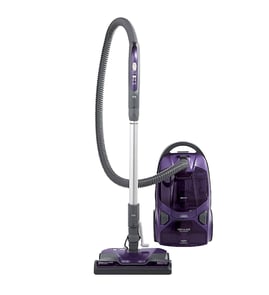



Where is the model number on a Kenmore canister vacuum?
On the Kenmore canister vacuum model 11627614700, the model and serial numbers are printed on the model and serial number plate on the vacuum. We use that plate information to match the correct parts list and the correct owner's manual for your exact unit.
Look for a sticker or metal plate on the canister body (not the wand). Typical locations include:
- On the outside of the main canister housing (often near the rear or bottom)
- On the underside of the canister near the wheels or caster area
- Under the canister hood (near the bag compartment) after opening the cover
- Near the cord rewind area or power cord entry point
- Along the back edge of the canister where the hose connects
The plate usually includes both identifiers. Record both so you can get the right vacuum bags, filters, and other replacement parts.
| What to record | Why it matters |
|---|---|
| Model number | Ensures diagrams and parts match your exact vacuum |
| Serial number | Helps confirm production version when parts changed over time |
- Unplug the vacuum before lifting or turning it over.
- Use a flashlight; plates are often in shadowed areas.
- If the label is worn, take a photo and zoom in to read it.
- If you open the hood, avoid pulling on wires or forcing latches.
Kenmore canister vacuums can look similar across multiple model numbers, but bags, motor safety filters, exhaust filters, and PowerMate components can differ. Using the model and serial number plate prevents ordering the wrong part.
For the exact wording and where Kenmore expects you to record the model and serial numbers, use the owner's manual.
Last updated: February 2026
How long do Kenmore canister vacuums last?
A Kenmore canister vacuum like model 11627614700 typically lasts 10 to 15 years with normal home use and routine care (bags, filters, and clog prevention). Heavy use, frequent clogs, and running with restricted airflow shortens motor life.
Most bagged canister vacuums fall into these ranges:
| Usage pattern | Typical lifespan | What drives it |
|---|---|---|
| Light (small areas, 1 to 2 times/week) | 12 to 15 years | Low heat load, fewer clogs |
| Average (whole home, 1 to 3 times/week) | 10 to 15 years | Regular bag and filter care |
| Heavy (daily, pets, lots of carpet) | 7 to 12 years | More wear on hose, wand, PowerMate, motor |
The owner’s manual emphasizes keeping airflow open and changing the dust bag often; restricted airflow makes the vacuum work hotter and harder. Use these habits:
- Change the dust bag when it’s full or when the performance indicator shows restriction.
- Check for clogs occasionally in the hose, wand, and floor nozzle; unplug before checking.
- Replace or clean filters on schedule (motor safety filter and exhaust filter).
- Avoid pulling the canister by the hose; move it using the handle.
- Keep the PowerMate brush area clear of hair and string; clean the agitator area as needed.
For model-specific maintenance steps and filter locations, follow the 11627614700 owner's manual.
These symptoms usually mean airflow restriction, worn brush components, or a tired motor:
- Suction drops quickly even with a new bag
- Burning smell or unusual heat from the canister
- Intermittent power (cord, plug, or internal wiring issue)
- PowerMate brush not spinning consistently
- Loud grinding or high-pitched motor noise
A canister vacuum’s motor depends on steady airflow for cooling. When the bag is overfull, filters are clogged, or the hose is blocked, performance drops and internal temperatures rise, which shortens the vacuum’s usable life.
Last updated: February 2026
What are the parts of the vacuum?
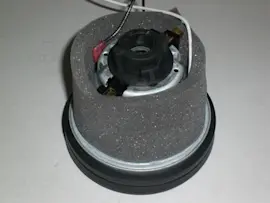
On the Kenmore 11627614700 canister vacuum, the main parts include the canister (motor and bag area), the hose and wand, the floor nozzle (PowerMate), and the filters that protect the motor and clean the exhaust air. These parts work together to create suction and pick up debris.
- Canister body: houses the motor, cord rewind, and the dust bag compartment
- Dust bag: collects dirt and debris (running without a bag can cause problems)
- Hose: carries airflow; this model’s hose contains electrical wiring, so damage matters
- Telescoping wand: adjusts for reach and height; locks into the PowerMate
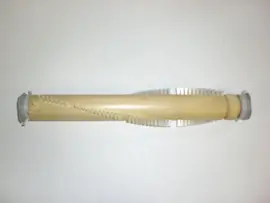
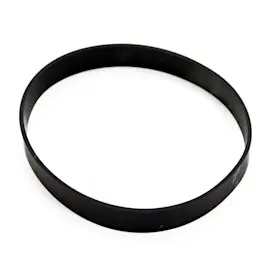
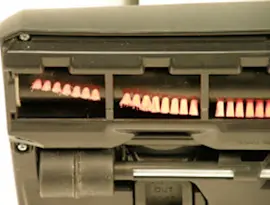
- PowerMate (motorized floor nozzle): provides deep carpet cleaning with an agitator and belt
- Attachments: tools that connect to the handle or wand for above-floor cleaning
- Filters:
- Motor safety filter: helps protect the motor from fine dust
- Exhaust filter: helps reduce dust in the air leaving the vacuum
| Part | Primary job | Common symptom when it has an issue |
|---|---|---|
| Dust bag | Captures debris | Weak suction, dust smell, poor pickup |
| Hose and wand | Moves airflow and provides reach | Intermittent power at nozzle, loss of suction |
| PowerMate (agitator and belt) | Agitates carpet for pickup | No brush roll, poor carpet cleaning |
| Filters (motor safety, exhaust) | Protects motor and cleans exhaust air | Reduced airflow, overheating, dusty exhaust |
Suction and airflow depend on a sealed path from the floor nozzle through the hose and wand into the bag, with filters staying clean enough to let air move. When one part is clogged, worn, or not seated correctly, cleaning performance drops fast.
- Use the Parts and Features section in the owner's manual to match names to what you see.
- Unplug before checking attachments, the bag area, or the PowerMate.
- Do not operate without the dust bag and filters installed.
- If the PowerMate brush is not turning, the belt and agitator area are the first places to inspect.
Last updated: February 2026