
What are the most common issues with PM0545305?
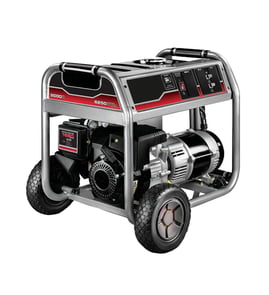
The most common problems we see on the Coleman PM0545305 generator are no-start conditions, rough running or surging, and no AC output. These issues usually trace to fuel quality, carburetor restriction, ignition or spark plug problems, or a tripped breaker or faulty voltage regulation.
Common symptoms and what they usually mean
- Won’t start: stale fuel, clogged carburetor jets, dirty air filter, fouled spark plug, low oil shutdown (if equipped)
- Starts then dies: restricted fuel flow, stuck float/needle, clogged tank vent, choke not opening
- Surging (hunting): partially clogged carburetor, air leak at intake, governor linkage sticking
- No AC power at outlets: tripped circuit breaker, bad receptacle, failed capacitor (if used), AVR/voltage regulator issue, worn brushes (if equipped)
- Runs but low or unstable voltage: engine speed (Hz) off, AVR problem, poor connections, overloaded circuit
Quick checks we recommend first (safe, high value)
- Use fresh gasoline; drain old fuel from the tank and carburetor bowl if it sat more than 30 days.
- Check oil level and any low-oil shutdown switch operation.
- Inspect and clean/replace the spark plug; verify strong spark.
- Clean the air filter and confirm the choke moves freely.
- Reset any outlet breakers; unplug all loads and retest output.
- Verify engine speed under no load; most portables must run near 3600 RPM to make 60 Hz.
Troubleshooting map (symptom to next step)
| Symptom | Most likely area | Best next test |
|---|---|---|
| No start | Fuel or ignition | Check spark, then confirm fuel flow to carb |
| Surging | Carburetor/governor | Clean carb passages; check linkage movement |
| No AC output | Breaker/AVR/brushes | Check breaker, then test outlet voltage with meter |
| Low voltage | RPM or regulation | Confirm RPM/Hz, then inspect wiring and regulator |
Why it matters
Generators like the PM0545305 depend on clean fuel and correct engine speed to produce stable voltage. Fixing a simple fuel restriction or breaker issue early prevents hard starting, overheating, and damage to connected equipment.
For electrical testing steps and safe meter use, we recommend how to use a multimeter to test electrical parts video.
Last updated: March 2026
What engine is in a Coleman Powermate PM0545305?
The Coleman PM0545305 generator can be built with different engine versions across production runs, so the correct way to identify the engine is to read the engine’s own ID tag (not the generator frame label). Once you have that engine model information, you can search parts by engine ID and by PM0545305 on Sears PartsDirect.
How to identify the exact engine on your PM0545305
Look for an identification label or stamped plate directly on the engine. That tag is the definitive source for engine make and model.
- Check the blower housing (recoil starter cover) first
- Also check the valve cover area and the side of the crankcase
- Write down every field shown (commonly model, type, code, or spec)
- Take a clear photo of the tag for reference when ordering parts
- Use the engine ID to match carburetor, ignition, air filter, and governor parts
What you should record (and why)
Use this as a checklist so you capture the details that determine parts compatibility.
| What to record from the engine tag | Example of how it’s labeled | Why it matters |
|---|---|---|
| Engine manufacturer | Brand name on tag | Determines the correct parts catalog |
| Engine model number | Model / Spec | Identifies the engine family |
| Type or trim code | Type / Trim | Narrows down carburetor and ignition variants |
| Code or serial | Code / Serial | Helps match production changes |
Why it matters
Generator model PM0545305 identifies the unit, but the engine tag identifies the exact engine build. That engine ID is what prevents ordering the wrong carburetor, spark plug, air filter, or recoil starter parts.
If you’re checking the engine because it won’t start
These quick checks solve many small-engine no-start issues.
- Drain old fuel and refill with fresh gasoline
- Confirm the oil level is correct (many engines protect against low oil)
- Inspect the spark plug and test for spark
- Check the air filter for heavy dirt or oil saturation
- Verify wiring connections are tight and not corroded
For safe electrical testing, we follow the steps in how to use a multimeter to test electrical parts video.
Last updated: February 2026
Why does my Coleman generator keep shutting off?
Your Coleman PM0545305 generator usually shuts off because the engine is being starved for fuel, the low-oil protection is tripping, it is overheating, or it is being overloaded electrically. We start by checking oil level, fuel cap venting, and load because those cause the most frequent, repeatable shutdowns.
Quick checks (fastest fixes first)
- Check oil level on a level surface; low oil can trigger the oil-alert shutdown.
- Loosen the fuel cap briefly right after it stalls; if it restarts, the cap vent is likely restricted.
- Reduce electrical load; unplug everything and restart, then add loads back one at a time.
- Inspect the air filter; a clogged filter can cause rich running and stalling.
- Confirm fresh fuel; old gas or water-contaminated fuel commonly causes run-then-die symptoms.
Most common causes and what to do
| Symptom | Likely cause | What we recommend |
|---|---|---|
| Runs 5 to 30 minutes, then dies | Fuel cap venting issue or fuel flow restriction | Test with cap loosened; clean/replace cap, check fuel line and filter |
| Dies when you plug something in | Overload or shorted appliance | Start with no load; add one device at a time; keep total watts below generator rating |
| Dies when hot, restarts after cooling | Overheating or ignition coil breaking down | Clear cooling air paths; check for debris; test spark when hot |
| Surges, hunts, then stalls | Dirty carburetor or stale fuel | Drain old fuel; clean carburetor and jets; replace fuel filter |
Electrical load tips (to prevent nuisance shutdowns)
- Add motor loads (fridge, sump pump) one at a time; starting watts spike.
- Avoid running near maximum output continuously; leave headroom for surges.
- If the breaker trips, reset it only after removing the overload.
Why it matters
Repeated shutdowns can foul the spark plug, overheat windings, and leave you with unstable voltage that is hard on connected equipment. Fixing the root cause (fuel delivery, oil protection, cooling, or overload) restores steady runtime.
Parts and diagrams
We use the parts diagrams for Coleman PM0545305 to match the correct fuel system and ignition components (carburetor parts, fuel cap, air filter, spark plug, ignition coil). If you need to search beyond the model parts list, use Sears PartsDirect.
Helpful DIY testing resource
For safe electrical troubleshooting steps (checking fuses, continuity, and basic meter use), follow how to use a multimeter to test electrical parts video.
Last updated: February 2026