Installation guide
 Error Codes


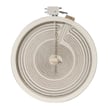
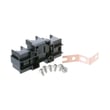
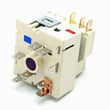
Is GE JB745SF1SS considered high end?
GE JB745SF1SS is typically considered a mid-range GE electric range, not a true high-end or luxury model. It’s a solid, mainstream freestanding range built for everyday cooking performance and serviceability, with replacement parts and installation requirements that match standard 40-amp electric range setups (see the installation guide).
How to think about “high end” for ranges
In our experience, “high end” usually means premium materials, advanced cooking tech, and higher price tiers. JB745SF1SS generally fits the dependable, value-focused category.
Common “high-end” signals include:
- Premium brand tier (often separate from the base brand line)
- Specialty cooking features (advanced convection systems, precision modes)
- Heavier-duty knobs, door hardware, and trim
- More robust electronics and sensors for tighter temperature control
- Higher overall build and finish level
What you can expect from JB745SF1SS as a mainstream GE range
This model is designed around standard freestanding electric range installation and typical household cooking needs.
Practical expectations:
- Standard electrical requirements (commonly a dedicated 40-amp circuit)
- Standard cabinet clearances and fit planning
- Straightforward repair path using common range parts (switches, elements, sensors)
- Good long-term ownership when maintained and installed correctly
Quick comparison: mainstream vs high-end
| Category | Mainstream range (typical) | High-end range (typical) |
|---|---|---|
| Price tier | Mid-range | Premium to luxury |
| Features | Core bake/broil and everyday cooktop | More specialized cooking modes and controls |
| Materials | Durable, practical finishes | More premium metals, hardware, and glass |
| Service | Common parts, simpler repairs | More complex systems, higher part costs |
Why it matters
Knowing the tier helps set expectations for performance, features, and repair costs. If you’re troubleshooting heating or control issues, we recommend starting with basics like installation and power supply, then moving to common service parts such as the wall oven temperature sensor WB21X22134 when symptoms point to temperature sensing problems.
Last updated: February 2026
How many watts is a GE JB745SF1SS?
GE JB745SF1SS is a 240-volt electric range, so it does not have one single “wattage” like a microwave; total power varies by which surface element(s) and oven heating element are on at the same time. For safe operation, follow the electrical requirements in the installation guide.
What “watts” can mean on this range
On an electric range, customers usually mean one of these:
- Total connected load (all heating components combined)
- Individual burner wattage (each radiant surface element)
- Oven heating wattage (bake and broil elements)
Because those values depend on the exact element sizes and configuration, the most accurate way to confirm your unit’s ratings is to check the rating plate location described in the installation instructions.
How to find the exact electrical rating (best method)
Use these steps for GE JB745SF1SS:
- Turn power off at the breaker.
- Pull the range forward carefully.
- Locate the rating plate (typically on the oven frame or the side of the drawer frame).
- Record volts, amps, and watts (or kW) listed.
- Match your home wiring to the installation requirements.
Electrical requirements you should plan for
The installation instructions specify the range should be on:
- An individual, properly grounded branch circuit
- 40 amp (minimum) circuit breaker or time-delay fuse
- A 125/250V range cord rated 40 amps (3-wire or 4-wire, UL-listed)
| Spec item | What to use for JB745SF1SS installation |
|---|---|
| Supply voltage | 125/250V (typical range supply) |
| Circuit size | 40A minimum |
| Cord type | 3-conductor or 4-conductor range cord |
Why it matters
Knowing the correct electrical rating helps prevent nuisance breaker trips, slow preheat, and overheating at the terminal block. It also ensures your cord, receptacle orientation, and strain relief are set up correctly for long-term reliability.
Last updated: February 2026
How do I reset my GE oven control board?
To reset the control board on your GE JB745SF1SS electric range, we recommend a simple power reset first: turn the range circuit breaker OFF, wait 60 seconds, then turn it back ON. This clears many temporary control glitches without replacing parts.
Reset steps (safe, effective order)
- Press Clear/Off (or Cancel) once; wait 10 seconds.
- If the display is still frozen or the oven will not start, switch the range breaker OFF.
- Wait 60 seconds (use 2 minutes if the control is still acting erratically).
- Turn the breaker ON and let the control boot up.
- Set the clock, then test Bake at 350°F.
- If an error code returns immediately, write it down before resetting again.
What to check if the reset does not stick
A reset helps when the control is “confused”, but it will not fix a failed sensor, wiring issue, or a bad board.
- If the oven temperature seems inaccurate or you get temperature-related errors, check the oven temperature sensor circuit; the sensor used on this model is commonly replaced as wall oven temperature sensor WB21X22134.
- If the display is blank but the breaker is on, inspect for a loose connection at the terminal block area (power supply issues can mimic a bad control).
- If the oven heats sometimes but not others, look for intermittent wiring problems.
Common symptoms and likely next step
| Symptom after reset | Most common cause | Typical next step |
|---|---|---|
| Error code returns right away | Sensor or control fault | Look up the code, then test sensor/board |
| No heat but display works | Heating circuit issue | Troubleshoot bake/broil circuit |
| Dead display | Power supply or board | Verify power, then inspect wiring |
Why it matters
Resetting is the fastest way to clear a temporary fault. If the problem comes back immediately, the control is usually reacting to a real input problem (like a temperature sensor reading out of range) rather than “needing another reset.” For code definitions and next steps, use our GE freestanding range error codes.
For electrical safety and power-connection details that affect control operation, follow the installation guide.
Last updated: February 2026
What is the life expectancy of a GE oven?
A GE oven typically lasts 12 to 18 years. For your GE JB745SF1SS electric range, lifespan depends most on heat stress (especially frequent self-clean cycles), keeping the oven sealed, and fixing heating or temperature-sensing problems quickly using the correct parts and procedures in the installation guide.
Typical lifespan and what affects it
Most electric ranges fall into a predictable lifespan range, but these factors move the needle:
- Self-clean frequency: high-heat cycles accelerate wear on wiring, controls, and sensors
- Door seal condition: a leaking gasket forces longer heat times and stresses components
- Heating performance: weak bake/broil heat increases run time and component strain
- Power quality: loose connections or incorrect wiring can damage controls over time
- Routine cleaning: spills left to bake on can cause odors, smoke, and overheating
Parts that commonly impact oven longevity
When an oven struggles to hold temperature or heats inconsistently, these parts are often involved:
- Oven temperature sensor: helps regulate temperature; failures can cause overheat or underheat
- Oven door gasket: keeps heat in; leaks can cause long preheat and uneven baking
- Control board: manages heating logic; failures can cause error codes or no-heat symptoms
Quick part-to-symptom guide (JB745SF1SS)
| Symptom | Common cause | Example part for this model |
|---|---|---|
| Oven temp swings, bakes unevenly | Sensor drifting out of range | Wall oven temperature sensor WB21X22134 |
| Long preheat, heat escaping around door | Worn or torn gasket | Range oven door gasket WB04T10086 |
| Random beeping, error codes, no-heat | Electronic control issue | Control board WB27X25357 |
Why it matters
A range that is sealed well and controls temperature accurately runs fewer minutes per meal. That reduces heat stress on the wiring harness, switches, and electronic controls, which is the biggest driver of long-term reliability.
Installation and electrical basics that protect the range
From a longevity standpoint, correct installation and power supply prevent repeat failures:
- Use a properly grounded, dedicated circuit sized for the range
- Use a UL-listed 3- or 4-conductor range cord as required by your setup
- Keep the range level so the door closes evenly and seals correctly
- Avoid pinching the cord when sliding the range into place
Last updated: February 2026