Owner’s manual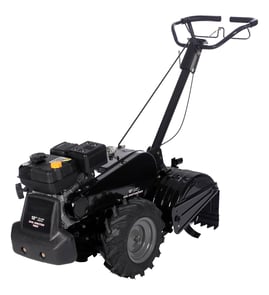

Can a rear tine tiller cut through roots?
Yes. An MTD rear-tine tiller like model 450 can work through small roots while breaking new ground, but thick, woody roots can stop the tines and cause the machine to lurch forward. Use the correct tine-drive direction and follow the safety rules in the owner's manual.
Rear-tine tillers are built for tougher soil, but roots behave differently than dirt.
- Small feeder roots usually shred and mix into the soil.
- Medium roots can wrap around the tine shaft and stall the engine.
- Large roots can jam the tines and pull the tiller forward suddenly.
- Hidden rocks and roots can damage tines, belts, and the gear case.
- If the tiller surges, let go of the handlebars; do not try to restrain it.
The operator guidance for this model is to match tine drive to soil conditions.
| Ground condition | Recommended tine drive | Why it helps |
|---|---|---|
| Virgin ground, sod, hard soil (often rooty) | Reverse tine drive | Bites in more aggressively for initial break-up |
| Soft soil, cultivating | Forward tine drive | Smoother mixing and less grabbing |
Additional tips that reduce grabbing and stalling:
- Start shallow with the depth stake; make multiple passes instead of one deep pass.
- Work in short sections and clear wrapped roots from the tines with the engine off.
- Keep bystanders at least 75 feet away while tilling.
- After striking a foreign object, stop the engine and disconnect the spark plug wire before inspecting.
Roots can make the tines “catch” and propel the tiller forward. Using the right drive mode, a shallow-first approach, and proper shutdown steps helps prevent injury and protects high-wear parts like the belt, tine shafts, and gear case.
Last updated: February 2026
Are rear tine tillers better?
Rear-tine tillers are better when you need deeper tilling and faster coverage of larger, open garden areas; they also handle tougher soil more effectively than most front-tine designs. For the MTD 450 rear-tine tiller, using the correct tine-drive direction and depth setting is what makes it perform its best (not just the tine location). See the owner's manual for operating modes and safety guidance.
Rear-tine tillers typically win for heavy-duty work because the tines are driven behind the wheels, which helps the machine bite into soil without being pulled off-line as easily.
- Breaking new ground, sod, or hard soil (use reverse tine drive when equipped)
- Tilling larger plots quickly (long rows, open areas)
- Working deeper with a depth stake setting that matches your soil
- Maintaining steadier forward progress in tough conditions
- Reducing the number of passes needed to get a fine seedbed (often two passes, lengthwise then widthwise)
Front-tine tillers are often easier to maneuver in tight spaces and can feel more precise around landscaping.
- Small patches, narrow beds, and tight turns
- Light cultivation in already-loose soil
- Users who prioritize lower cost and lighter weight
The operator guidance for the Model Series 450 focuses on selecting the right drive mode and operating safely.
- Set the depth stake before you start tilling
- Use reverse tine drive for virgin ground, sod, or hard soil
- Use forward tine drive for cultivating or soft ground
- Stop completely before changing the gear selection; shifting with wheels or tines engaged can cause stalling or damage
- For transport, select wheel drive only (do not engage the tines)
| Task | Recommended approach on MTD 450 | Why it helps |
|---|---|---|
| New, hard ground | Reverse tine drive | Improves bite and control |
| Soft soil cultivation | Forward tine drive | Smoother, faster finishing |
| Moving across yard/drive | Wheel drive only | Prevents tine contact and kickback |
Choosing “rear-tine vs front-tine” is really about matching the machine to your soil and space. A rear-tine tiller like the MTD 450 is built for traction and depth; using the correct drive mode and safe shifting practices prevents sudden lurching, stalling, and unnecessary wear.
Last updated: February 2026
What is the best brand rototiller?
There is no single “best” rototiller brand for everyone; the best choice depends on your garden size, soil type (hard clay vs. loose soil), and whether you want a front-tine or rear-tine machine. For an MTD rear-tine tiller like model 450, prioritize durability, serviceable parts, and safe operation practices outlined in the owner's manual.
Focus on the features that affect real-world performance and long-term ownership:
- Tine style: rear-tine for tougher soil and better traction; front-tine for lighter work
- Power source: gas for larger plots; electric/battery for small gardens and low maintenance
- Transmission and controls: smooth engagement, easy depth adjustment, stable reverse behavior
- Parts support: availability of wear items (cables, fasteners, bearings, tires)
- Weight and balance: heavier units bite better; lighter units are easier to maneuver
| Brand type | Best for | Typical strengths | Typical tradeoffs |
|---|---|---|---|
| Mainstream homeowner brands (including MTD-built platforms) | Most home gardens | Good value, common parts, familiar controls | Not as heavy-duty as pro units |
| Premium homeowner brands | Larger gardens, tougher soil | Stronger drivetrains, better ergonomics | Higher upfront cost |
| Professional walk-behind systems | Frequent use, large plots | Maximum durability, attachments | Highest cost, heavier, more setup |
Rear-tine tillers put a lot of load on the drive system and controls. Over time, common service needs include cable adjustment or replacement, tightening hardware, and addressing vibration. For your MTD 450, examples of parts that often come up in maintenance include a clutch cable such as the tiller clutch cable 746-1117 and hardware like screws and washers.
We recommend using these practical checks on any brand you are considering:
- Confirm the tiller can be operated with good visibility and stable footing
- Keep bystanders at least 75 feet away during operation
- If you hear unusual noise or vibration, stop the engine and inspect before continuing
- Use depth settings correctly; first-time tilling is commonly done at a shallow setting
For model-specific operating and adjustment guidance (depth stake, side shields, and safe handling), use the owner's manual.
Last updated: February 2026
How many horsepower tractor do you need to run a 5 ft tiller?
A 5 ft rotary tiller that mounts to a tractor typically needs 25 to 40 PTO horsepower to run well. That guidance is for tractor PTO-driven tillers; the MTD 450 is a walk-behind rear-tine tiller with its own engine, so tractor horsepower does not apply to operating this specific machine. For operating and safety details, use the owner's manual.
- Use PTO horsepower for sizing a tractor to a PTO tiller.
- Engine horsepower is higher than PTO horsepower; it is not the number used for implement ratings.
- Hard soil and deeper tilling require more PTO power.
- If you are underpowered, you compensate with slower ground speed and shallower passes.
| Soil and workload | Typical PTO HP range | What to do if you are near the low end |
|---|---|---|
| Previously worked, loose soil | 25 to 30 | One normal pass, moderate depth |
| Average garden soil | 30 to 35 | Two passes, reduce depth per pass |
| Sod, clay, virgin ground | 35 to 40 | Multiple shallow passes, slow travel speed |
The MTD 450 is designed to be operated as a self-powered tiller. Key operating practices from the manual include:
- Keep bystanders, helpers, pets, and children at least 75 feet away during operation.
- Keep hands and feet away from rotating tines.
- If the tines catch and the tiller surges forward, let go of the handlebars and do not restrain the machine.
- Disconnect and ground the spark plug wire before making adjustments.
Correctly matching PTO horsepower to a tractor tiller prevents stalling and driveline shock, and it keeps tine speed consistent for better soil breakup. For the MTD 450, following the manual reduces injury risk and prevents damage during hard-ground tilling.
Last updated: February 2026