

What model Kenmore washer do I have?
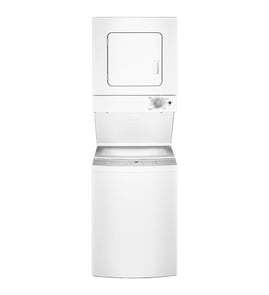
If you have a Kenmore stacked laundry center, the most reliable way to identify your washer is to find the model tag on the unit; for this parts page, the model is Kenmore 11088732792. Once you match that number, you can choose compatible washer and dryer parts with confidence.
Where to find the model number on a Kenmore laundry center
Check these common locations on a washer/dryer laundry system like 11088732792:
- Under the washer lid (along the rim of the opening)
- On the washer front frame behind the lid
- On the back panel near the power cord entry
- Inside the dryer door opening on the door frame
- Behind the control panel area (label may face upward or inward)
What the model number looks like (and why it matters)
Kenmore model numbers often start with 110 and are typically 10 to 12 characters long. The exact model number is what we use to match parts like a drain pump, motor coupling, or lid components.
Quick ID guide
| What you see on the tag | What it means | What to do next |
|---|---|---|
| 11088732792 | Exact model match | Use this model to select parts |
| 110.88732792 (with a dot) | Same model format | Ignore punctuation; match the digits |
| A different 110xxxxxxxx | Different model | Use the exact number on your tag |
If the tag is missing or unreadable
Use these practical checks to narrow it down:
- Compare your control panel layout and knob count to the parts diagrams for the model
- Match visible wear items you can identify, such as the washer drain pump WP3363394
- If the washer agitates poorly, compare your agitator parts to the agitator dog 80040
- Look for any secondary stickers on the cabinet back or inside the dryer door opening
Why it matters
Kenmore laundry centers share many similar-looking designs, but small model differences change fit and wiring. Using the exact model number prevents ordering the wrong coupling, gear case, timer, or door latch parts.
Last updated: February 2026
How to remove front panel of Kenmore washer?
For Kenmore laundry center model 11088732792, the washer front panel typically comes off after you remove the top/console fasteners and release the panel’s lower retaining clips. We recommend disconnecting power and water first, then working from the top down so you do not bend the panel.
Before you start (safety and prep)
- Unplug the laundry center.
- Shut off both water supply valves.
- Run a drain/spin if possible, then bail out any remaining water.
- Pull the unit forward enough to access the rear screws.
- Keep a towel and a shallow pan handy in case a hose drips.
Common removal steps (most Kenmore stacked laundry centers)
- Remove the screws at the back edge of the top panel; slide the top back and lift it off.
- If the control console blocks access, remove its mounting screws and gently tilt it back (do not strain wiring).
- Locate the front panel fasteners (often at the top corners inside the cabinet opening).
- Remove the top fasteners.
- Release the bottom clips by inserting a putty knife 2 to 4 inches in from each lower corner and pushing the spring clips inward.
- Tilt the front panel forward and lift it up and off the bottom tabs.
If the panel will not come free
| What you see | What it usually means | What to do next |
|---|---|---|
| Panel moves at top, stuck at bottom | Bottom spring clips still engaged | Re-seat putty knife and press clips inward while pulling panel forward |
| Panel will not move at all | Hidden screws still installed | Recheck top corners and along the inside lip under the top panel |
| Panel comes loose but hoses/wires limit movement | Pump or switch wiring routed tight | Support the panel and free harness clips before pulling away |
Why it matters
Removing the front panel is the quickest way to inspect common leak and no-drain causes on model 11088732792, including the pump area and tub-to-pump hoses. If you find water at the base, the washer drain pump WP3363394 is one of the first components we check.
Last updated: February 2026
Is it worth repairing a Kenmore washing machine?
Yes, it’s usually worth repairing a Kenmore washing machine, especially a Kenmore laundry center like model 11088732792, when the fix is a common wear part and the total repair cost is clearly less than replacing the unit. Repairs are most cost-effective when the tub and cabinet are solid and the failure is isolated (drain, drive, or agitation).
Quick way to decide (repair vs. replace)
Use these checks to make a confident call before buying parts:
- Age and condition: If the unit is structurally sound (no severe rust, no tub damage), repair makes sense.
- Symptom type: No-drain, no-agitate, or no-spin problems are often repairable with standard parts.
- Cost threshold: If parts plus labor are under about 50% of replacement cost, repair is typically the better value.
- Downtime: If you need laundry back fast, in-stock parts can beat shopping and delivery delays.
- Repeat failures: Frequent breakdowns point to deeper wear (gear case, tub support) and higher total cost.
Common repairs that are often “worth it” on this model
These are frequent, fixable issues on stacked laundry centers and the parts are straightforward to source:
| Symptom | Likely area | Example part for 11088732792 |
|---|---|---|
| Washer won’t drain | Drain pump or blockage | Washer drain pump WP3363394 |
| Washer agitates weakly or not at all | Agitator dogs or drive block | Agitator dog 80040 |
| Washer won’t spin, makes grinding/noise | Drive coupling, clutch, gear case | Coupling 285753A |
Why it matters
A targeted repair can restore full wash performance for years, while replacement often adds hidden costs (delivery, installation, haul-away, venting updates). For model 11088732792, starting with the most common failure points (drain and drive components) keeps the decision practical and budget-focused.
Smart next steps before ordering parts
- Confirm the exact symptom (fills but won’t drain, drains but won’t spin, agitates only, etc.).
- Check for simple causes first (coin trap area, kinked drain hose, unbalanced load).
- If the washer won’t drain, inspect the pump inlet for debris before replacing.
- If the washer won’t agitate, check the agitator for stripped internal dogs.
- If the washer won’t spin and you hear the motor, suspect coupling or clutch wear.
Last updated: February 2026
How to read Kenmore model numbers?
Kenmore model numbers are read left to right; the first 3 digits are the manufacturer prefix, and the remaining digits identify the specific design and production variation. For your Kenmore laundry center model 11088732792, matching the full model number is the key step to getting the correct diagrams and replacement parts.
What the digits usually mean
Most Kenmore model numbers follow this pattern:
- Prefix (first 3 digits): identifies who built the unit for Kenmore
- Base model digits: identify the core platform or design family
- Suffix/remaining digits: identify feature, color, or production changes
Common Kenmore prefix examples
| Prefix | Typically indicates | Why it matters |
|---|---|---|
| 110 | Whirlpool-built Kenmore laundry | Parts and wiring layouts often match Whirlpool designs |
| 596 | Whirlpool-built Kenmore refrigeration | Helps narrow down compatible components |
| 790 | Frigidaire-built Kenmore cooking | Changes which parts catalogs apply |
Where to find the model number on a stacked laundry center
On Kenmore stacked laundry centers like 11088732792, the model/serial tag is commonly found in one of these spots:
- Inside the washer lid area (around the rim)
- On the dryer door opening or door frame
- On the back panel of the unit
- Behind the lower access panel (if equipped)
How we use your model number to pick the right part
When you search parts for 11088732792, we match your model to the correct component list. Then you can choose the exact replacement by symptom and location, such as:
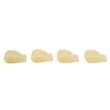
- Washer not agitating: agitator dog 80040
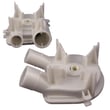
- Washer not draining: washer drain pump WP3363394
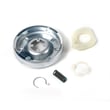
- Washer won’t spin (direct-drive style): coupling 285753A
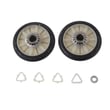
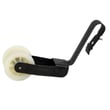
- Dryer squealing or not tumbling smoothly: idler pulley WP691366
Why it matters
Even one digit off can point to a different production run with different wiring, mounting points, or shaft sizes. Using the full Kenmore model number helps prevent returns and gets your washer and dryer laundry system back to normal faster.
Last updated: February 2026
Why is my Kenmore 11088732792 washer not draining?
Your Kenmore 11088732792 washer typically won’t drain because the drain path is restricted (hose, tub-to-pump hose, or pump), the pump is jammed or failing, or the lid switch is not allowing the drain/spin portion of the cycle. Start with the hose and pump checks first.
Quick checks (fastest fixes first)
- Unplug the laundry center; then set towels down for water spills.
- Make sure the drain hose is not kinked, crushed, or shoved too far down the standpipe.
- Check for a clog at the standpipe or laundry sink (a slow household drain can mimic a washer problem).
- If you hear a hum but no draining, the pump is often jammed with debris.
- If the washer drains sometimes but not others, look for an intermittent obstruction (coins, socks) or a weak pump.
Inspect the drain pump and hoses
A common cause on Kenmore stacked laundry centers is debris in the pump or a worn pump impeller.
What we do:
- Unplug power.
- Access the pump area and check the inlet and outlet hoses for lint, small socks, or foreign objects.
- Spin the pump impeller by hand (it should turn with some resistance, not grind or free-spin loosely).
If the pump is leaking, noisy, seized, or the impeller is damaged, replacement is the fix: washer drain pump WP3363394.
Lid switch and spin enable (drain depends on it)
Many top-load washer sections will not complete drain/spin if the lid switch is not closing.
- Close the lid firmly and listen for a distinct click.
- Check for a broken lid strike or misalignment.
- If the unit fills and agitates but will not drain/spin, the lid switch circuit is a prime suspect.
Symptom-to-cause guide
| What you notice | Most likely cause | What to check |
|---|---|---|
| Hums, won’t drain | Pump jammed or failing | Pump for debris, impeller condition |
| Drains slowly | Partial clog | Drain hose, tub-to-pump hose, standpipe |
| Won’t drain and won’t spin | Lid switch issue or drive problem | Lid click/strike alignment, then drive system |
| Drains but clothes are still wet | Not reaching full spin | Clutch/coupling/drive components |
Why it matters
A washer that can’t drain leaves water in the tub, prevents proper spin, and can overwork the motor and pump. Clearing a restriction early often prevents a bigger repair.
Last updated: February 2026
What is the average lifespan of a Kenmore washer?
A Kenmore washer typically lasts 10 to 15 years with normal household use. For a Kenmore washer/dryer laundry system like model 11088732792, good loading habits, correct detergent, and quick repairs to wear items help you reach the longer end of that range.
Typical lifespan and what affects it
Most washers land in the same general window, but these factors move the number up or down:
- Load size and balance: frequent overloading or unbalanced loads shorten drive and suspension life
- Water quality: hard water speeds up valve and seal wear
- Cycle selection: heavy-duty cycles every load add stress
- Ventilation and moisture control (laundry center setups): humidity can accelerate corrosion
- Maintenance and small fixes: replacing inexpensive wear parts early prevents bigger failures
Common failures that end a washer’s service life
On Kenmore direct-drive style systems, these issues are frequent “turning points”:
- Won’t agitate or weak agitation (often worn agitator dog 80040)
- Won’t spin or intermittent spin (clutch or drive components)
- Won’t drain or drains slowly (often the washer drain pump WP3363394)
- Leaks at the tub or center seal area (gaskets, tub support wear)
- Loud grinding or oil leak (gear case wear)
Quick maintenance checklist (best payoff)
Use this as a simple routine to extend life:
- Keep loads below the top row of holes in the basket (no packing)
- Level the unit so it does not walk during spin
- Use HE detergent only if your detergent label calls for it, and measure carefully
- Run a monthly cleaning cycle (hot wash with washer cleaner or approved method)
- Inspect fill hoses yearly; replace if bulging, cracking, or leaking
Repair vs. replace: a simple guide
| What you’re seeing | Typical fix | Usually worth it? |
|---|---|---|
| No agitation | Agitator dogs or coupling | Yes |
| No drain | Drain pump | Yes |
| Oil under washer, loud gear noise | Gear case | Depends on age |
| Multiple major issues at once | Several assemblies | Often no |
Why it matters
A washer that is near end-of-life often costs more in downtime, water leaks, and repeat service calls than a targeted repair. Catching early symptoms (noisy spin, slow drain, weak agitation) keeps your Kenmore 11088732792 running longer and protects the dryer section above it.
Last updated: February 2026
How many cubic feet is a Kenmore Model 11088732792 washer?
Kenmore laundry center model 11088732792 uses a top-load washer; the washer capacity for units in this style is typically about 2.5 to 3.5 cu. ft. Capacity is based on the wash basket volume, so the most accurate way to confirm is to measure the basket and calculate cubic feet.
How to calculate washer capacity (cubic feet)
Use the inside of the wash basket (not the outer tub). Measure in inches, then convert to cubic feet.
- Measure inside basket diameter (across the top, inside edge to inside edge)
- Measure basket depth (inside bottom to the top rim)
- Use the cylinder formula: cu. in. = π × (diameter/2)² × depth
- Convert to cubic feet: cu. ft. = cu. in. ÷ 1728
- Round to the nearest tenth for a practical capacity number
Quick example (so you can sanity-check your result)
| If your basket measures (in.) | Approx. capacity (cu. ft.) |
|---|---|
| 20" diameter × 12" deep | 2.2 |
| 21" diameter × 13" deep | 2.6 |
| 22" diameter × 14" deep | 3.1 |
Why it matters
Knowing cubic feet helps you choose the right load size. Overloading reduces agitation and can lead to out-of-balance spinning, which increases wear on drive and suspension components.
Parts that can be affected by chronic overloading
If loads are not moving well or the washer struggles to spin, these model-matched parts are commonly involved:
- Agitator dog 80040 (worn dogs reduce agitator movement)
- Coupling 285753A (a failed coupling can stop agitation and spin)
- Washer drain pump WP3363394 (poor draining can prevent a full-speed spin)
Last updated: February 2026