 Installation guide
 Owner’s manual
 Error Codes




What is the average lifespan of a GE dishwasher?
A GE dishwasher typically lasts 10 to 12 years. For your GE GSD2100V65BB, regular cleaning, correct detergent use, and fixing small leaks or drain issues early help you reach (and often exceed) that average; see the maintenance guidance in the GSD2100V65BB owner's manual.
What affects lifespan the most
- Water quality: Hard water speeds up mineral buildup in the water valve and wash system.
- Drain performance: Kinked or leaking drain hoses can cause repeat drain problems and extra wear.
- Detergent and rinse aid habits: Using automatic dishwasher detergent and keeping rinse aid filled improves results and reduces residue.
- Loading and spray coverage: Overloading blocks spray arms and strains the pump.
- Small leaks left untreated: Door seal and hose leaks can lead to corrosion and motor stress.
Quick maintenance checklist (high impact)
- Clean the tub and run a dishwasher cleaner periodically.
- Keep the rinse agent dispenser filled; a full dispenser commonly lasts about a month.
- Use quality automatic dishwasher detergent and store it dry.
- Inspect the drain hose routing so it does not kink when pushed into the cabinet.
- Wipe the door edges and check for drips after cycles.
Common wear items and what they do
| Part | What you’ll notice when it’s failing | Typical result |
|---|---|---|
| Door seal | Water at the bottom/front of the door | Leaks, moisture damage |
| Drain hose | Slow drain, water left in tub, leaks under sink | Drain problems |
| Pump and motor | Loud grinding, weak wash action | Poor cleaning, no wash |
If you’re chasing leaks on this model, the dishwasher door seal WD08X10057 is a common fix point.
Why it matters
Knowing the expected lifespan helps you decide whether to repair or replace. If your GSD2100V65BB is near the 10 to 12 year mark, addressing maintenance items (seals, hoses, cleaning) often restores performance and prevents bigger failures.
Last updated: February 2026
What is the most common problem with GE dishwashers?
The most common GE dishwasher problems are poor draining, poor cleaning, and leaks. On the GE GSD2100V65BB, these usually trace back to a clogged drain path (air gap or disposer), low water temperature or pressure, or a worn door seal; many fixes start with cleaning and basic checks in the GSD2100V65BB owner's manual.
Most common symptoms and what they usually mean
- Dishwasher won’t drain or drains slowly: air gap/disposer clog, drain hose restriction, or a drain actuator issue.
- Dishes not clean: low inlet water temperature, low water pressure, blocked spray arm, or detergent issues.
- Leaks at the door: door seal wear, debris on the sealing surface, or loading that interferes with closure.
- Suds/overflow: wrong detergent type or rinse aid spill.
- Won’t start or stops mid-cycle: door switch not closing consistently or a control/timer issue.
Quick checks we recommend first (fast, no parts)
- Verify hot water: the manual calls out 120°F for best cleaning.
- Check water pressure: typical dishwasher supply should be 20 to 120 psi.
- If it isn’t draining well, clean the air gap and flush the disposer connection.
- Use only automatic dishwasher detergent; wrong detergent can cause heavy suds.
- Confirm rinse aid is filled correctly and wipe up any spills.
Parts that commonly solve these problems on this model
| Problem | Common part to inspect/replace | What it affects |
|---|---|---|
| Not draining | Dishwasher drain hose WD24X10014 | Kinks/clogs that prevent pump-out |
| Leaking at door | Dishwasher door seal WD08X10057 | Seals water in during wash |
| Won’t start | Dishwasher door switch WD21X10261 | Confirms door is latched so cycle can run |
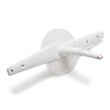
| Poor wash action | Dishwasher spray arm, lower WD12X10244 | Water distribution and spray coverage |
Why it matters
Drain and wash issues often come from simple restrictions (air gap, hose, spray arm) or water conditions (temperature, pressure). Fixing those first prevents repeat clogs, poor cleaning, and leak damage.
Last updated: February 2026
What are the commonly replaced parts in a dishwasher?
On the GE GSD2100V65BB dishwasher, the most commonly replaced parts are the wash and drain components (pump/motor, drain solenoid, hoses), door sealing and safety parts (door seal, door switch), and wear items (racks, spray arm). These parts typically fail from clogs, leaks, corrosion, or normal wear.
Commonly replaced parts (and what they affect)
- Wash performance: circulation pump or pump and motor assembly, lower spray arm
- Draining: drain solenoid assembly, drain hose
- Leaks: door seal, tub corner baffle
- Won’t start or stops mid-cycle: door switch, timer
- Daily wear and tear: upper and lower dishracks, silverware basket
Model-matched examples for GSD2100V65BB
| Symptom | Likely part type | Example part for this model |
|---|---|---|
| Dishes not getting clean | Spray and circulation | Dishwasher spray arm, lower WD12X10244, dishwasher circulation pump WD19X10020 |
| Dishwasher won’t drain | Drain system | GE dishwasher drain solenoid assembly WD21X10268, dishwasher drain hose WD24X10014 |
| Water leaking at the door | Door sealing | Dishwasher door seal WD08X10057 |
| Racks rusting or wheels breaking | Rack components | Dishwasher dishrack, lower WD28X31819, dishwasher dishrack, upper WD28X31820 |
Quick checks before you replace a part
- Disconnect power before any maintenance (per safety guidance in the GSD2100V65BB owner’s manual).
- Clear food debris from the tub and spray arm holes.
- Confirm the hot water supply is adequate; most dishwashers clean best with 120°F to 140°F incoming water.
- Verify the shut-off valve is fully open and supply pressure is in a normal range.
- Inspect hoses and clamps for seepage, kinks, or soft spots.
Why it matters
Replacing the correct part restores cleaning, draining, and leak protection while preventing repeat failures. For example, a restricted drain hose can mimic a bad drain solenoid, and a worn door seal can look like a tub leak.
Last updated: February 2026
How to remove the filter and spinner on GE dishwasher?
On the GE GSD2100V65BB dishwasher, we remove the filter and spinner (spray arm) from inside the tub bottom so we can clear debris that causes poor cleaning or draining. The exact fastener style varies by version, so we follow the removal sequence shown in the GSD2100V65BB owner’s manual.
Before you start (safety and setup)
- Turn off power at the breaker; do not rely on the door switch alone.
- Let the unit cool at least 20 minutes after a cycle before reaching near the heater area.
- Pull the lower rack out for working room.
- Keep a towel handy; a little water in the sump area is normal.
- Take a quick photo before disassembly so reassembly is easy.
Filter and spinner removal steps (typical GE layout)
- Remove the lower rack and set it aside.
- Lift off the lower spray arm (spinner):
- If it is a lift-off style, pull straight up.
- If it is a nut or retainer style, hold the arm and turn the retainer counterclockwise, then lift the arm off.
- Remove the sump cover or reservoir cap (if equipped):
- Release the plastic tabs by squeezing them inward and wiggling the cover up and out.
- Remove the coarse filter screen:
- Lift the screen straight up and out.
- Rinse and inspect:
- Rinse the screen under hot water; use a soft brush to clear holes.
- Check the spray arm jets for seeds, glass, or labels.
What to check while it’s apart
- Food debris in the sump area (common cause of slow drain)
- Cracks or warping in the spray arm
- Standing water that smells (cleaning and deodorizing helps)
| Symptom | Most common cause | What this cleaning fixes |
|---|---|---|
| Dishes gritty | Clogged filter/screen | Restores water flow and filtration |
| Poor spray | Blocked spray arm jets | Restores spray pattern |
| Not draining well | Debris in sump area | Helps water reach the drain path |
When a part is likely needed
If the spinner is damaged or won’t stay seated, replacement is often the fastest fix. For this model, the correct lower spray arm is the dishwasher spray arm, lower WD12X10244.
Why it matters
A clean filter and clear spray arm keep wash pressure up, reduce redepositing debris on dishes, and help prevent drain problems that can lead to odors and standing water.
Last updated: February 2026





