Owner’s manual
 Error Codes



How to remove bottom grille on GE refrigerator?
On the GE PYE22PSKJSS bottom-mount refrigerator, the bottom grille (base grille) typically comes off by removing any retaining screws (if present) and then pulling the grille straight out to release the tabs. Reinstall by aligning it and sliding it back into place.
Before you start
- Unplug the refrigerator or switch off power at the breaker to reduce shock risk while working near wiring.
- Protect the floor; pulling or twisting the refrigerator can damage some floor coverings.
- If you need more room, raise the front leveling legs and pull the refrigerator straight out (not sideways).
- Keep track of screws and clips so the grille seats flat when reinstalled.
Steps to remove the bottom grille
- Look along the top edge and corners of the grille for screws.
- If screws are present, remove them with a Phillips screwdriver.
- Grip the grille near both ends.
- Pull the grille straight toward you to disengage the retaining tabs.
- If it feels stuck, check again for hidden screws or clips, then try a gentle, even pull (avoid bending the plastic).
Reinstalling the grille
- Line up the grille tabs with the slots in the cabinet.
- Push or slide the grille into place until it sits flush.
- Reinstall the screws (if your grille uses them).
| Task | What to do | Why |
|---|---|---|
| Grille will not release | Recheck for screws, then pull evenly from both sides | Prevents cracking tabs and trim |
| Need more access | Raise leveling legs, pull unit straight out | Reduces floor and cabinet damage |
| Grille sits crooked after install | Reseat tabs, then tighten screws | Prevents rattles and air leaks |
Why it matters
The bottom grille helps protect components and supports proper airflow at the base of the refrigerator. If it is loose or misaligned, you can get extra noise, vibration, and reduced cooling efficiency.
For model-specific diagrams and access notes, use the owner's manual.
Last updated: February 2026
Are bottom mount fridges better?
A bottom-mount refrigerator like the GE PYE22PSKJSS is better for many households because the fresh-food section sits at eye level, so you reach everyday items more easily and bend less often. It is a practical choice when you use the refrigerator compartment more than the freezer.
What “better” usually means with bottom-mount designs
Bottom-mount (bottom freezer) refrigerators tend to be a better fit when convenience and fresh-food access matter most.
- Fresh-food shelves are higher, so you see and grab items faster
- Less bending for daily use (milk, produce, leftovers)
- Freezer storage is typically a pull-out drawer, which can hold bulky frozen items
- Many models support features like door ice and interior LED lighting (varies by model)
- Good option for households that cook often and store lots of refrigerated food
For model-specific features and control details, use the PYE22PSKJSS owner's manual.
Quick comparison: bottom-mount vs top-freezer
| Feature | Bottom-mount (bottom freezer) | Top-freezer |
|---|---|---|
| Most-used compartment access | Easier (fresh food at eye level) | Harder (fresh food lower) |
| Bending during daily use | Less | More |
| Freezer access | Drawer style; can be deeper | Shelf style; easier to see at a glance |
| Typical fit for | Fresh-food focused households | Budget focused, simple storage |
When a bottom-mount is the best choice
A bottom-mount refrigerator is the better pick if these match how you use your kitchen:
- You open the refrigerator door many times per day
- You want produce, drinks, and leftovers at comfortable reach
- You prefer a freezer drawer for larger frozen packages
- You want a layout that supports organization in the fresh-food section
Why it matters
Refrigerator layout affects daily ergonomics and food visibility. If fresh food is what you access most, putting it at eye level reduces strain and helps you keep track of what you have, which can cut down on wasted food.
Last updated: February 2026
How to order GE appliance parts?
For your GE PYE22PSKJSS bottom-mount refrigerator, we recommend ordering replacement parts by using the model-specific parts list and diagrams for PYE22PSKJSS so you get the correct fit. Keep your full model number and serial number handy before you place the order, and confirm part compatibility in the owner's manual.
What to do before you order
- Find the model and serial tag (commonly inside the fresh food compartment).
- Write down the full model number: PYE22PSKJSS.
- Identify the failed symptom (no cooling, no ice, leaking water, lights out).
- Match the part to the correct section in the parts diagram (ice maker, dispenser, controls, etc.).
- If you are replacing a filter or water part, plan to flush/purge the water system after installation.
Common parts customers order for this model
If your issue matches one of these symptoms, these are frequently replaced parts for PYE22PSKJSS:
| Symptom | Likely part to check | Example part on this page |
|---|---|---|
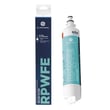
| Water tastes/flows poorly | Water filter | GE refrigerator water filter RPWFE |
| Ice maker not filling | Water inlet valve | Refrigerator water inlet valve WR57X10098 |
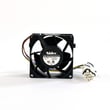
| Warm fridge or freezer | Evaporator fan motor | GE refrigerator evaporator fan motor WR60X26866 |
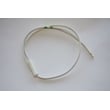
| Temperature swings | Temperature sensor | Refrigerator temperature sensor WR55X10025 |
Why it matters
Ordering by the exact model number (PYE22PSKJSS) prevents wrong-part returns and helps ensure proper cooling, ice production, and water dispensing performance after the repair.
Last updated: February 2026
What is the most common problem with GE PYE22PSKJSS refrigerators?
The most common issues we see with the GE PYE22PSKJSS bottom-mount refrigerator are ice maker and water dispensing complaints (no ice, slow ice, dripping) and fresh food temperature swings caused by airflow restrictions, frost buildup, or a failed cooling component such as the evaporator fan motor or a temperature sensor. See the owner's manual for model-specific troubleshooting steps and control settings.
Most common symptoms (and what they usually point to)
- Ice maker not making ice or slow production: water supply restriction, air in the water line, or ice maker issue
- Water dispenser drips after dispensing: air in the water line; purging the line typically fixes it
- Fresh food warm but freezer cold: airflow problem, evaporator fan issue, or frost buildup on the evaporator
- Temps seem “off” vs. the setpoint: normal variation based on usage, door openings, and load; also check for blocked vents
- Intermittent or odd behavior with controls: control settings, error codes, or a board/sensor problem
Quick checks we recommend first
- Confirm the set temperatures: a common recommended starting point is 37°F for the refrigerator and 0°F for the freezer.
- Remove any protective film from the temperature control area if it was left on after installation.
- Do not block the fresh food air tower vents with food packages; blocked vents cause warm spots and poor recovery.
- Purge the water line if the dispenser drips: dispense water continuously for at least 5 minutes to remove air.
- Give it time after power loss or first plug-in: allow 24 hours for both compartments to reach the selected temperatures.
Parts that commonly solve these problems
If the quick checks do not help, these model-matched parts are frequent fixes:
| Symptom | Likely part to check | Example part for this model |
|---|---|---|
| Warm fresh food, weak airflow, unusual fan noise | Evaporator fan motor | GE refrigerator evaporator fan motor WR60X26866 |
| Temps fluctuate, unit runs too long or not long enough | Temperature sensor (thermistor) | Refrigerator temperature sensor WR55X10025 |
| Water taste/flow issues, ice quality problems | Water filter | GE refrigerator water filter RPWFE |
Why it matters
Ice maker and cooling complaints often share the same root cause: restricted airflow or inconsistent temperature control. Fixing vent blockage, purging air from the water line, and addressing a failing fan motor or sensor helps the refrigerator hold steady temperatures and improves ice production.
Last updated: February 2026