Installation guide
 Owner’s manual
 Error Codes


What is the advantage of a bottom mount fridge?
A bottom-mount refrigerator like the Frigidaire FPHG2399MF6 keeps the fresh-food section at a more comfortable, eye-level height, so you reach everyday items with less bending. The freezer stays on the bottom, which is convenient if you access frozen foods less often (or prefer pull-out baskets).
Key benefits you will notice day to day
- Easier access to fresh foods, drinks, and condiments (less stooping)
- Better organization for refrigerated items because shelves are at eye level
- Freezer storage is typically in drawers or baskets, which helps keep items grouped
- Doors can open wide for full access to drawers and freezer baskets (plan clearance during placement)
- Proper leveling helps doors close and seal correctly, which supports consistent temperatures (see the installation guide)
Bottom-mount vs top-mount: quick comparison
| Feature | Bottom-mount (like FPHG2399MF6) | Top-mount |
|---|---|---|
| Fresh-food access | Higher, easier reach | Lower, more bending |
| Freezer access | Lower drawers/baskets | Upper swing door |
| Best for | Frequent fresh-food use | Frequent freezer use |
Why it matters
Most households open the refrigerator section far more than the freezer. With a bottom-mount design, the items you use most often sit higher, which reduces strain on your back and knees and makes loading and unloading groceries faster.
Setup tip that protects the advantage
A bottom-mount unit performs best when it is installed with the right clearances and leveled so the doors seal fully. In the installation instructions for this style of Frigidaire refrigerator, the cabinet is set to tilt slightly from front to back to help the doors close and seal properly; follow the leveling steps in the installation guide.
Last updated: February 2026
What is the bottom part of a refrigerator called?
On a Frigidaire FPHG2399MF6 bottom-mount refrigerator, the “bottom part” people usually mean is the compressor area (the sealed-system components and airflow space near the lower rear). On the front bottom, the lower panel is commonly called the toe grille.
Common “bottom parts” and what they do
- Compressor (lower rear): pumps refrigerant through the sealed system to create cooling.
- Condenser fan area (lower rear): moves air across the condenser coils to remove heat.
- Toe grille (lower front): the vented cover that helps provide airflow; it should not be blocked.
- Leveling/rollers (lower front corners): help level the cabinet so doors seal correctly.
- Bottom freezer compartment (front): the pull-out freezer section on a bottom-mount design.
Quick identification guide
| What you see/feel | What it’s usually called | Where it is |
|---|---|---|
| Warm air movement, humming | Compressor/condenser area | Lower rear |
| Vented panel you can see from the front | Toe grille | Lower front |
| Doors not lining up, gaps at gasket | Leveling/roller area | Lower front corners |
Why it matters
Using the right name helps you find the correct diagram, instructions, and parts. For example, the installation instructions specifically note not to block the toe grille because airflow is essential for proper operation.
Related parts that live in the “bottom area”
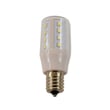
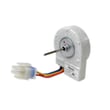
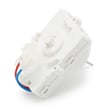
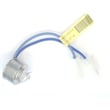
If you are troubleshooting noise, poor cooling, or overheating, these model-compatible parts are commonly involved:
For model-specific panel locations, clearances, and leveling guidance, use the installation guide.
Last updated: February 2026
What is the most common problem with Frigidaire refrigerators?
Cooling complaints are the most common issue we see with Frigidaire refrigerators like model FPHG2399MF6: the fresh food section runs warm, temperatures swing, or frost builds up because airflow or heat removal is restricted. Ice maker and water dispenser problems are the next most common, usually tied to water supply, filtration, or a valve issue.
Most common symptoms and what they usually point to
- Fridge warm, freezer OK: evaporator airflow problem (fan, frost buildup) or a temperature sensor issue
- Both sections warm: dirty condenser area, condenser fan problem, or control issue
- Excess frost or ice on back wall/freezer: defrost system problem (heater, airflow restriction)
- Door not sealing, moisture around gasket: door gasket not sealing or doors not level
- Ice maker slow or not making ice: water supply connection, low flow, or inlet valve problem
Quick checks we recommend first (no parts needed)
- Confirm the doors seal fully on all sides and the refrigerator is level.
- Make sure vents inside the refrigerator are not blocked by food packages.
- If you recently connected water, verify there are no leaks and the shutoff valve is fully open.
- If the ice maker is off, turn it on (the installation instructions describe turning the ice maker on after reconnecting power).
- Listen for fan noise: a failed evaporator fan often changes airflow and causes warm temps.
For model-specific operating and setup details, use the installation guide and follow the installation checklist items for door sealing, leveling, and water connections.
Parts that commonly solve these problems on FPHG2399MF6
| Problem area | Common fix | Example part for this model |
|---|---|---|
| Poor door seal, moisture | Replace door gasket | Refrigerator door gasket 5304537408 |
| Ice maker or dispenser not filling | Diagnose/replace inlet valve | Refrigerator water inlet valve assembly 242252702 |
| Frost buildup, warm temps | Check defrost heater and airflow | Refrigerator defrost heater 5303918410 |
| Temperature swings | Test/replace sensor (thermistor) | Refrigerator temperature sensor 240597220 |
Why it matters
Cooling and ice maker issues often start small (slower ice production, slightly warmer fridge) but can lead to food spoilage, heavy frost, and longer compressor run times. Catching airflow, sealing, and water-supply problems early helps protect the sealed system and improves efficiency.
Last updated: February 2026
Why is there water in the bottom of my Frigidaire FPHG2399MF6 Ice Maker?
Water collecting in the bottom of the ice maker area on your Frigidaire FPHG2399MF6 usually points to a water supply connection that is seeping, a fill issue at the inlet valve, or a drain/ice path problem that lets meltwater pool instead of flowing away. We start by checking for leaks at the back connections and the ice maker fill system.
Quick checks we recommend first
- Pull the refrigerator forward and look for any moisture at the water line connection and valve area.
- Confirm the shutoff valve is fully open and the supply line is not kinked or pinched.
- Check for slow drips at the compression nut and ferrule connection (common after a move or install).
- Inspect the ice maker fill tube area for ice buildup that can deflect water into the compartment.
- Make sure the refrigerator is level and slightly tilted back so doors seal and water flows correctly.
Most common causes (and what to do)
| What you see | Likely cause | What we do next |
|---|---|---|
| Water under/behind fridge and pooling near ice maker area | Seep at water line or valve connection | Re-seat and tighten the compression connection; do not overtighten; recheck for drips |
| Water only during/after ice maker fill | Inlet valve not closing cleanly or fill tube misdirecting water | Inspect for dripping at the valve outlet and ice at the fill tube; replace the valve if it weeps |
| Ice clumps, then water | Fill tube freezing and overflowing on the next fill | Clear the ice blockage; verify freezer temp is not set too cold |
Parts that commonly fix this symptom
If you confirm the leak is coming from the valve area (not the household plumbing), the part most often involved is the refrigerator water inlet valve assembly 242252702.
Why it matters
Even a small seep at the water supply connection can create recurring puddles, cause ice clumping, and lead to intermittent ice maker performance. Fixing the source keeps the ice maker fill consistent and helps prevent hidden water damage.
Installation details to follow
The installation instructions call out key leak-prevention steps: flush the supply line until clear, use copper or stainless braided tubing (plastic is not recommended), and tighten the compression nut another half turn after finger-tight (do not overtighten). Use the installation guide for the exact connection and leveling checklist.
Last updated: February 2026