Installation guide
 Owner’s manual
 Error Codes


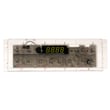

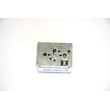
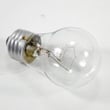
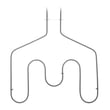
How do I find the model number on my JB250RF4SS?
On the GE electric range JB250RF4SS, the model number is printed on the appliance’s rating label. The quickest place to check is the oven frame: open the oven door and look around the door opening for a label with the model and serial numbers. For label locations and diagrams, use the JB250RF4SS installation guide.
Most common places to look
- Oven frame around the door opening (often along the side trim)
- Storage drawer area; pull the drawer out and look on the frame
- Back panel of the range (use a flashlight)
- Lower front frame behind the drawer front
What the label looks like
| You will see | What it means | Why you need it |
|---|---|---|
| Model number (JB250RF4SS) | Exact product ID | Ensures correct parts fit |
| Serial number | Production code | Helps match revisions |
| Electrical ratings | Voltage/amps | Useful for installation and troubleshooting |
Tips to read it accurately
- Copy the model number exactly, including all letters and numbers
- Take a clear photo before ordering parts
- If the label is worn, try a flashlight at an angle to make the print stand out
Why it matters
GE ranges can look similar across model families, but parts like the oven control, temperature sensor, and surface element switches can vary by model. Using the exact model number prevents wrong-part returns and delays.
Last updated: March 2026
What is the average lifespan of JB250RF4SS?
A GE electric range like model JB250RF4SS typically lasts 13 to 15 years with normal household use and basic maintenance (keeping the oven clean, not overheating wiring, and replacing wear items like elements when needed). For care and operating guidance, use the owner's manual.
What affects lifespan most
- Electrical supply quality (proper 240V circuit, tight connections)
- Heat stress on components (frequent high-heat baking/broiling)
- Spillovers and corrosion under drip pans and around terminals
- Door seal condition (heat loss makes the oven work harder)
- How quickly failed parts are replaced (elements, sensors, switches)
Common wear items vs. long-life parts
| Part type | Typical issue | What you notice |
|---|---|---|
| Surface element | Coil opens or shorts | Burner will not heat or heats unevenly |
| Bake/broil element | Element burns out | Oven will not reach temp, slow preheat |
| Temperature sensor | Drifts out of range | Overbakes or underbakes |
| Control switch/control | Contacts wear | Burner cycles wrong, no heat |
Maintenance that extends service life
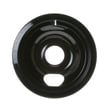
- Keep drip pans clean and seated correctly; replace bent pans (see range drip pan WB31T10015 as an example)
- Avoid lining the oven bottom with foil; it can trap heat and damage the liner
- If you smell burning insulation or see arcing, shut off power at the breaker and inspect wiring
- Periodically check the power cord/terminal area for heat discoloration (a common failure point)
Why it matters
Most “range failures” are single-part issues (element, sensor, switch). Replacing the failed component promptly helps prevent secondary damage to wiring, terminal blocks, and the oven control.
Last updated: March 2026
What replacement parts are most commonly needed for the JB250RF4SS?
The most commonly replaced parts on a GE electric range like model JB250RF4SS are heating and wear items: surface elements, bake/broil elements, burner control switches, the oven temperature sensor, and light components. For part identification and diagrams specific to your range, use the owner's manual.
Common JB250RF4SS replacement parts (examples)
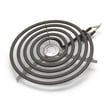
- Surface element (burner) such as range coil surface element, 8-in WB30X24400
- Oven bake element such as range bake element WB44T10011
- Broil element such as oven broil unit WB44X45498
- Burner control switch such as range surface element control switch WB24T10029
- Oven temperature sensor such as range oven temperature sensor WB21X22134
- Oven light parts such as range oven light bulb 40A15 and range light socket WB08T10026
Quick symptom-to-part guide
| Symptom | Most likely part | What to check first |
|---|---|---|
| One burner will not heat | Surface element or switch | Swap element to another position if compatible |
| Oven will not bake | Bake element | Look for blisters or breaks in the element |
| Oven temperature is off | Temperature sensor | Compare actual temp with an oven thermometer |
| No oven light | Bulb or socket | Try a known-good bulb, then inspect socket |
Why these parts fail
- Elements wear out from repeated heating cycles
- Switch contacts pit and overheat over time
- Sensors drift, causing inaccurate temperature control
- Light bulbs fail from heat and vibration
Why it matters
Replacing the correct part restores safe, predictable heating and helps prevent secondary issues like overheated wiring or damaged controls.
Last updated: March 2026