Owner’s manual
 Error Codes


Do you remove cardboard from the bottom of a Whirlpool refrigerator?
For the Whirlpool GI6FARXXY02, remove any shipping cardboard, tape, and foam used for packaging; do not remove any permanent bottom or rear cover panels that protect the condenser area and wiring. The GI6FARXXY02 owner's manual also recommends using cardboard or hardboard under the unit when moving it to protect your floor.
What cardboard should be removed vs. kept
Remove (packaging)
- Cardboard corner posts, spacers, and base shipping pads
- Tape and glue residue on doors, shelves, and trim
- Foam blocks and plastic wrap inside the cabinet
- Any cardboard used to brace drawers or doors during shipping
Keep (protective covers)
- Any fixed cover or panel at the bottom/rear that is screwed or clipped in place
- Any panel that routes airflow for cooling components
- Any cover that shields wiring, tubing, or the condenser area
Quick check: is it packaging or a cover?
| What you see | Typical signs | What to do |
|---|---|---|
| Loose cardboard under the unit | Slides out easily; no screws/clips | Remove it and recycle it |
| Rigid panel at bottom/rear | Fasteners, tabs, or a formed shape | Leave it installed |
| Cardboard sheet on the floor | Not attached to the refrigerator | Use it as a floor protector when moving |
Safe steps to remove packaging
- Unplug the refrigerator before reaching near the bottom area.
- Pull the refrigerator straight out (do not “walk” it) and protect the floor with cardboard.
- Remove loose cardboard and foam, then wipe away tape residue with warm water and mild dish soap.
- Reinstall the base grille if you removed it for access.
Why it matters
Bottom and rear covers help protect components and support proper airflow for efficient cooling. Removing a protective cover can lead to overheating, noise, or poor temperature control.
Last updated: January 2026
How to put bottom grill on whirlpool refrigerator?
On the Whirlpool GI6FARXXY02 bottom-mount refrigerator, the bottom grill (base grille) installs by lining it up with the openings at the front base and snapping it into place. If you removed it for leveling or condenser cleaning, it simply pushes back on the same way.
Steps to reinstall the base grille
- Make sure the grille is oriented correctly (finished side facing out).
- Align the grille ends with the front base area near the leveling screw openings.
- Push the grille straight toward the refrigerator until it snaps into place.
- Gently tug on both ends to confirm it is fully seated.
- If the refrigerator was moved, recheck that it sits level and the doors close smoothly.
If the grille will not snap on
Most fit issues come from alignment or the refrigerator not being level.
- Check for packaging, dust buildup, or debris blocking the grille tabs.
- Verify the grille is centered and not shifted to one side.
- Confirm the front leveling screws are not set so low that they interfere with the grille.
- Look for cracked or missing grille mounting tabs (the grille may need replacement if tabs are broken).
Quick reference
| What you did | What to do next |
|---|---|
| Removed grille to level the refrigerator | Reinstall grille after adjusting the front leveling screws |
| Removed grille to clean condenser | Reinstall grille after vacuuming the grille area and condenser front |
| Grille feels loose after install | Re-seat it; confirm both ends snap in evenly |
Why it matters
The base grille helps protect the lower components and supports proper airflow at the front of the refrigerator. Keeping it installed also makes routine tasks like leveling and condenser access more straightforward.
For the exact removal and reinstall method shown for this model, follow the GI6FARXXY02 owner's manual.
Last updated: January 2026
What is the most common problem with whirlpool refrigerators?
The most common Whirlpool refrigerator problem (including model GI6FARXXY02) is a cooling complaint: the fresh food section gets warm, temperatures swing, or the unit runs too long. The next most common issue is ice maker or water dispenser trouble caused by restricted water flow or a weak inlet valve. For model-specific checks and control settings, use the GI6FARXXY02 owner's manual.
Most common symptoms and what they usually point to
- Refrigerator warm, freezer OK: airflow problem between compartments; a stuck or broken damper is common.
- Both sections warm: dirty condenser area, failed compressor start components, or a sealed-system issue.
- Runs constantly: poor airflow, dirty condenser, door not sealing, or controls set too cold.
- Ice maker slow or no ice: low water pressure, clogged filter, frozen fill tube, or a failing inlet valve.
- Water dispenser weak: restricted filter, kinked water tube, or inlet valve problem.
Quick checks we recommend first
- Confirm the controls are turned on and the unit has power (the manual troubleshooting section covers basic power checks).
- Make sure vents inside the fresh food section are not blocked by food packages.
- Clean dust from the condenser area (restricted airflow makes the refrigerator run longer and cool worse).
- Check door closing and gasket contact all the way around.
- If water or ice is affected, verify the household shutoff valve is fully open and the supply line is not kinked.
Parts that commonly solve these problems on GI6FARXXY02
| Symptom | Likely area | Example part for this model |
|---|---|---|
| Fresh food warm, freezer OK | Airflow/damper | Refrigerator damper control assembly WPW10196393 |
| No water or no ice | Water supply/valve | Refrigerator inlet valve WPW10498990 |
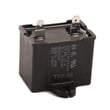
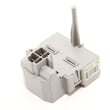
| Intermittent cooling or no start | Start components | Refrigerator run capacitor WPW10662129 |
Why it matters
Cooling and water-system problems usually get worse over time; catching them early helps protect food, reduces run time, and prevents ice and dispenser issues from turning into leaks or temperature swings.
Related DIY help
If you’re seeing a display code or flashing lights, use Whirlpool refrigerator error codes to narrow the problem to a specific system.
Last updated: January 2026