Owner’s manual
 Error Codes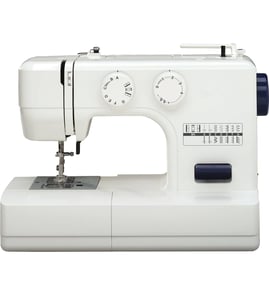

How do I know what model my sewing machine is?
Your Kenmore sewing machine’s model number is shown on the machine’s identification plate (often called the nameplate). For this unit, the owner documentation lists the model as 385.15512000; you can confirm the exact format and where to look in the 38515512000 owner's manual.
Check these common spots for a small plate or sticker with the model and serial information:
- Back of the machine near the power cord connection
- Right side of the machine body (handwheel side)
- Bottom of the machine base (you may need to tip it carefully)
- Under or behind the accessory storage compartment (if equipped)
- Near the free arm area or front lower panel
Kenmore sewing machines in the 385 family often show the model in one of these formats:
| You might see | What it means |
|---|---|
| 385.15512000 | Full model number (with a dot) |
| 38515512000 | Same model number (no dot) |
| 385.15512XXX | Model family format; the last digits vary by version |
Model numbers and serial numbers are easy to confuse. Use these quick checks:
- Model number identifies the design and parts fit; it usually starts with 385 on many Kenmore machines.
- Serial number is unique to your specific machine; it may include letters.
- Write the model number exactly as printed (including any dots) when looking up parts or manuals.
We use the model number to match the correct parts, accessories, and troubleshooting steps (needle plate, bobbin system, foot control compatibility, and more). Using the wrong model can lead to ordering parts that do not fit.
Last updated: February 2026
How old is a Kenmore 38515512000 sewing machine?
Kenmore sewing machine model 38515512000 is part of the Kenmore 385 series; these machines were produced over multiple years, so the exact age depends on the original purchase date. Your best model-specific reference is the documentation that shipped with the machine, including the 385.15512000 identification shown in the 38515512000 owner's manual.
Use these quick checks to narrow down when your machine was made or first put into service:
- Look for an original sales receipt or service paperwork; the purchase date is the most reliable “age” marker.
- Check the machine’s ID plate and any serial number label (often on the back or underside); record it exactly.
- Review the warranty language in the manual; it references coverage “from the date of purchase,” which helps confirm that purchase date is what matters for age.
- If you inherited the machine, ask the prior owner for the approximate purchase year and any maintenance history.
- Compare included accessories and attachments to the parts list in the manual; missing or swapped items can hint at years of use.
Kenmore model numbers that start with 385 identify a long-running Kenmore sewing machine family. That prefix helps with finding the right manual, accessories, and repair information, but it does not by itself give a single build year for every 385 model.
| What you have | What it tells you | What it does not tell you |
|---|---|---|
| Model number: 38515512000 | Exact model identification for parts and instructions | Exact manufacture date |
| Purchase date (receipt) | True “how old is it” age | Nothing about factory build date |
| Serial number (if present) | Can help narrow production run | Not always easy to decode |
Knowing the approximate age helps us match the right maintenance steps (cleaning, oiling points, belt condition), choose compatible needles and presser feet, and decide when wear items like the motor brushes, foot control, or drive belt are more likely to need attention.
If you’re troubleshooting performance issues while you’re checking age, our Kenmore 385 error codes guide is a fast way to connect symptoms to likely causes.
Last updated: February 2026
Is Kenmore sewing machine 38515512000 low shank?
Yes. The Kenmore sewing machine model 38515512000 uses a low-shank presser foot setup, so common low-shank feet (such as a walking foot/even feed foot, zipper foot, satin stitch foot, and buttonhole foot) are the correct style for this machine.
We recommend verifying by checking the presser foot and foot holder details in the owner's manual. You can also confirm physically in under a minute.
- Turn the machine off and unplug it.
- Raise the presser foot lever to lift the presser foot.
- Look at the foot holder (ankle) and the screw that holds it to the presser bar.
- On a low-shank machine, the distance from the bottom of the presser bar to the needle plate is relatively short (low clearance).
- If you already have a Kenmore 385-series walking foot that fits, that is a strong confirmation you have a low-shank setup.
Low-shank vs high-shank determines whether a presser foot lines up correctly with the needle and feed dogs. Using the wrong shank style can cause poor feeding, skipped stitches, needle strikes, or a foot that will not attach securely.
| Accessory type | Low-shank version typically fits 38515512000? | Notes |
|---|---|---|
| Walking foot (even feed) | Yes | Helpful for quilting layers and matching stripes/checks |
| Zipper foot | Yes | For installing zippers and sewing close to edges |
| Satin stitch foot | Yes | For dense zigzag and decorative stitches |
| Buttonhole foot | Yes | For consistent buttonhole sizing |
Use these checks before forcing anything:
- Make sure you are attaching the foot to the foot holder correctly (some feet replace the holder; others snap on).
- Confirm the needle is installed correctly and fully seated.
- Hand-turn the handwheel one full stitch cycle to ensure the needle clears the foot.
- If the fabric is not feeding well after installing a new foot, use our sewing machine fabric not moving troubleshooting steps.
Last updated: February 2026