 Owner’s manual




How do I know if my Kenmore dryer thermal fuse is blown?
If your Kenmore Elite dryer model 11067072600 won’t start at all, a blown thermal fuse is a common cause. Another common clue is the drum runs but you get no heat; on many electric dryers, that can also happen when one house fuse or breaker trips, so we always check power first using the steps in the owner's manual.
Quick checks before you test the fuse
These checks rule out the most common look-alikes for a blown thermal fuse:
- Confirm the controls are set to a running (On) cycle and the Start button is pressed firmly.
- Make sure the dryer door is fully closed.
- Verify the dryer is plugged in and the electrical supply is on.
- Check your home electrical supply; many electric dryers use two fuses or breakers.
- Run a Timed Dry heated cycle for about 5 minutes, then open the door and feel for heat.
How to test the thermal fuse (the reliable way)
A thermal fuse is a one-time safety device; when it opens, it stops power to protect the dryer from overheating.
- Disconnect power to the dryer.
- Access the thermal fuse (location varies by design; the owner's manual shows the service access approach for this model family).
- Pull the wires off the fuse terminals.
- Use a multimeter on continuity or ohms:
- Good fuse: continuity (near 0 ohms)
- Blown fuse: no continuity (open circuit)
What to replace if it’s blown
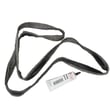
For this model, the correct replacement is the dryer thermal fuse WP3390719.
| Test result | What it means | What to do next |
|---|---|---|
| No continuity | Fuse is blown | Replace the fuse and fix the overheating cause |
| Continuity OK | Fuse is good | Check door switch, start circuit, and power supply |
Why it matters (and what usually causes it)
A thermal fuse usually blows because the dryer overheated. The most common reason is restricted airflow from lint buildup or a crushed or clogged vent. If you replace the fuse without correcting airflow, the new fuse can blow again.
- Clean the lint screen and lint chute area
- Inspect and clean the vent duct to the outside
- Confirm strong airflow at the exterior vent hood
Last updated: February 2026
How much does it cost to replace a heating element in a Kenmore dryer?
For Kenmore Elite dryer model 11067072600, replacing the heating element typically costs $135.08 for the part plus any supplies; if you hire service, total repair cost commonly lands around $200 to $450 depending on labor rates and whether heat-related safety parts also need replacement. See the owner's manual for model-specific checks.
Typical cost breakdown
- Heating element (part only): Dryer heating element WP8544772
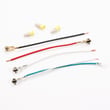
- Optional wiring repair (if terminals are heat-damaged): Dryer heating element wire kit 279457
- Common safety parts sometimes replaced at the same time:
- Labor (if not DIY): often $100 to $300 depending on your area and access to the dryer
| Scenario | What you pay for | Typical total |
|---|---|---|
| DIY, element only | Part + basic tools | About $135 to $170 |
| DIY, element + safety parts | Element + fuse/cut-off (as needed) | About $170 to $250 |
| Professional repair | Parts + labor | About $200 to $450 |
When the heating element is not the only problem
If the dryer runs but you do not feel heat after about 5 minutes, the manual points to power-supply checks first (some electric dryers use two fuses or two breakers). If power is correct, no-heat can also be caused by a blown thermal fuse, a failed thermistor, or a high-limit thermostat.
Common no-heat parts for this model include:
Why it matters
A failed heating element is a straightforward fix, but overheating from restricted airflow can take out the element and safety fuses again. Cleaning lint buildup and keeping the vent clear helps protect the new part and improves drying time.
Last updated: February 2026
How to hard reset a Kenmore dryer?
To hard reset your Kenmore Elite dryer model 11067072600, unplug the dryer (or switch the breaker off) for about 1 to 5 minutes, then restore power and start a new cycle. This clears many control glitches and returns the dryer to a normal ready state.
Hard reset steps (safe, standard method)
- Press STOP twice to cancel any active cycle.
- Unplug the dryer (or turn both dryer breakers off if it is electric).
- Wait 1 to 5 minutes.
- Restore power.
- Close the door and press START to run a cycle.
For model-specific control behavior and cycle cancel instructions, use the owner's manual.
If the dryer still will not start after a reset
A “reset” will not fix an open safety circuit or an overheating shutdown. Check these common causes:
- Door not fully closed; the dryer will not run if the door switch is not made.
- House power issue; many electric dryers need two breakers (or fuses) on.
- Overheating from restricted airflow; clean the lint screen and make sure the vent is clear.
- Blown thermal fuse; this is a common no-start condition after overheating.
- Control not restarted correctly; after a long pause, you must reselect the cycle before pressing START.
Quick symptom-to-likely-cause table
| What you see | What it usually means | What to do next |
|---|---|---|
| Dryer is dead or won’t run | Power supply or safety circuit open | Check breakers, then test thermal fuse |
| Runs but no heat | Heating circuit problem or airflow issue | Check venting, then heating components |
| Stops mid-cycle | Overheat condition or intermittent power | Clean venting; inspect thermostats/fuse |
Parts that commonly relate to “won’t run” after overheating
If airflow was restricted, a safety device may have opened and needs replacement after the venting is corrected.
Why it matters
A hard reset clears temporary electronic states, but dryers also shut down to prevent damage when airflow is poor or a safety fuse opens. Fixing the root cause (especially vent restriction) helps prevent repeat shutdowns and protects the heating system.
Last updated: February 2026
Is 7.4 cubic feet a large dryer?
Yes, 7.4 cubic feet is a large-capacity dryer size. For the Kenmore Elite 11067072600 specifically, the dryer’s rated capacity is 7.3 cu. ft. (IEC), which is still considered large and works well for family-size loads and many bulky items when you load the drum loosely; see the 11067072600 owner's manual.
Large capacity: where 7.3 to 7.4 cu. ft. fits
Most standard dryers are about 5.0 to 7.0 cu. ft.; anything around 7.3 to 7.4 cu. ft. is large capacity.
- Fits bigger mixed loads with better tumbling space
- Handles bulky items more easily (blankets, many comforters)
- Helps sensor cycles dry more evenly when airflow is strong
- Can reduce wrinkles when you avoid packing items tightly
- Often cuts dry time compared to an overloaded smaller drum
How to load a large drum for best drying
Capacity is about space, not just weight. We recommend leaving room at the top so items can lift and drop.
| Load type | Best practice | Result |
|---|---|---|
| Everyday mixed load | Fill loosely to about 3/4 full | Better airflow and even drying |
| Towels/jeans | Medium loads | Heavy fabrics tumble better |
| Bulky item | One bulky item at a time | Fewer wet spots, steadier heat |
| Delicates | Smaller loads, low heat | Less shrink and wear |
Why it matters (performance and safety)
Large-capacity dryers still rely on strong airflow. Overloading restricts tumbling and venting, which causes long dry times and excess heat buildup.
Quick checks if drying seems slow
- Clean the lint screen every load
- Confirm the vent is not crushed behind the dryer
- Keep vent runs as short and straight as possible
- If the dryer overheats or stops, check the dryer thermal fuse WP3390719
Last updated: February 2026






